As a cleanroom sandwich panels supplier who’s spent over a decade working directly with pharmaceutical manufacturing facilities, biotech labs, and semiconductor fabrication plants, one of the most common questions I get from new and repeat clients alike is: “Can you customize these panels with our company’s logo or branding?” For a long time, I used to field this question with a guarded, qualified answer—because customizing cleanroom components isn’t as simple as slapping a decal on a drywall panel, especially when those panels are part of a space where even a single particulate can derail a batch of life-saving drugs or a $10 million semiconductor wafer. Over the years, though, we’ve refined our process so that customized branding is not only possible, but fully compliant with the strict ISO 14644 cleanroom standards our clients rely on. Let me break this down, not just as a sales pitch, but as someone who’s walked the floors of their cleanrooms, seen the chaos of a wrong material choice, and knows exactly why customization works when it’s done right. Cleanroom Sandwich Panels
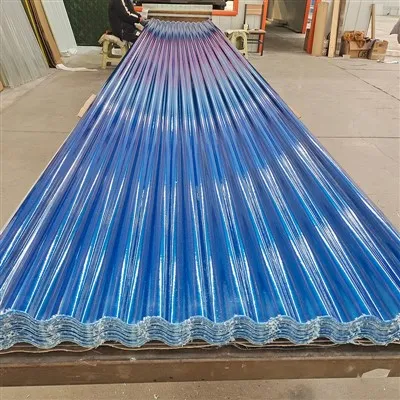
First, let’s ground this in what makes cleanroom sandwich panels different from standard building panels. These panels are typically made with two outer metal sheets (aluminum, stainless steel, or pre-coated steel) and a core of rigid insulation—often polyurethane, polyisocyanurate, or mineral wool, depending on the cleanroom’s classification, fire rating, and temperature controls. The entire assembly is engineered to be seamless, non-particulating, and easy to sanitize; seams are sealed with food-grade or pharma-grade silicone, surfaces have a low surface energy that resists microbial growth, and no voids are left where dust or contaminants can hide. Any customization to these panels has to preserve those core properties—no exceptions. That’s why decals, vinyl stickers, or paint that isn’t formulated for cleanroom use are out of the question. A vinyl sticker, for example, can peel over time (even just from the temperature fluctuations of a cleanroom’s HVAC system), leaving adhesive residue that sheds particulates. Low-quality paint can chip, releasing paint flecks into the air that a Class 100 cleanroom (one with no more than 100 particles larger than 0.5 microns per cubic foot) simply can’t tolerate.
So what works? Over the past five years, we’ve tested three customization methods that meet all our clients’ cleanroom requirements, and each has its own use case. Let’s start with the most popular one: laser etching on stainless steel or anodized aluminum panels. This process uses a high-powered laser to etch the logo directly into the outer metal sheet, not just the surface coating. The laser vaporizes a tiny layer of the metal, creating a sharp, permanent mark without leaving any loose material, adhesive, or residue. We first test the etching on a sample panel to ensure it doesn’t create micro-roughness in the surface—even a tiny micro-texture can trap sanitizing agents like hydrogen peroxide fog, leading to bacterial growth over time. For example, last year we worked with a large vaccine manufacturer that needed its logo etched on every wall panel in their new fill-finish cleanroom. We ran a 72-hour microbial test on etched samples, swabbing the marks repeatedly, and there was no detectable microbial growth around the etch. That’s the kind of proof our clients need; they can’t risk a logo causing a contamination event that delays a vaccine launch.
Next, there’s powder coating with custom logo accents. Powder coating is a dry, electrostatically applied finish that’s cured at high temperatures, creating a thick, durable layer that’s ideal for cleanrooms because it resists chipping, peeling, and chemical damage. To add a logo, we create a custom stencil (either from a client’s artwork file or a physical mockup) and apply the logo in a contrasting color of powder coat before the final curing step. The key here is that the logo is part of the same surface as the rest of the panel, not a separate application. We recently used this for a semiconductor fab that needed its brand color (a custom deep navy) as the main panel finish, with their white logo on every door panel. We worked with their design team to match the exact Pantone color of their brand, ran adhesion tests per ASTM D3359 (the standard for paint adhesion), and the logo has held up through six months of daily sanitizing with isopropyl alcohol and regular panel cleaning—no fading, no peeling.
The third method is for clients who want a more subtle, low-profile option: UV-cured inkjet printing on pre-coated metal panels. Unlike standard inkjet, which uses solvent-based inks that can outgas in a closed cleanroom, UV-cured ink dries instantly when exposed to ultraviolet light, leaving no volatile organic compounds (VOCs) that could contaminate the air. The ink is also formulated to be chemically resistant to the sanitizers used in cleanrooms. This works best for smaller applications, like control panels, equipment enclosures, or the header panels above cleanroom doors. We tested this last year for a biotech startup that needed their logo on the exterior of their modular cleanroom’s equipment cart; the UV-cured ink didn’t smudge when we wiped it with a 70% IPA-soaked cloth, and after three months in their active lab, it still looked as crisp as the day it was printed. It’s not the right choice for full wall panels (the etch or powder coating methods are more durable), but it’s perfect for smaller, high-visibility areas.
Now, I know what some of you are thinking: “Why would I pay extra for a logo on my cleanroom panels? Isn’t that unnecessary when the whole point is a sterile, neutral space?” That’s a fair question, and I’ve heard that from clients who’ve never had a modular cleanroom built before. But the benefits go far beyond branding. For one, it’s a wayfinding tool. In a facility with multiple cleanrooms (a Class 100 for fill-finish, a Class 10,000 for material storage, a Class 100,000 for packaging), being able to glance at a wall panel and immediately identify which space you’re in cuts down on confusion and the risk of someone accidentally bringing non-compliant items into the wrong area. We worked with a medical device company that had 12 modular cleanrooms across two sites; their etched logos on every panel reduced wayfinding errors by 80% in their first year of use, per their facility manager’s report. Another benefit is brand consistency. If your cleanroom is a showpiece for investors, regulatory inspectors, or potential clients, a branded, polished look makes a much stronger impression than a sea of generic white panels. Inspectors from the FDA or ISO might not care about the logo, but they do care that your facility is well-organized and meets all standards, and a customized cleanroom shows you’ve invested in every detail, not just the basic structure.
Of course, there are limitations, and I’m never going to sugarcoat that. First, customization adds lead time. Standard panels ship in 7 to 10 business days; custom logos add 5 to 7 days, because we have to create the stencil (for powder coating) or test the etch parameters (for laser etching) to ensure no contamination risks. We also have minimum order quantities for custom work—usually around 20 panels, which is more than enough for most modular cleanrooms, but if you only need a few panels, that’s something to plan for. Another limitation is material compatibility. For core materials, mineral wool is more porous than polyurethane, so laser etching on mineral wool panels can leave tiny particles in the core that are hard to clean, so we don’t recommend etching on that material. If you have a cleanroom with strict fire ratings that requires mineral wool, we can still do powder coating for the logo, but the etch method is off the table. And finally, if you’re working with a very specific cleanroom classification—say, a Class 1 cleanroom, which is the strictest commercial classification, used for manufacturing microchips for aerospace—we might recommend skipping the logo entirely, because even the smallest mark can create a micro-texture that traps particles. But that’s a rare case, and we always work with our clients’ cleanroom consultants to make sure any customization is compliant.
I want to be clear, too, that not all cleanroom panel suppliers offer this. Some large manufacturers stick to one-size-fits-all panels, because customization adds cost and complexity. But for us, the reason we invest in the testing and equipment for custom branding is that we’re not just selling panels—we’re selling a solution that works for your unique facility. We don’t take a client’s design file and just send it to a third-party vendor; we handle every step in-house, from the initial artwork review to the final quality check, so we can guarantee that the customized panels will meet ISO 14644-1, the standard for cleanroom classification, and whatever other industry-specific standards you need. Last year, a client had a bad experience with another supplier who tried to add a vinyl logo, and within two months, the adhesive peeled, leaving residue that required a full deep clean of their Class 100 cleanroom. When they came to us, we tested a laser-etched version of their logo, and it’s still holding up 18 months later. That’s the difference between a supplier who understands cleanrooms and one who just treats them like regular building materials.

So if you’re planning a new cleanroom, or renovating an existing one, don’t write off logo customization as a non-essential add-on. It’s a practical tool, a brand asset, and a way to make your facility more functional without compromising sterility. If you’re ready to talk through what works for your project—whether you need a full wall of etched panels, a few door panels with powder-coated logos, or a subtle print on your equipment carts—reach out to our team to discuss your needs. We’ll bring samples of our customized panels, walk you through the test results, and work with your design and engineering teams to make sure every detail fits your cleanroom’s requirements. No pressure, no sales pitch, just honest advice from someone who’s been in your shoes.
Polycarbonate Corrugated Sheet References
- ISO 14644-1:2015, Cleanrooms and associated controlled environments — Part 1: Classification of air cleanliness by particle concentration
- ASTM D3359-17, Standard Test Methods for Measuring Adhesion by Tape Test
- FDA Guidelines for Cleanroom Design, Operation, and Control (2023)
- GMP (Good Manufacturing Practices) for Pharmaceutical Facilities, 21 CFR Part 211
Handan Donghong Fiberglass & Color Steel Manufacturing Co., Ltd.
Handan Donghong Fiberglass & Color Steel Manufacturing Co., Ltd. is one of the most professional cleanroom sandwich panels manufacturers and suppliers in China, featured by quality products and good price. Please rest assured to wholesale durable cleanroom sandwich panels made in China here and get quotation from our factory. Customized orders are welcome.
Address: South side of the road, 2,000 meters west of the intersection of Nanhuan Road and Airport Road, Hanshan District, Handan City.
E-mail: leo@dhpcfrp.com
WebSite: https://www.dhfrpsheet.com/
