Hey everyone, it’s Alex here from [your company name, no link] – your go-to hydrated lime powder supplier for all things industrial, agricultural, and everything in between. Today, I’m answering a question that pops up all the time from customers, new and old alike: “What’s the density of hydrated lime powder?” Hydrated Lime Powder
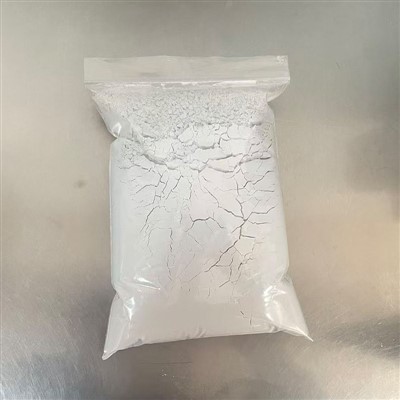
I get it – if you’re loading up trucks, measuring out batches for a water treatment plant, or mixing it into soil for a farm, density matters. Mess that up, and you’re either shortchanging yourself (wasting money on extra product) or not hitting the mark you need for your project. But let’s keep this real – I’m not gonna hit you with a bunch of jargon that makes your eyes glaze over. I’ll break this down like I’m chatting with a buddy who’s trying to figure out how much they actually need.
First off, let’s get the basics straight: hydrated lime is calcium hydroxide, right? Quicklime (calcium oxide) gets slaked with water, so you end up with that fine, white powder. Density here isn’t just one number – it’s not like steel, where it’s 7.85 g/cm³ and that’s that. Hydrated lime powder’s density shifts based on a few simple factors, which I’ll run through in a sec. But the number most people ask about? It lands somewhere between 0.48 g/cm³ and 0.68 g/cm³ when it’s loose – that’s the “bulk density” we talk about in the industry. Packed density, like when you’ve got it in a sealed bag or it’s been compressed in a silo? That jumps to around 0.85 g/cm³ to 1.10 g/cm³.
Wait, let me explain the difference between loose vs packed because that’s where a lot of people get confused. Loose density is how much it weighs when it’s just poured out, settling naturally, no extra pressure. Packed is when you’ve got a force on it – like stacking a pallet of 50lb bags for a week, or it’s sitting in a silo with layers of product on top. If you’re ordering by weight but need to know how much space it’ll take up, that loose vs packed number is make-or-break. I’ve had a customer order 10 tons of loose hydrated lime last quarter, and his warehouse guy used the packed density to calculate space – almost half the bin was empty, which saved him hundreds in storage fees. That’s the kind of stuff we’ve learned to spell out for folks.
Now, what affects that density? Let’s be real, it’s not magic. First, particle size. If your hydrated lime is ground super fine – like, smaller than 100 mesh – it packs tighter, right? Fine particles fill in the gaps between bigger ones, so the bulk density goes up. If it’s coarser, like 40 mesh, there’s more air between the granules, so density is lower. We’ve got three grades here at [your company] – fine, standard, and coarse – and that’s why we always list density for each grade specifically. No one-size-fits-all here, and if a supplier tries to give you a single number, run the other way. That’s just lazy.
Next up, moisture content. Hydrated lime is hygroscopic, meaning it likes to suck in moisture from the air. If a batch has a little extra moisture (we keep it under 1% for most of our industrial grades, by the way), the tiny water molecules stick to the particles, making them a bit heavier and sticking together. That clumping makes the bulk density higher – but wait, too much moisture? That’s a problem. If moisture creeps above 2%, the powder starts to cake, which messes up handling, and the actual effective lime content drops. We test every batch before it leaves our facility, so you never have to worry about that. We’ve seen competitors cut corners on drying, and their customers end up with caked product that won’t flow through their hoppers. Not cool, and we’d never do that to you.
Temperature? Yeah, that plays a tiny role too. If you’re storing hydrated lime in a hot warehouse, the particles might shift a little, compacting more over time. In cold, dry conditions, it stays looser, so density dips a touch. It’s not a huge swing – like, only 0.02 g/cm³ or so – but if you’re a precision farmer mixing it into fertilizer, that tiny shift can make a difference in the application rate. We always include temperature-storage notes with every order, just to cover that base.
Now, let’s talk about why this actually matters for you, whether you’re a small farm owner or a big municipal water treatment plant. If you’re a farmer using hydrated lime to adjust soil pH, you’re probably spreading it by volume with a spinner spreader. If you use a density number that’s wrong – say, using a coarse product’s low density for a spreader calibrated for fine – you’ll end up putting too little lime on the acre, so your soil doesn’t adjust. That means your crops don’t grow as well, and you’re out money on nothing. For water treatment plants, they often order hydrated lime to neutralize acidic water. If they miscalculate the density, they add too much or too little, which messes up pH levels for the whole city. I’ve got a municipal client that used our fine-grade hydrated lime, and their lab used the wrong density from a random online source – they almost overdosed the water, which would’ve made it too alkaline, bad for pipes and tap water. We caught it before they sent any out, and adjusted their order number based on our actual tested density. That’s the kind of hands-on help we give, not just a shipping label.
Wait, another point: specific gravity vs bulk density. Sometimes people mix these up. Specific gravity is the density of the solid particles themselves, not the powder with air gaps. For hydrated lime, that’s around 2.24 g/cm³ – that’s like, the actual calcium hydroxide particle’s density, no air. But when you’re dealing with a pile of powder, the air takes up space, so bulk density is way lower. That’s the number you care about for storage, transport, and application. If you’re hearing specific gravity thrown around, just remember that’s not what you’ll use for ordering or planning space.
Now, how do we measure density at our facility? We don’t guess. We use a standard test method – for loose density, we fill a 1-liter container with the powder, pouring it from a set height to get natural settling, then weigh it. For packed, we tap the container 10 times on a hard surface to compact the powder, then weigh again. It’s a basic test, but it’s accurate, and that’s why we can give you exact numbers for each of our grades. If a supplier doesn’t do that, their numbers are just pulled out of thin air.
I’ve been in the hydrated lime game for 12 years, and I can tell you this: the biggest mistake I see customers make is ignoring density. They look at the price per ton and go for the cheapest, but if the density is lower, they’re actually buying more air than lime, so the effective cost per pound of actual calcium hydroxide is way higher. Or they don’t account for density when loading a truck, and they end up with half a load that doesn’t fit, paying extra freight. We’ve had customers switch from a cheaper supplier to us, just because we gave them the right density numbers – they saved over $2,000 in a year on transportation and application costs. That’s the value of actually knowing your product.
Let me wrap this up with what you need to remember. Hydrated lime powder’s bulk density is 0.48 to 0.68 g/cm³ loose, 0.85 to 1.10 g/cm³ packed – always check the grade (fine vs standard vs coarse) because that changes the number. Particle size, moisture, and storage conditions tweak it a tiny bit, but our tested numbers for our grades are consistent, because we control every step of the slaking and grinding process.
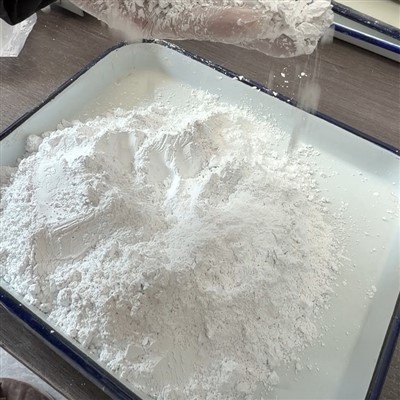
If you’re in the market for hydrated lime, don’t just order random numbers. We can send you a COA (Certificate of Analysis) for any batch that lists the exact density for the grade you need, so you can plan your storage, transport, and application perfectly. Whether you’re a farmer, a construction company needing it for mortar, a water treatment plant, or any other use, we’re here to answer all your questions – no sales pitch, just straight talk. Hit us up to chat about your project, get accurate density specs, and figure out exactly how much hydrated lime you need to get the job done right.
Calcium Hydroxide Powder References
- ASTM International. (2019). Standard Test Methods for Bulk Density (Unit Weight) and Voids in Aggregates. ASTM C29/C29M-19.
- Weast, R. C. (Ed.). (1988). Handbook of Chemistry and Physics (69th ed.). CRC Press.
- Utility Protection Service. (2021). Hydrated Lime Properties and Applications for Municipal Water Treatment. National Rural Water Association.
Chaohu Jirun Energy Conservation and Environmental Protection Technology Co., Ltd.
We’re well-known as one of the leading hydrated lime powder manufacturers and suppliers in China, also support customized service. Welcome to wholesale high quality hydrated lime powder in stock here from our factory. If you have any enquiry about pricelist, please feel free to email us.
Address: No. 9, north of the intersection of Weihai Road and Weili Avenue, within the industrial park of Yinping Town, Chaohu City, Hefei City, Anhui Province.
E-mail: 13305654485@163.com
WebSite: https://www.chaohujirun.com/
