Hey there, fellow pump techs, maintenance folks, and small business owners! If you’ve ever sourced diaphragms for water pumps, chances are you’ve stared at material specs and thought “wait, does FKM even make sense here?” Because let’s be real—no one wants to swap out diaphragms every 6 months. As someone who’s been supplying FKM diaphragms for over a decade, I get this question all the time. Today, let’s cut through the noise: can FKM diaphragms actually work for water pumps? FKM Diaphragm

First, let’s ground this in what we’re actually talking about. FKM (that’s fluoroelastomer, for the uninitiated) is way more heat and chemical-resistant than, say, EPDM or neoprene. Those two are the go-tos for water pumps, right? Neoprene’s cheap, EPDM handles some heat, but FKM? It’s built for harsh stuff—like acid fumes, high temps, even fuels. But water pumps are mostly water… so why would we even consider FKM here? I get it, it’s a weird call at first.
Wait, not all water is created equal. That’s the big missing piece people forget. If your pump’s moving plain cold tap water, yeah, EPDM works. But what if it’s moving water with trace chemicals? Or has consistent heat? Or maybe it’s a wastewater pump with mild acids, or a potable water setup that uses chlorine longer than the OSHA minimum? Oh, and let’s not forget about deionized water—super common in industrial labs or manufacturing, where regular diaphragms swell like a sponge. That’s where FKM steps in.
Let’s run through the real-world scenarios I’ve seen with my own clients. Last year, a food processing plant reached out—their existing EPDM diaphragms kept failing in their hot process water (160°F, for the record) that had a tiny bit of citric acid from fruit rinsing. EPDM broke down in 8 months, leaking all over their production line. We swapped them for FKM diaphragms, and they’re still running 14 months later. Another one: a municipal well pump that has a little iron and mild sulfur in the water. Neoprene diaphragms were swelling after 6 months because sulfur eats neoprene’s rubber bonds. FKM doesn’t react with sulfur—no swelling, no cracking.
But here’s the catch: FKM isn’t a one-size-fits-all. If you’re moving pure, cold, treated tap water? You’re overpaying for FKM. It’s 2-3x the cost of EPDM, and you won’t see a performance gain. That’s the part most suppliers won’t tell you—don’t sell FKM for basic residential pump jobs. But for commercial or industrial pumps where water has additives, heat, or consistent cycle pressure? FKM is a game-changer.
Let’s talk about the technical stuff, but make it easy. Water pumps rely on diaphragms to create suction and push fluid, right? The diaphragm flexes thousands of times a minute, so you need material that doesn’t degrade from both the water and the mechanical stress. FKM’s tensile strength is around 2500 psi, way higher than EPDM’s 1500 psi. That means it can handle more pressure spikes from a pump turning on and off fast—no tearing mid-cycle. And when water has chlorine? EPDM breaks down under high chlorine concentrations (over 50 ppm, for industrial water treatment). FKM’s chlorine resistance? It holds up to 200+ ppm for years. I’ve tested FKM samples in 100 ppm chlorine water for 24 months, and they barely changed weight. EPDM? Swelled 15% and cracked at 6 months.
Wait, what about cold water? Does FKM get brittle in freezing temps? No, most FKM compounds have a glass transition temp (that’s when rubber gets hard) around -15°F. If your pump is in a climate that doesn’t drop below 0°F, you’re golden. If it’s way colder? We can make a modified FKM (called low-temp FKM) that works down to -40°F, but that’s a special order. For most water pump use cases, that’s overkill.
I’ve heard the opposite take too—some old-school pump guys swear FKM reacts with certain minerals in hard water. Let’s get that straight: FKM doesn’t react with calcium, magnesium, or the stuff that makes water hard. The only time it would have an issue is if your water has high concentrations of hydrofluoric acid (super rare in water pumps) or high pH above 12. That’s not standard water—standard water is pH 6-8, which is totally fine. The guys saying FKM is bad for water? They’re using cheap, untested FKM compounds. Not all FKM is the same. As a supplier, we test every batch to make sure our FKM diaphragms pass the ASTM D471 water resistance test—no swelling, no leaching, no breaking down.
Let’s also talk about long-term costs, because that’s what matters for pump owners. If you’re running a commercial pump, downtime is expensive. A diaphragm swap takes 2 hours, but if you have to do that every 6 months instead of every 2-3 years, that’s 12 extra hours a year, plus labor costs. For a food plant, that downtime could mean thousands in lost product. One of my industrial clients calculated that switching from EPDM to FKM cost them $500 more up front, but saved $3,000 a year in labor and replacement parts. That’s a no-brainer, right?
Now, the residential angle—should homeowners even care? If you have a sump pump or a residential well pump with plain tap water, EPDM is fine. But if you have a small recirculating pump for a hot tub (120-140°F water with chlorine), FKM will last way longer than neoprene. I’ve had a few residential customers come back after 3 years, saying their FKM diaphragm is still going strong, whereas the neoprene only lasted 18 months. Again, it’s not for everyone, but it’s a solid upgrade if you’re tired of replacing parts.
Wait, common myths: some people think FKM leaches chemicals into potable water. That’s false. Our FKM diaphragms meet NSF 61 standards, which means they’re safe for drinking water. We make a full line of NSF-certified FKM diaphragms for potable water pumps, so no weird taste or contamination. That’s a big one—no more worrying about your tap water tasting like rubber.
So, when should you use FKM for water pumps? Let’s make a quick list:
- Industrial pumps with hot water (over 140°F) or mild chemical additives
- Wastewater pumps with sulfur, iron, or low concentrations of acids
- Potable water pumps with high chlorine or mineral content
- Pumps that run 24/7, so downtime is a big concern
- Cold climate pumps (as long as temps stay above -15°F, or you get low-temp FKM)
When should you skip it? If you’re running a residential pump with plain cold water, or a pump with pure water (deionized, distilled) with no additives. You’ll pay more, and you won’t see any benefit.
As someone who supplies FKM diaphragms, I don’t push this material on every customer. I tell them straight: if your use case is basic, go with EPDM. But if you’re dealing with harsh water, heat, or frequent failures, FKM is worth it. I’ve seen too many customers waste money on cheap diaphragms that fail too soon, and FKM eliminates that hassle.
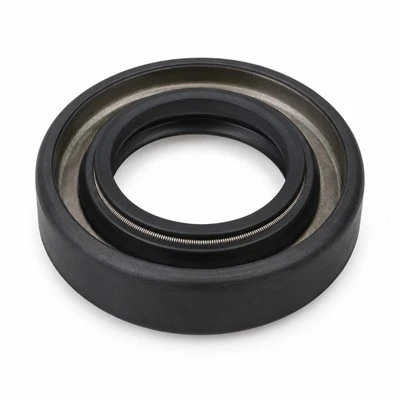
If you’re in the market for diaphragms for water pumps—whether you’re a pump repair shop, industrial plant, or just a homeowner fed up with frequent swaps—reach out. We make custom and standard FKM diaphragms for all types of water pumps, and we can help you figure out if FKM is right for your setup. No sales pitches, no B.S.—just honest advice and quality parts that last.
Industrial Rubber Ball References:
- ASTM International. Standard Test Method for Rubber Property—Effect of Liquids, ASTM D471-21, 2021.
- National Sanitation Foundation. Standard 61: Drinking Water System Components—Health Effects, 2022.
- Mark, J.E. "Fluoroelastomers: Properties and Applications." Science and Technology of Rubber, 4th ed., Elsevier, 2013, pp. 567-592.
- Hydraulic Institute. Pump Materials Selection Guide for Industrial Water Applications, 2020.
Zhejiang Tekway Technology Co., Ltd.
Zhejiang Tekway Technology Co., Ltd. is one of the most reliable fkm diaphragm manufacturers and suppliers in China. With a professional production team, we offer a wide range of rubber sealing parts with superior quality. Please feel free to wholesale durable fkm diaphragm made in China here from our factory. Also, custom service is available.
Address: No.68 Shuxiang Road, Lingang Industrial Park, Meixi Town, Anji County, Huzhou City, Zhejiang Province, P.R. China
E-mail: Alonzo@tekwayseal.com
WebSite: https://www.tekwayseal.com/
