Hey everyone, let’s cut to the chase today because I know most of you here – whether you’re a plant engineer, a maintenance lead, or someone sourcing valves for a new project – don’t have time to scroll through generic specs or jargon-heavy white papers. I’m part of a forged steel valves supplier, and one question I get asked all the time is, “What exactly is an A105 forged steel valve?” Forged Steel Valves
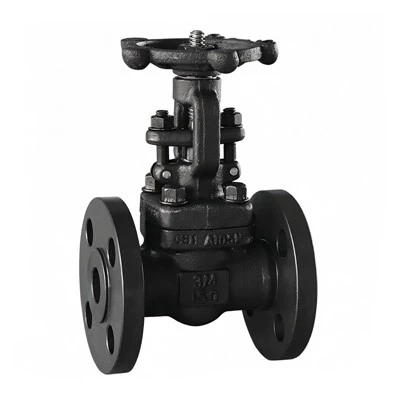
First off, let’s ditch the “A105” mystery. No, it’s not some secret code or a random model number pulled out of thin air. That “A105” is an ASTM grade – specifically, ASTM A105, which is the standard specification for carbon steel forged fittings, flanges, and valves. But wait, not every carbon steel valve is A105. That “forged” part is huge here, too, because it changes literally everything about how the valve performs in real-world situations.
Let’s start with the material, since that’s the core of any valve. A105 is a low-carbon, manganese-silicon steel, right? But the key is how it’s made: forging. Instead of casting molten steel into a mold (which can leave hidden gaps, bubbles, or weak spots that you can’t see), A105 starts as a solid steel billet. We heat that billet up to a precise, high temperature (not too hot where it’s all mushy, not too cold where it cracks), then hit it with massive hydraulic or press force to shape it into the valve’s body. That process compacts the steel grain structure – think of it like squishing a wet sponge until all the air pockets are gone. The result is a part that’s way stronger, more durable, and has better impact resistance than a cast valve of the same nominal size. I’ve seen this firsthand in the field: cast valves might leak or even crack under high pressure or sudden temperature swings, but A105 forged steel valves? They hold up.
Now, let’s talk about where A105 valves actually get used, because that’s what matters most to you. You won’t find these in a coffee shop or a residential water heater – A105 is built for heavy industrial applications. Think oil and gas pipelines, power plants (both fossil fuel and even some newer ones that use high-temperature steam), chemical processing facilities, refineries, and petrochemical plants. Why? Because these places deal with two things that will destroy a lesser valve: high pressure and extreme temperatures. A105 can handle working pressures up to like 1500 psi (and sometimes more, depending on the valve class) and temperatures ranging from -20°F all the way up to 800°F. That’s a way bigger range than, say, a brass valve you’d use for a garden hose. I remember a client last year who was working on a refinery project in Texas – they had tried cast valves before, and after six months, three of them failed during a high-pressure transfer run. Switched to A105 forged steel valves, and they haven’t had a single issue in two years.
Wait, but let’s clear up a common mix-up: A105 vs. A105N. Some of you might have seen that “N” at the end. The “N” stands for “normalized” – that’s an extra heat treatment step. Forging leaves the steel with a bit of internal stress, so normalizing means heating the valve up to its critical temperature, then letting it cool slowly in air. That relieves that stress, making the valve even more resistant to cracking, especially in cold environments. If you’re working in a place like North Dakota or Canada where winter temperatures drop way below freezing, A105N is the way to go. Regular A105 works fine for moderate climates, but the “N” is a smart upgrade for cold-weather jobs.
Another big point: valve classes. A105 valves come in different classes, right? Class 150, Class 300, Class 600, Class 900, even Class 1500. The number is the pressure rating at a specific temperature (usually 100°F, but it varies if you’re working at higher temps). So Class 300 A105 can handle more pressure than Class 150, but you have to match the class to your system’s needs – going too high is a waste of money, going too low is dangerous. I always tell clients to share their system’s pressure and temp specs, and I’ll hook them up with the right class, no guesswork.
Now, let’s bust a myth I hear all the time: “A105 is just like any other forged steel valve.” No way. The material chemistry is specific. ASTM A105 has strict limits on elements like sulfur and phosphorus – sulfur makes steel brittle, phosphorus causes cold cracking. So if a valve is marketed as A105 but doesn’t meet those chemistry specs, it’s not actually A105. That’s why it’s important to source from a reputable supplier (hint, that’s us) – we don’t cut corners on material testing. Every A105 valve we ship comes with a material test report (MTR) that proves it meets ASTM standards. No MTR, no A105 – period.
What about maintenance? Because even the best valve needs some TLC. A105 forged steel valves are pretty low-maintenance compared to other types. They’re resistant to corrosion, but if you’re working with really harsh chemicals (like strong acids), you might need to add a protective coating – but for most standard industrial uses, plain A105 works fine. You just need to do regular checks for leaks, make sure the stem is lubricated, and replace parts like gaskets when they wear out. I’ve had clients who’ve had A105 valves in their system for 10+ years with no major failures – that’s way better than the 3-5 year lifespan of some cast valves.
Wait, let’s get into a real example to make this concrete. Last quarter, we worked with a power plant in the Midwest that was upgrading their steam lines. They originally used cast carbon steel valves, but during peak demand in summer, the steam pressure got really high, and two cast valves cracked, leading to unplanned downtime that cost them tens of thousands of dollars in lost production. They switched to our A105 Class 600 forged steel gate valves. Those gate valves are perfect here because they’re designed to fully open or fully close (no partial flow, which can cause erosion) and handle high pressure. Three months later, they hit peak summer demand, and not a single issue. They ended up ordering 40 more for their next upgrade. That’s the kind of real-world win we’re all about.
Now, why choose forged A105 over other materials? Like, why not stainless steel? Stainless is more corrosion-resistant, but it’s way more expensive. For most industrial applications where corrosion isn’t a super extreme issue, A105 is the sweet spot – strong, durable, cost-effective. Brass is cheaper, but it can’t handle the pressure and temp that A105 can, so it’s out of the question for heavy use. Alloy steels like Cr-Mo are for even higher temps (like 1000°F+), but A105 is perfect for the 800°F max that most refineries and power plants deal with. So it’s all about matching the material to the job – that’s what we help clients figure out.
Let me also touch on the different types of A105 valves, because you don’t just pick an A105 valve – you pick the right type for your function. We do gate valves, globe valves, ball valves, check valves, all in A105. Gate valves are for on/off service (like controlling a pipeline’s flow). Globe valves are for regulating flow (you can adjust them partially open). Ball valves are quick to open/close and good for tight shutoff. Check valves prevent backflow, which is super important for keeping your system safe. Each type has its own use case, and we can walk you through which one is right for your setup.
Here’s something you might not know: A105 is also used for flanges and fittings, not just valves. But when we talk about A105 forged steel valves, it’s specifically the valve body, bonnet, and trims made from that forged material. The trims (the internal parts like the stem, disc, seat) are usually stainless steel or another alloy, but the main body is A105 for strength. That combination gives you a valve that’s tough on the outside, reliable on the inside.
Now, I want to be honest with you – A105 isn’t perfect. If you’re working with highly corrosive chemicals like concentrated sulfuric acid, you’ll need a different material like 316 stainless or alloy 20. If you’re at temperatures above 800°F, A105 starts to lose some of its strength, so you’d go for a chromium-molybdenum alloy like A217 Gr C12. But for 90% of the general industrial applications our clients deal with, A105 is the go-to choice. It’s affordable, tested, and proven.
At the end of the day, the key takeaway here is that A105 forged steel valve is a workhorse. It’s built with a manufacturing process that eliminates weak points, meets strict industry standards, handles the harsh conditions of heavy industry, and offers a great balance of performance and cost. We’re not here to sell you a valve for a job it doesn’t fit – we’ll ask the right questions: what’s your system’s pressure, temperature, fluid type, valve size? Then we’ll recommend the right A105 valve (or a different material if needed) that will keep your operations running smoothly, no unplanned downtime, no last-minute failures.
If you’re in the market for A105 forged steel valves – whether you need a few for a small project or a bulk order for a big upgrade – hit us up. We’ll send over specs, MTRs, even help you design the right setup for your system. No pressure, no pushy sales talk, just straight answers and quality valves that do what they’re supposed to do. Trust me, once you switch to A105, you won’t go back to anything else.
Metal Seated Ball Valve References:
- ASTM International. (2022). Standard Specification for Carbon Steel Forgings for Piping Applications (ASTM A105/A105M-22).
- valve world. (2021). Forged vs Cast Valves: Key Differences and Applications.
- Pump Industry Magazine. (2020). Understanding A105 and A105N Forged Steel Valves for Industrial Service.
- API (American Petroleum Institute). (2019). Standard for Valves – Flanged, Threaded, and Welded End (API 600).
Zhejiang Chenxiang Valve Co., Ltd.
We are one of the most professional forged steel valves manufacturers and suppliers in China, also support customized service. We warmly welcome you to wholesale high quality forged steel valves in stock here from our factory. If you have any enquiry about quotation, please feel free to email us.
Address: No. 126 Zhongxing Road, Wenzhou Industrial Park, Longwan District, Wenzhou City, Zhejiang Province
E-mail: vip@chenxiangvalve.com
WebSite: https://www.cxindustrialvalve.com/
