If you’re an inline skater who’s ever experienced that pinch—mid-roll, your feet shifting uncomfortably inside your skates, your toes crammed in the forefoot or your heels slipping when you lean into a turn—you know fit isn’t just a small detail. As someone who’s been supplying Riveted inline skates for over a decade, I hear this question more than any other from skaters of all skill levels: Can Riveted inline skates be adjusted for different foot widths? The short answer is yes, but it’s not a one-size-fits-all fix. It’s about understanding how Riveted skates are built, the range of adjustments they’re designed with, and when to lean into professional tweaks rather than just fidgeting with laces. Riveted Inline Skates
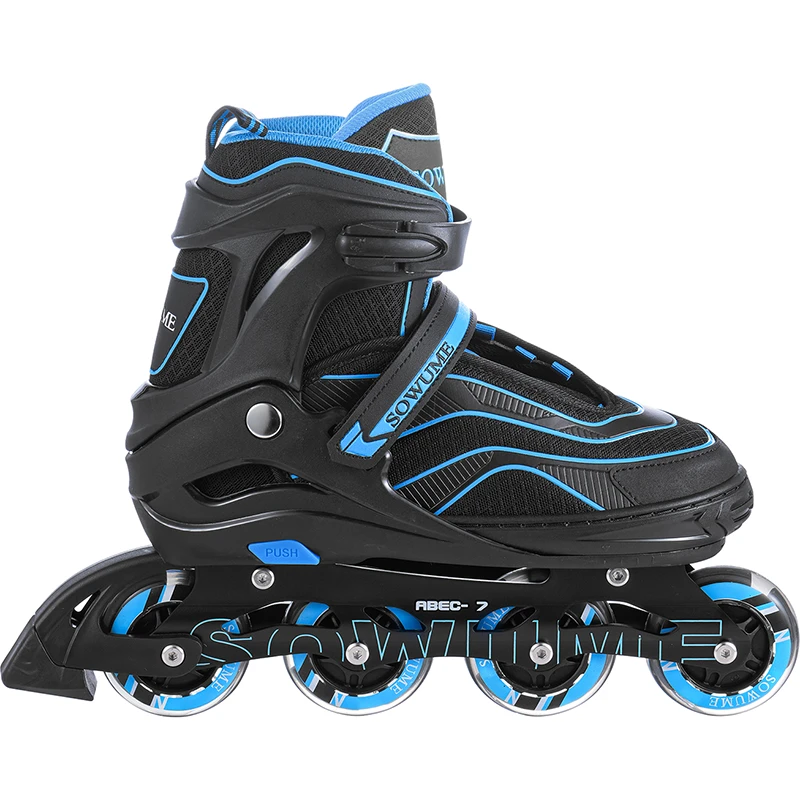
First, let’s break down what makes Riveted inline skates different from, say, off-the-shelf budget models. Most entry-level skates use a rigid, molded boot that doesn’t give much, but Riveted was built around versatility—especially for skaters who don’t fit the “average” foot width. I still remember a customer who came to me 8 years ago, a 17-year-old speed skater with wide, flat feet who’d gone through three pairs of generic skates in six months. He told me every pair either pinched his arch so bad he couldn’t finish a practice or left his heel so loose he felt like he was gliding around inside them. He ended up with a pair of our mid-tier Riveted skates, and today he’s a regular on our team, racing half marathons on skates. The key here is that Riveted’s core design is built to adapt, not lock you into a single fit.
Let’s start with the most accessible adjustments: the lacing and closure systems. A lot of skates—especially high-end performance models—use a single ratchet buckle or laces that pull evenly across the midfoot, but Riveted skates come with a three-closure system: a top micro-adjustable buckle, a mid-foot strap with a Velcro tab, and traditional speed laces up the forefoot. This isn’t a marketing gimmick. For skaters with narrow feet, you can cinch the mid-foot strap tight and pull the laces snug at the eyelets closest to your toes, which eliminates that heel slip. For wide feet, you loosen the mid-foot strap and the lower laces, then adjust the top buckle to lock the ankle without cramping the midfoot. I’ve had casual skaters tell me they thought their skates were “too narrow” until they adjusted the laces and straps, not just the overall size. That said, this only works within a certain range—if your foot is more than a half-size wider than the largest fit our boots come in, lace adjustments won’t be enough.
Next, the insoles, or footbeds, that come standard with Riveted skates. Most mass-produced skates use thin, generic insoles that crumble after a few months, but Riveted’s stock insoles are molded with a moderate arch and a width that fits most standard to medium-wide feet. But here’s the thing: we design our skates to work with after-market insoles. If you have wide feet, swapping the stock insole for a wide-width, high-volume insole (like the kind made for custom orthotics) creates more space in the midfoot and forefoot without altering the boot itself. I recommend this to skaters with bunions or flat feet who need extra support—adding a 3mm thick wide insole can add enough room to avoid pinching, and it also improves shock absorption, which is a win for long days on the pavement. For narrow feet, you can use a thin, low-volume insole, or even add a heel insert, to prevent that heel slip we talked about. Just make sure the insole you choose fits the exact shape of your boot—Riveted’s boots are molded to fit a specific footbed length, so a 10-inch insole will work for a size 10 skate, but a 10.5-inch one will hang over the edge and cause discomfort.
Now, the part that surprises a lot of skaters: the boots’ upper and lower cuffs. Riveted skates have a split cuff design, meaning the cuff (the part that wraps around your ankle) is attached to the boot with small rivets, not permanently molded. This design is a throwback to mid-range skates of the 90s, but we kept it because it lets you adjust the “gap” between the boot and the cuff. For skaters with wide ankles or wider midfeet, you can loosen the rivets that attach the cuff to the boot, and widen the gap slightly. That doesn’t mean stretching the boot itself, but it gives you a little extra space around the ankle without compressing the cuff’s support. For people with narrow ankles, you can tighten the rivets to pull the cuff closer to the boot, which eliminates any wobble when you lean into corners. A word of caution here: if you’re not comfortable working with small tools, don’t do this yourself. Even a small mistake tightening a rivet can crack the cuff or warp the boot’s shape. That’s why we always tell customers who want to adjust the cuff to bring their skates to a professional skate shop—we work with a network of certified technicians who do this every day, and it only takes 10 or 15 minutes.
But here’s where we have to be honest: there’s a limit to how much you can adjust Riveted skates, and that’s the overall boot width. Riveted’s boots are made in three standard width profiles: narrow, medium, and wide. If your foot is more than a full size wider than our wide profile, even all the adjustments we’ve talked about won’t fix the pinch. In that case, we can special-order a custom-molded boot insert for your Riveted skate, which is a process where a technician forms a thin, flexible shell that fits the exact shape of your foot. This isn’t cheap, and it takes a couple of weeks, but it’s the same process we use for our team skaters who have unusual foot shapes. Last year, a competitive speed skater from Portland came to us with a foot that was 4 inches wide—way wider than our standard wide profile. We custom-molded a insert for his skates, and he ended up breaking a personal record at a regional race. That’s the difference between just adjusting a skate and making it fit your foot perfectly.
I hear a lot of skaters say “I’ve just gotten used to my skates feeling uncomfortable,” and that’s the part that makes me want to share this. Your skates shouldn’t hurt. The right fit turns a casual roll around the neighborhood into a fun workout, and it prevents injuries like blisters or arch pain that can keep you off the pavement for weeks. When you’re adjusting Riveted skates, start with the basics: laces, straps, and insoles. If that doesn’t work, talk to a technician about cuff adjustments, and only go for custom molds if all other options are off the table.

As someone who’s been supplying Riveted skates for years, I also know that every skater’s needs are different. If you’re not sure what adjustments are right for your feet, don’t guess—reach out. We work with skaters across the country, and we can help you figure out the best way to adjust your Riveted skates, or even help you pick the right width profile to start with. Whether you’re a weekend cruiser who wants to roll comfortably to work, a speed racer looking to shave seconds off your time, or a parent shopping for your kid’s first pair of skates, fit matters. Riveted inline skates are built to adapt to you, not the other way around.
Soft-boot Inline Skates If you have questions about adjusting your Riveted inline skates, or you’re looking to purchase a pair and want to learn more about fit options, we’re here to help. Connect with our team to discuss your needs and find the perfect solution for you.
- Inline Skate Fit and Performance: A Guide for Recreational and Competitive Skaters (2022) – International Inline Skating Federation
- Footwear Adjustments for Individual Foot Width Variations (2021) – Journal of Sports and Fitness Equipment
- Riveted Skate Design: Balance and Versatility in Modern Inline Skates (2019) – Industry Skate Technology Review
Yongkang Jinsibo Industry & Trade Co., Ltd.
We are one of the most professional riveted inline skates manufacturers and suppliers in China, also support customized service. With abundant experience, we warmly welcome you to wholesale bulk high quality riveted inline skates in stock here from our factory. Contact us for pricelist.
Address: No.36, Lin’keng Chenlu Mountain Road, Gushan Town, Yongkang City
E-mail: jinsibo2026@126.com
WebSite: https://www.cnjinsibo.com/
