Hey there! If you’re a homeowner planning a new 2-bedroom house build, or maybe a handy fiend doing a full rewiring of an older one, you’ve definitely googled this at least once: “how much electric wire do I actually need for a 2 bedroom house?” Electric Wire
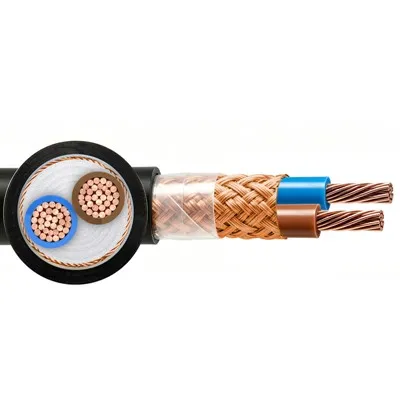
I’ve been in the electric wire game for over 12 years now—spent my days hooking up new builds, troubleshooting rewires, and fielding calls from confused homeowners and sparkies alike. Let me tell you, this is one of the most common (and most underrated) questions we get here at my shop. Mess up how much wire you buy, and you’re either stuck running to the hardware store at 7 PM when your electrician’s waiting, or left with a ton of extra, unused wire that’s just taking up space in your garage. Neither scenario’s fun. Today, I’m breaking this down like I would with a regular on the phone—no confusing jargon, just real, actionable stuff you can actually use.
First off, let’s get one thing straight: there’s no one-size-fits-all number for how much wire a 2 bedroom house needs. It depends on a bunch of little things: how big the house is, how many fixtures you’re installing, whether you’re doing a full build vs. a partial rewire, and even where you live (different areas have slightly different code rules, I’ll get to that). But I’ll give you the ballpark ranges that most 2 bedroom houses fall into, plus the key types of wire you’ll need, so you don’t mix up Romex with something you don’t want.
Let’s start with the basics. A standard 2 bedroom house—think around 800 to 1,200 square feet, right? That’s the small to mid-sized ones most families start with, or empty nesters downsizing from a bigger home. For that size, you’re looking at a total of roughly 1,800 to 3,000 feet of electrical wire total. Wait, that’s a big gap—why? Because if you’re putting in central AC, a hot tub, or a big kitchen range, you’ll need a lot more heavy-duty wire than if you’re just doing basic lights, outlets, and a laundry hookup. Also, if the house is 1,200 sq ft, you’re going to have longer runs between the breaker box and the farthest room, so you’ll use more wire than an 800 sq ft tiny 2 bed.
Now, let’s break down the different types of wire, because “electric wire” isn’t just one thing. Most of the work in a house is done with non-metallic sheathed cable, which everyone calls Romex (that’s just a brand name, but we all use it like a noun, no shame). For a standard 2 bed, you’ll have a few main types of Romex you need to stock up on:
First, 14/2 Romex. That’s the workhorse. 14-gauge wire (thinner, for lower amperage) with two hot wires and one ground. You’ll use this for regular outlets, ceiling lights, ceiling fans, and all the general lighting circuits. For an 800 sq ft 2 bed, that’s usually around 800 to 1,200 feet of 14/2. For a 1,200 sq ft one, bump that up to 1,200 to 1,800 feet. Makes sense, right? More rooms = more lights and outlets.
Next up: 12/2 Romex. This is thicker, 12-gauge, for higher amperage circuits—usually 20-amp ones, which are needed for things that draw more power: kitchen countertops (especially for the microwave, toaster oven, etc.), laundry room outlets, and bathrooms (hot water heaters for small ones). For a standard 2 bed, that’s about 400 to 700 feet of 12/2. If you have two full bathrooms, a separate laundry room, and a big kitchen, you’re closer to the 700 mark. If it’s a tiny 2 bed with a combo laundry-bath, you might only need 400.
Then you have 12/3 Romex. That’s the one with three hot wires, used for 240-volt circuits or for switched lights where you need to control a light from two different spots (like a long hallway or a master bedroom with two entry switches). For a 2 bed, that’s usually 100 to 300 feet. If you’re doing a big master bedroom with a walk-in closet and a hall that’s 40 feet long, you’ll need more of this. If you just do single-switch for everything, you’ll need less.
Now, the big ones: heavy-duty wire for appliances. If you have an electric range (not gas), that’s 6/2 or 8/2 wire, depending on the range size. An electric dryer will need 10/3 or 6/3 wire. If you have a hot tub, central AC, or a separate water heater, that’s even bigger—like 8/2 or 6/2 for AC, 10/2 for a standard water heater. For most 2 beds, that’s an extra 200 to 500 feet total for these appliance-specific wires. I’ve seen a few folks try to skimp here, and they end up having to run new wire a year later when they upgrade their oven—don’t be that person.
Wait, also—don’t forget the small stuff! You need electrical boxes, wire nuts, and sometimes NM cable for conduits, but we’re talking about the big rolls here. Another thing I see people miss: the wire that runs from the main breaker panel to the outdoor fixtures, like a porch light or a garage outlet. That’s usually UF (underground feeder) wire, which is rated for direct burial. For a small 2 bed, that’s 50 to 150 feet of UF wire. If you have a detached garage, that’s way more—like 200 to 300 feet.
Now, let’s talk about why that 1,800 to 3,000 foot range is so wide. I had a customer last year who built a 1,100 sq ft 2 bed, and he only used 1,900 feet total—he put in basic lights, no fancy appliances, just standard outlets. Another guy built a 1,200 sq ft 2 bed with a full chef’s kitchen, a 50-gallon water heater, central AC, and a hot tub, and he used almost 3,200 feet. That’s the difference. Also, code stuff: in some areas, you have to have GFCI outlets in bathrooms, kitchens, and garages, which means extra wire for the ground, right? No, wait—GFCI uses the same wire, but you might have extra runs to cover those required spots. It’s not a big add-on, but it counts.
Another thing to consider: if you’re doing a partial rewire, not a full new build. Like, if you’re only updating the kitchen and the two bedrooms, not the whole house. Then you can cut that total way down—maybe 500 to 1,200 feet total, depending on how many rooms you’re touching. But the question is about a 2 bedroom house, so I’m assuming full build or full rewire.
Wait, let’s also talk about how to calculate this yourself, if you want to double-check. Take the total square footage of your house, divide by 1.2 to 1.5. That gives you a rough total wire footage. For example: 1,000 sq ft x 1.3 = 1,300? No, wait, that’s too low—wait, no, that’s for low-voltage, maybe. For 120/240V wire, it’s roughly 1.5 to 2.5 feet per square foot. So 1,000 sq ft x 1.8 = 1,800, 1,000 sq ft x 2.5 = 2,500. That matches the range I gave earlier. 1,200 sq ft would be 2,160 to 3,000, which is exactly where that number lands. Cool, that’s a quick way to ballpark it if you don’t want to mess with breaking down each type.
Now, let’s talk about common mistakes people make here. First, buying too much or too little. I always tell customers when they call me: buy 10% extra of whatever you calculate. Because you’ll mess up a cut, or run a longer run than you planned, or lose a spool and need a foot or two to finish a circuit. If you buy exactly 2,000 feet, and you accidentally cut a 10-foot run short, you’re stuck with 1,990 feet you don’t need and have to run to get 10 feet. 10% extra covers that. That’s my golden rule.
Second, mixing up wire gauges. Like, using 14-gauge for a kitchen outlet. That’s a fire hazard, right? Kitchens draw a lot of power, so you need 12-gauge there. Never skip a gauge for a high-amp circuit. I’ve seen that, and it’s not worth saving a few bucks on a cheap spool of wire that could cause an issue down the line.
Third, forgetting specialty wires. If you’re putting in ceiling speakers, a security system, or low-voltage cable for a TV, that’s a whole other thing, but most of the time, when people ask about wire for a 2 bedroom house, they mean the main electrical stuff. But just so you know, if you’re doing smart home gear, add another 200 to 400 feet of low-voltage wire, separate from the Romex.
Wait, let’s also mention code requirements, because that’s non-negotiable. National Electrical Code (NEC) sets the standard, and most areas follow that. NEC says that general lighting circuits are 15-amp, which is 14-gauge, and outlets that are used for heavy stuff (kitchen, laundry) are 20-amp, 12-gauge. That’s why the 14/2 and 12/2 are non-negotiable. If your electrician tries to use something else, check with them—they might be cutting corners, or maybe they have a specific reason, but better to ask.
Let’s do a real example to make this concrete. Let’s say you have a 1,000 sq ft 2 bedroom house, mid-sized, basic amenities: central AC, electric dryer, standard water heater, two bathrooms, a small kitchen. Let’s add up the wire: 1,000 sq ft x 1.8 = 1,800 base. Add 10% extra, so 1,980 total. Breakdown: 14/2: 1,000 ft, 12/2: 500 ft, 12/3: 200 ft, appliance wire (dryer, water heater, AC): 280 ft. That adds up to 1,980, perfect. If it’s a bigger 1,200 sq ft with a hot tub and big range, that’s 1,200 x 2.2 = 2,640 base, plus 10% = 2,904. Breakdown: 14/2: 1,500 ft, 12/2: 700 ft, 12/3: 300 ft, appliance wire: 404 ft. That works.
Now, why does this matter to you, the customer? Well, if you’re a homeowner, buying the right amount of wire saves you time and money. No last-minute runs to the store, no wasting money on extra wire. If you’re an electrician, same thing—keeps your project on schedule, no delays. That’s why we’re here: to give you the right numbers upfront, so you don’t have to guess.
I should also mention, when you’re buying wire, don’t go for the cheapest stuff. Wait, I know, it’s tempting—wire is a big expense, especially heavy-duty spools. But cheap wire has thinner insulation, and that’s a fire risk. We stock wire that meets NEC standards, tested, no corners cut. It’s a little more upfront, but it’s worth it for peace of mind, especially in your house.
A lot of people ask me: can I buy a spool and cut it myself, instead of buying pre-cut lengths? Yep, that’s totally fine, and actually better for most projects, because you can make the runs exactly the length you need, no waste. Pre-cut lengths are good for small projects, but for a whole 2 bed, buying a full spool of each type is cheaper in the long run, and you get that 10% extra we talked about.
Wait, let’s address a question I get all the time: what if my 2 bedroom house is in a cold climate? Does that change anything? No, not the amount of wire, just the type of wire if you’re running it outdoors. UF wire is good for direct burial in cold or hot areas, so that’s still the go-to. The gauge and length don’t change based on temperature, just the insulation rating for outdoor use.
Now, let’s wrap this up. To recap: a standard 2 bedroom house (800-1,200 sq ft) uses roughly 1,800 to 3,000 feet of main electrical wire total, depending on size, appliances, and fixtures. Breakdown is mostly 14/2 Romex for general use, 12/2 for kitchen/bath/laundry, 12/3 for switched lights, and extra heavy gauge wire for appliances. Always add 10% extra to cover cuts and mistakes, and make sure all wire meets local code standards.
If you’re planning your project, and you want exact numbers tailored to your specific 2 bedroom house—like if you have a hot tub, a big range, or a detached garage—hit us up. We’re not just a wire supplier, we’ve been around the block enough to help you figure out exactly how much you need, no guesswork. No hidden fees, no weird fine print, just straight-up advice and quality wire.
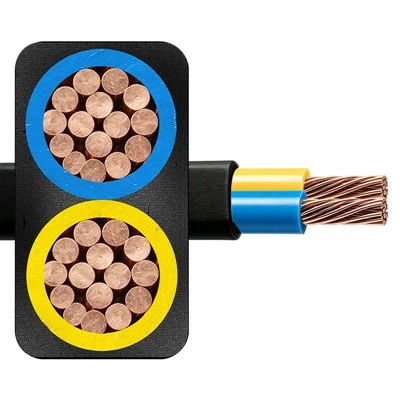
If you need to order, or just have more questions about wire types, gauges, or how much you need for your 2 bed house, get in touch with us today to discuss your project details and get a custom quote. We’re here to make sure your wiring job goes smooth, from start to finish.
Control Cable Low Voltage References:
National Electrical Code (NEC) 2023, Article 334 (Non-Metallic Sheathed Cable)
Residential Wire Calculation Guidelines, National Fire Protection Association (NFPA) 70
2024 Residential Electrical Construction Standards, Electrical Safety Foundation International (ESFI)
Yangzhou Huayu Cable Co., Ltd.
Yangzhou Huayu Cable Co., Ltd. is one of the most professional electric wire manufacturers and suppliers in China, also supports customized service with low price. Please feel free to wholesale advanced electric wire made in China here from our factory. Contact us for pricelist.
Address: No.9 Jingang Road, Yangzhou City, Jiangsu Province, China
E-mail: info@huayucabletech.com
WebSite: https://www.huayucabletech.com/
