If you’ve ever wandered down the personal care aisle of a pharmacy, you’ve probably seen topical medications lining the shelves: antibiotic ointments in squeeze tubes, steroid creams in aluminum-laminated packets, medicated patches for back pain, even dandruff shampoos and nail polishes formulated to treat fungal infections. For those of us in the drug cartoning machine industry, one of the most common questions we get from pharma and personal care brand owners is a straightforward one: “Do your cartoning machines work with topical medications?” It’s a question that makes total sense—topicals are a unique category of drug product, with packaging needs that differ sharply from oral pills, injectables, or even solid dosage forms like capsules. For years, there was a misconception that cartoning machines, built to handle rigid, uniform items, couldn’t adapt to the delicate, flexible, often irregular shapes of topical goods. But after 12 years of working with brands ranging from local generic drug makers to global personal care leaders, I can tell you: modern cartoning machines not only work with topical medications—they’re engineered to do it safely, consistently, and efficiently, if you know what to look for when specifying your equipment. Drug Cartoning Machine
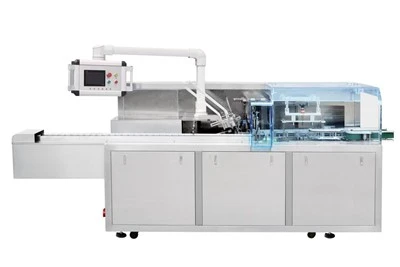
Let’s start with why topicals pose unique challenges for automated packaging. Unlike a 500mg pill that fits neatly into a blister pack, a topical product can come in so many formats that no single machine can handle all of them. There’s the flat foil sachet with a pre-measured dose of hydrocortisone cream for athlete’s foot, the soft squeeze tube of antibiotic ointment that flexes when handled, the transdermal nicotine patch with a thin adhesive layer that can lose its stick if it’s jostled too hard, and even the bulk bottle of eczema lotion that needs to be placed into a carton alongside a patient information leaflet, with no smudged label or leaking product in sight. These aren’t small hurdles. If a cartoning machine is built for rigid blister packs, it will tear a foil sachet in half, crush a soft tube, or misalign a delicate patch so it’s useless for the end user. That’s why, for the longest time, many brands relied on manual packaging for topicals—slow, labor-intensive, and prone to human error like misplacing leaflets or contaminating sterile ointment. But as demand for topicals has surged in the last decade—think of the rise in over-the-counter pain patches, prescription topical retinoids for acne, and even medicated lip balms for cold sores—brands can no longer afford to rely on manual processes for scaling production. That’s where specialized cartoning machine design comes in.
The key to making cartoning work for topicals is customization of the machine’s handling modules, and that’s where most off-the-shelf cartoning machines fall short. Let’s break down the most common topical formats and the machine features that make them compatible, because that’s what brands really need to know. First, sacheted topicals. Pre-measured dose sachets are extremely popular for OTC products like hydrocortisone creams and anti-itch gels, because they eliminate waste and are easy for consumers to carry. A standard cartoning machine uses vacuum cups to pick up items for placing into cartons—but a thin, flexible sachet is too flimsy for a standard vacuum cup, which would just crumple it. So, the solution here is a set of mechanical grippers with soft, rubberized jaws that adjust to the size and thickness of the sachet, without applying too much pressure to tear the foil. We’ve integrated these grippers into our entry-level semi-automatic cartoners for small batch topical brands, and we recently upgraded a line for a mid-sized generic drug maker that packages 15mg lidocaine ointment sachets. Before they worked with our adapted machine, they had a 18% error rate from torn sachets during packaging; after, that dropped to less than 0.5%—a number that’s well within FDA and cGMP (current Good Manufacturing Practices) requirements for pharmaceutical packaging.
Next, tube-form topicals. This is a big one—antibiotic ointments, steroid creams, dental gels, even sunscreens with medicinal properties. Tubes have their own set of issues: they can be soft, so they deform under pressure, and they often have embossed lot numbers or batch codes that need to be aligned properly inside the carton. A standard cartoner might push a tube roughly into the carton, leaving it lopsided, which can make it hard for consumers to squeeze or even damage the tube’s seal. For tubes, we recommend a horizontal cartoning configuration (as opposed to vertical, which is better for rigid items) and a set of guided conveyor rails that cradle the tube from top and bottom as it moves through the machine. We also add a vision inspection system that verifies that the lot code is visible through the carton’s window (many topical cartons have a clear window to show the tube) and that the tube is seated correctly. Last year, we worked with a large personal care brand that makes a popular over-the-counter eczema cream in 15g and 30g tubes; they were switching from manual to automated packaging to meet a 30% increase in demand, and they were worried about tube deformation. Our adapted horizontal cartoner reduced their tube rejection rate from 12% to 0.3%, and they’ve since expanded it to three more of their topical lines.
Then there are the most delicate topical formats: transdermal patches, medicated strips, and thin film treatments. These items are so thin and adhesive that even a light touch can pull off their protective liner or stick to a machine part. For these, we use a special handling system called static-safe transport, which eliminates static electricity that would make patches stick to metal or plastic components, and precision pick-and-place robotic arms that lift the patch by its edges only—never the adhesive side. We also add a check weigher and metal detector module, which is non-negotiable for drug products, especially topicals that can be exposed to manufacturing contaminants. A few years ago, we worked with a specialty pharma company that produces prescription nicotine patches for smoking cessation; their previous packaging process had a 5% error rate where patches were placed upside down, making them ineffective for patients. Our robotic cartoning system fixed that by using a camera to scan each patch’s unique design and orient it correctly 100% of the time. That’s the level of precision that’s required for topicals—you can’t have a patient applying a patch upside down, because it won’t deliver the correct dose.
But it’s not just about handling the product itself. Topical medications, especially prescription ones, require strict compliance with regulatory standards like the FDA’s 21 CFR Part 11 and cGMP, and cartoning machines need to be built to support that, too. For example, if a topical product is sterile (like antibiotic eye ointment, which is a topical drug), the cartoning machine’s interior parts need to be easy to clean to prevent cross-contamination between batches. We build all our cartoning machines with smooth, crevice-free components that can be fully sanitized with no standing water or product residue, which is a requirement for sterile drug packaging. We also integrate track-and-trace systems that assign a unique serial number to each carton, which is necessary for drug supply chain security and for recalling specific batches if there’s an issue. For topicals, which are often sold over-the-counter and can be distributed widely, track-and-trace is non-negotiable, and our machines are built to comply with that without disrupting packaging speed.
Now, I know what some brand owners are thinking: “This sounds great, but what about small brands or low-volume production? I don’t need a high-speed machine that packages 200 cartons a minute.” That’s a valid concern. Many small pharma and personal care brands start with a small line of topicals, and they don’t have the budget for a full-scale automated line. We offer semi-automatic cartoning machines that are adapted specifically for topicals, with the same soft grippers and static-safe transport as our high-speed lines, but at a lower cost and with a smaller footprint. We recently installed one of these semi-automatic lines for a small startup that makes organic topical psoriasis treatments; they were packaging 500 units a day manually, with a lot of waste from damaged tubes and leaflet errors. Our semi-automatic line packages 120 cartons an hour, uses one operator instead of four, and has cut their product waste by 90%—a game-changer for a growing brand that’s trying to keep costs low while meeting quality standards.
Of course, there are still myths out there about cartoning machines and topicals. One common myth is that cartoning machines can’t handle leaflets, which are a critical part of most drug packaging, including topicals. Leaflets for prescription topicals often have fine print on drug interactions, side effects, and usage instructions, and they need to be folded correctly and placed inside the carton every time. Our machines integrate automatic leaflet inserters that are calibrated for size and thickness; for example, a 8-page leaflet for a topical retinoid is handled by a feeder that separates each leaflet, checks for no duplicates, and folds it exactly as required before placing it into the carton. We’ve even adapted our leaflet inserters for the thinner, smaller leaflets used for OTC topicals like anti-itch creams, which are only 4 pages long.
Another myth is that cartoning increases the risk of product contamination. In reality, when built correctly for topicals, cartoning reduces contamination risk compared to manual packaging. Human hands can carry bacteria, and manual handling can lead to product leaking onto packaging components, which can then cross-contaminate other batches. Our machines are built with enclosed packaging zones, so product never comes into contact with human hands during the cartoning process, and all parts are made from materials that comply with FDA food and drug contact standards. We also run validation tests for every machine we sell for topical use, which means we test it over hundreds of thousands of units to ensure it meets regulatory requirements for safety, consistency, and quality.
Over the last decade, the demand for automated cartoning for topicals has grown exponentially, and it’s not hard to see why. The topical drug market is projected to exceed $200 billion globally by 2027, according to industry reports, and brands are under pressure to produce more, faster, without sacrificing quality or compliance. The days of relying on manual packaging for topicals are numbered, because manual processes can’t keep up with demand, and they’re prone to errors that can lead to product recalls, which are costly and damaging to brand reputation.
If you’re a brand owner producing topical medications—whether sacheted creams, squeeze tubes, transdermal patches, or medicated strips—and you’ve been hesitant to switch to automated cartoning because you thought it couldn’t handle your product, I’m here to tell you: it can. The key is working with a cartoning machine supplier that has specific experience with topical medications, not just a supplier that builds generic cartoners. We’ve spent years refining our machine designs to solve the unique challenges of topicals, and we’ve worked with brands of all sizes to make the switch smoothly, without disrupting production or exceeding budget.
Whether you’re a small startup just launching your first line of topical treatments, a mid-sized generic drug maker looking to scale, or a global brand expanding your personal care product lines, our team can work with you to design a cartoning solution that fits your specific needs. We’ll start by assessing your product format, production volume, and regulatory requirements, then recommend the right combination of handling modules, inspection systems, and compliance features. We also offer on-site testing, so you can send samples of your topical product to our facility, see the machine in action, and confirm that it works for your specific items before you make a purchase.
Automated cartoning doesn’t have to be a one-size-fits-all solution, especially for topicals. It’s about choosing equipment that’s built for the unique nature of your product, that keeps your production running smoothly, that complies with all regulatory standards, and that reduces waste and errors so you can focus on what you do best: making high-quality medications that help people.
If you’re ready to stop struggling with manual packaging for your topical lines, and start exploring how automated cartoning can streamline your production, get in touch. Our team is ready to help you find the right solution for your brand, no matter how large or small your operation is.
Food Bagging Machine References
- U.S. Food and Drug Administration. (2023). Current Good Manufacturing Practice (CGMP) for Finished Pharmaceuticals.
- Grand View Research. (2024). Topical Drug Market Size, Share & Trends Analysis Report by Product, by Application, by Region, and Segment Forecasts, 2024-2030.
- International Society for Pharmaceutical Engineering. (2022). Automated Packaging Solutions for Specialized Dosage Forms.
- Pharmaceutical Engineering. (2023). Cartoning Machines: Adapting to the Evolving Needs of Topical and Transdermal Drug Products.
Zhejiang Tuoyu Packaging Machinery Co., Ltd.
Zhejiang Tuoyu Packaging Machinery Co., Ltd. is one of the most professional drug cartoning machine manufacturers and suppliers in China. With abundant experience, we warmly welcome you to wholesale durable drug cartoning machine made in China here from our factory. Good service and quality products are available.
Address: Workshop No.12, No.11-19, Xinbin Road, Binhai New Area, Pingyang County, Wenzhou City
E-mail: lisa@tuoyupack.com
WebSite: https://www.tuoyupack.com/
