If you’ve ever stood in a manufacturing plant, a mining yard, or even a grocery store stock room, you’ve relied on conveyor belts without a second thought. But behind every smooth, reliable conveyor is a properly sized drive motor—one that doesn’t underperform when you need it most, or waste money on overcapacity you’ll never use. As a drive motor supplier who’s worked with hundreds of small shop managers and large operations over the last 12 years, I can tell you that sizing a motor for a conveyor isn’t just a math problem; it’s a balance of real-world conditions, hidden variables, and long-term cost savings. Too many operators either cut corners here, leading to motor burnout, unplanned downtime, and lost production, or buy a motor that’s bigger than needed, throwing thousands of dollars away on extra power they’ll never use. Drive Motor
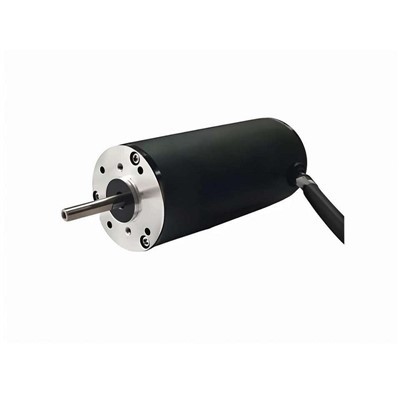
Let’s start with the basics you can’t skip: the core physics of conveyor motor sizing. All conveyor motors need to do two key things: overcome the force required to move the belt and its load, and handle the inertia of getting the system moving from a standstill. Most people start with calculating the required power, and that’s where the process gets messy if you don’t account for every small detail. Here’s the step-by-step breakdown I walk every customer through, no shortcuts.
First, you need to calculate the total load your conveyor will move. This isn’t just the weight of the products; it’s the combined weight of the belt itself, the idlers (the rollers that support the belt), and the maximum load you’ll carry at any time. For example, if you’re moving 50-pound boxes, a 20-foot belt, and 15 idlers along the length, you can’t guess the total weight—you have to add all three components. I’ve seen a customer size a motor for 500 pounds of product only to forget the belt and idlers added another 300 pounds, leading to a motor that stalled mid-shift after two months of use.
Next, account for friction. The friction between the belt and idlers, plus any friction at the pulleys, is what’s holding your system back. This is the number most new operators skip, but it’s make-or-break. Friction depends on factors like the type of belt material (a rubber belt has more friction than a synthetic one, for example), how well the idlers are lubricated, and even the angle of the conveyor if it’s sloped. For horizontal conveyors, typical friction coefficients range from 0.02 to 0.05, but for inclined conveyors, that number jumps because you’re also working against gravity. If your conveyor rises 1 foot for every 10 feet of length, you need to add the gravitational force pulling the load back down the slope to your total required force. If you miss that, your motor will run at full capacity just to hold the load steady, leading to premature wear.
Now, convert that total force into power. Power, measured in watts or horsepower, is what drives the motor. The formula for conveyor power is pretty straightforward, but let’s make it tangible: Power (in horsepower) = (Total Force × Conveyor Speed) / (Efficiency Factor). Wait, what’s the efficiency factor? That’s the percentage of power the motor actually delivers to the conveyor, not what it draws from the grid. Motors aren’t 100% efficient—small industrial motors run at 85-90% efficiency, while high-efficiency models hit 95%. If you ignore efficiency, you’ll size your motor too small by 5-10%, which might not sound like much, but for a 10-horsepower motor, that’s a whole extra horsepower you’re missing.
But here’s the part no standard formula tells you: start-up inertia. A conveyor sitting still has a lot of stored inertia—all that mass of belt, idlers, and load has to get moving quickly. If your motor only has enough power to move the conveyor once it’s at full speed, it will struggle to start, leading to overheating and frequent trips of the breaker. For most conveyors, you need to add a 15-25% buffer to your calculated power to handle start-up inertia. I once worked with a construction company that sized a motor perfectly for steady-state load but forgot the sand and gravel belt carried 2,000 pounds at start-up. Within three months, the motor burned out because it had to start from a full load every time the conveyor stopped for a quick adjustment. The fix was simple: a 20% larger motor that could handle the start-up inertia, and their downtime dropped by 90% immediately.
Now, let’s talk about the conveyor’s operating conditions, because size isn’t one-size-fits-all. A conveyor in a cold mine is way different from one in a 70-degree food processing plant. Cold temperatures make motor lubricants thicker, increasing friction, so you need a larger motor to compensate. High heat? Motor efficiency drops, so again, you need a buffer. Dusty environments? Dust can build up on the motor’s cooling fins, leading to overheating, so sizing for a 10-15% extra capacity isn’t just a suggestion—it’s a necessity to prevent burnout.
Another big factor: your conveyor’s duty cycle. Are you running it 24/7 for a mining operation, or 8 hours a day for a retail distribution center? A motor for continuous use needs to have a higher service factor than one that only runs a few hours a day. The service factor is a rating on motors that tells you how much over their rated power they can run safely for extended periods. For continuous duty (24/7), look for a motor with a 1.15 service factor or higher. For intermittent use, a 1.0 service factor might be enough, but I still recommend a 5% buffer because unexpected stops and starts add stress.
Wait, let’s clear up a common myth: higher horsepower isn’t always better. I had a customer a few years back who bought a 20-horsepower motor for a small 50-foot package conveyor, thinking more power meant more reliability. It turned out their steady-state load only needed 5 horsepower. The bigger motor cost them $1,200 more upfront, and it was less efficient at low load levels, so their monthly electricity bill was $80 higher than it needed to be. That’s thousands of dollars wasted over the motor’s lifespan. Sizing is about matching, not overshooting.
So what’s the right process to get it right every time? Let’s outline the steps I give all my customers when they reach out:
- Document all components of your total load: belt weight, idler weight, pulley weight, and maximum load capacity. Don’t estimate—weigh a sample of each component or check the manufacturer’s specs for accuracy.
- Measure your conveyor’s speed: this is how fast the belt moves, usually in feet per minute or meters per second.
- Calculate friction and gravitational force: for horizontal conveyors, use 0.03 as a baseline friction coefficient; for inclined conveyors, add the force of gravity pulling the load down the slope (force = mass × g × sine of the slope angle).
- Compute steady-state power: use the formula, and don’t forget efficiency (use 90% for standard motors, 95% for high-efficiency models).
- Add a buffer for start-up inertia and environmental conditions: 15-25% for continuous use in harsh environments, 10-15% for mild, intermittent use.
- Double-check your duty cycle: if you’re running 24/7, prioritize a motor with a high service factor to avoid overheating.
Now, let’s add a few real-world examples to make this concrete. Take a horizontal conveyor moving packaged groceries in a grocery store stock room: it’s 30 feet long, uses a 1/8-inch rubber belt, has 10 idlers, moves at 100 feet per minute, and carries a maximum load of 1,000 pounds. The total load is: belt (50 pounds) + idlers (20 pounds) + load (1,000 pounds) = 1,070 pounds. Friction is 0.03, so total force is 1,070 × 0.03 = 32.1 pounds. Steady-state power is (32.1 × 100 feet per minute) / 33,000 (the constant for horsepower) / 0.9 efficiency = ~0.11 horsepower. Add a 20% buffer for start-up, that’s 0.13 horsepower. But a standard fractional horsepower motor comes in 1/6 and 1/4 horsepower. The right pick here is 1/4 horsepower, because 1/6 is too small to handle even the slight start-up load from boxes sliding a bit on the belt. That’s a small example, but it shows how even low-power applications need that buffer.
Another example: a 100-foot inclined conveyor moving coal in a cold mining yard, rising 20 feet (20% slope). Total load: belt (2,000 pounds) + idlers (1,500 pounds) + coal (5,000 pounds) = 8,500 pounds. Friction is 0.04 for cold, lubricated idlers, plus gravitational force: 5,000 pounds × sine of the slope (0.2) = 1,000 pounds. Total force: (8,500 × 0.04) + 1,000 = 1,340 pounds. Speed is 150 feet per minute. Steady-state power: (1,340 × 150) / 33,000 / 0.85 (efficiency in a dusty mine, where cooling is reduced) = ~7.1 horsepower. Add a 25% buffer for start-up and cold conditions, that’s ~8.9 horsepower. The right motor here is 10 horsepower, with a 1.15 service factor for continuous 24/7 use. That’s the sweet spot—no overbuying, no underpowered risks.
Now, what if you’re retrofitting an existing conveyor? A lot of customers come to me looking to replace a worn-out motor on an old conveyor, and they often make the mistake of just buying the same size motor that was there before. But old belts stretch, idlers wear out, and the load you’re moving might have changed. I always recommend checking the actual load and friction on the old conveyor before replacing it—what worked 10 years ago might not work now. I had a metalworking shop that replaced a 5-horsepower motor without checking, only to find their new steel parts load was 30% heavier than the old aluminum parts. The old motor burned out a month later, and they ended up needing a 7.5-horsepower motor instead. That’s an easy mistake to avoid.
Also, don’t overlook motor type. Sizing the power is part of it, but the motor’s design matters too. For conveyors that need low-speed, high-torque (like heavy mining or material handling), a gearmotor might be a better fit than a standard induction motor, because it delivers consistent torque at low speeds without adding extra gearing. For smaller, faster conveyors in packaging, a standard NEMA motor is usually more than enough, as long as you size the power correctly. As a supplier, I can help you match the motor type to your conveyor’s needs, not just its size.
The biggest mistake I see every day is ignoring long-term costs. A $500 undersized motor might seem like a good deal upfront, but if it burns out every 6 months, that’s $2,000 in replacements and the cost of lost production. On the flip side, a $5,000 oversized motor might have a higher upfront cost, but if it runs efficiently and lasts 10 years, that’s a better investment. Sizing isn’t just about today—it’s about the next 5 or 10 years of use.
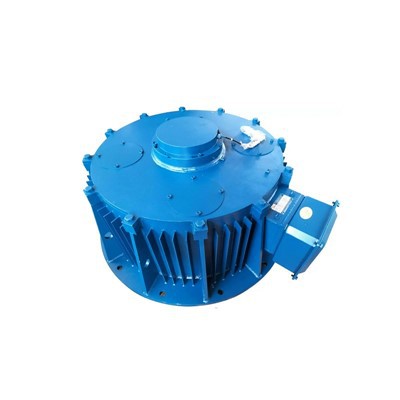
So, if you’re planning a new conveyor build, or replacing a motor on an existing one, don’t guess. A little time spent calculating load, speed, friction, and conditions will save you thousands in downtime and energy costs. As a drive motor supplier, I’ve helped hundreds of operations get this right, and I can help you too—whether you’re a small shop with a single conveyor or a large plant with a fleet. Let’s talk through your specific application, no jargon, no hard sells, just the right motor for your needs.
Brushless Motor References
- Electrical Construction & Maintenance. (2022). “Sizing Motors for Conveyor Systems: Key Factors to Consider.”
- Conveyor Equipment Manufacturers Association (CEMA). (2021). Belt Conveyor Design Manual, 7th Edition.
- National Electrical Manufacturers Association (NEMA). (2020). Standards for Rotating Electric Motors and Generators.
- Energy Star. (2023). “Motor Efficiency: Calculating Power Requirements for Industrial Applications.”
Zibo Auric Mechanical and Electrical Technology Co., Ltd.
Address: B419, High-tech Entrepreneurship Park, High-tech Zone, Zibo City
E-mail: cui@auricmotor.com
WebSite: https://www.auricmotor.com/
