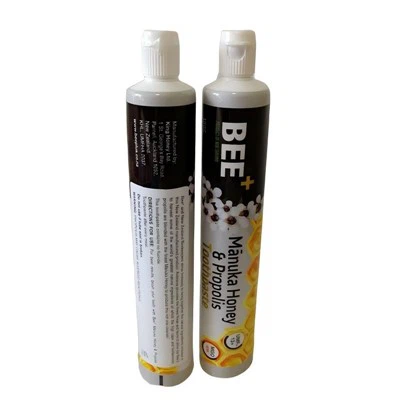
Cosmetic Tubes Hey there, fellow beauty brand owners, formulators, and anyone who’s dealt with that annoying, sticky mess of cosmetic tube leakage—we’ve all been there, right? You’re rushing to grab your morning moisturizer, squeeze the tube hard, and suddenly a glob of product squirts out the cap, all over your bathroom counter, your shirt, maybe even your brand new jeans. It’s not just a hassle for customers; if you’re a cosmetic tube supplier, we know leakage can tank your brand’s reputation fast. At our cosmetic tube company, we’ve worked with tons of clients over the years to fix this exact problem, and today I’m breaking down what actually causes tube leakage, plus practical, science-backed ways to stop it—no fancy jargon, just real stuff we’ve seen work. First, let’s cut to the chase: what makes cosmetic tubes leak in the first place? A lot of people blame “cheap tubes,” but honestly, it’s usually a mix of small, avoidable missteps with design, product compatibility, and even manufacturing. Let’s start with tube material—wait, no, let’s make it simple. If your tube is made of the wrong plastic for your product, that’s a big red flag. For example, if you’re selling a super watery toner or a lightweight serum, a thin LDPE (low-density polyethylene) tube might seem cost-effective, but that stuff’s flexible, and over time, the pressure from shaking a purse, storing it upside down, or even temperature changes can push product out through the seal. Thick, cream-based products? They might seem fine in a thin tube, but if the plastic isn’t resistant to oils or alcohols in your formula, the tube can swell or degrade just a little. That tiny degradation creates a gap where product seeps out. We had a client last year who made a popular body lotion—they were using super thin LDPE tubes to save a few cents per unit, but after 3 months on shelves, 12% of their inventory had leakage. Switched to a slightly thicker LLDPE (linear low-density polyethylene) tube with a layer of EVOH (ethylene vinyl alcohol) as a barrier, and that number dropped to less than 0.5%. The barrier layer stops product from seeping through the plastic walls, which is a game-changer for oilier formulas. Next up: the cap and seal—this is probably the most common culprit, and it’s something we see so many brands skip over for “sleek design.” A lot of tubes come with basic snap-on caps, but if the cap’s inner ring (the part that actually touches the tube’s neck) isn’t sized right, or it’s made of a soft material that compresses too much, it won’t create a tight, leak-proof seal. Or, if the seal ring on the tube’s neck itself has a tiny flaw—like a manufacturing misalignment, or even a smudge of product during filling—there’s a gap. Wait, filling process! That’s another big one. If your filler machine is over-squeezing the tube during filling, or not leaving enough “headspace” at the top (the empty space between the product and the cap), pressure builds up inside the tube. Think of a soda can—shake it, and the pressure makes it fizz out. Same thing here: if a tube is full to the brim, even a tight cap can’t hold that pressure, so product leaks out when the customer screws or snaps the cap on. We once had a mascara brand that was having constant leakage—turns out their filler was leaving only 0.1mm of headspace, way less than the recommended 0.5mm for squeeze tubes. Adjusted the headspace, and poof, most of the leakage stopped. Also, if you’re using a pump vs. a squeeze tube? Pumps are even trickier. If the dip tube isn’t inserted deep enough, or the pump’s gasket (the rubber ring that seals it to the tube) is missing or damaged, air gets in, and product gets pushed out. Now, let’s talk about product compatibility, which is a science thing but easy to test. For example, if you have a product with high alcohol content (like a toner or acne treatment), alcohol can break down the glue or the inner lining of a tube over time. Or, if your product has a pH level below 4 (super acidic, like some fruit-based serums), that can react with certain plastics, causing the tube’s walls to become porous. We recommend doing a simple compatibility test: take a sample of your product, put it in a test tube made of the same material you’re using, store it at room temp and 100°F (hot, like a car dashboard) for 4 weeks, then check for swelling, discoloration, or seepage. If it swells, you need a different tube material; if it seeps, add a barrier layer. Another thing that people sleep on: storage and shipping conditions. Even if your tubes are perfect, if they’re being stored in a warehouse that’s too hot, or stacked heavy on pallets, the pressure can cause leakage. For example, a tube stacked under 10 others for weeks might have the neck compressed, so the cap doesn’t seal right. Our team always tells clients to add a small, reinforced collar to the top of the tube—this adds extra rigidity, so stacking and transport don’t squish the neck. Now, let’s get to the actionable steps you can take right now, no huge changes needed if you don’t want them. First, audit your current tube specs. Grab a sample of your existing tube, measure its thickness, check the cap’s inner seal, and calculate the headspace you’re leaving. If your tube is thinner than 0.25mm (for squeeze tubes), bump it up to 0.3mm minimum—even a tiny increase makes a big difference in pressure resistance. For the cap, avoid cheap snap-on caps if you can—opt for screw caps with a rubber or TPE (thermoplastic elastomer) seal insert; that insert acts like a cushion, creating a tight seal every time. Second, tweak your filling process. If you’re over-filling, adjust your filler to leave at least 0.5mm of headspace for small tubes, 1mm for large ones (like 100ml body tubes). If you’re manually filling, use a small tool to leave a little gap at the top—no more squeezing until product comes out the top. Third, add a barrier layer if you’re working with tricky products. If your formula has oils, alcohol, or is acidic, a 5-layer tube (LDPE/EVOH/LDPE/TIE/LDPE, for example) is way more resistant than a 2-layer one. The EVOH layer is the key here—it stops moisture and product ingredients from passing through the plastic walls. We can even customize the barrier thickness based on your product: if you have a lightweight serum, a thin EVOH layer works; if it’s a heavy body oil, a thicker layer for extra protection. Fourth, test, test, test. Don’t wait for customers to complain—do your own in-house tests. We recommend the “drop test”: fill 10 tubes, cap them tight, drop them from 3 feet onto a hard surface (like a concrete floor), and check for leakage. Or the “temperature test”: leave 10 tubes in a hot place (like a closed car in summer) for 2 weeks, then check. If more than 1 of 10 leaks, something’s off. Last year, a skincare startup did the drop test and found that their 50ml serum tubes were leaking 2 out of 10 times—turned out their cap’s insert was misaligned during manufacturing. We adjusted the cap mold, and the drop test results went to 0 leaks. Now, let’s talk about common mistakes we see brands make that make leakage worse. One big one is using the same tube for every product. A tube that works for a gentle moisturizer might not work for a retinoid serum—retinoids are sensitive, and the formula can be harder on plastic. Another mistake is skipping the neck thread on the tube. Wait, some basic tubes have a smooth neck, not a threaded one—so when you screw the cap on, there’s no consistent thread to pull the cap tight. Threaded necks are a must for screw caps, as they create a uniform seal every time. Also, if you’re adding a tamper-evident band, make sure it doesn’t get in the way of the cap’s seal. Some brands cut corners on tamper bands, making them too thick, so when you put the cap on, the band pushes the cap out of alignment, leaving a gap that causes leakage. That’s a tiny detail, but it’s such a common fix. I know some of you are thinking, “This sounds like a lot of work, and I don’t want to spend more money on tubes.” But here’s the thing: leakage costs way more in the long run. A customer who gets a leaked tube is probably not going to buy from your brand again, and they’ll leave a bad review that hurts your sales. At our cosmetic tube company, we’ve worked with brands to fix leakage issues that cut their customer complaints by 80%—that’s way more than the small extra cost of a better tube or a process tweak. If you’re a brand dealing with recurring leakage, you don’t have to figure this out alone. Our team has helped hundreds of clients design custom tubes that fit their specific products, so you don’t have to guess. We can run compatibility tests, adjust tube thickness, tweak cap designs, and even help with filling process tips to cut down on leakage. We’ve seen it work for small indie brands and big names alike—no one’s too big or too small for a custom solution. If you’re ready to stop wasting money on leaked inventory and keep your customers happy, reach out to our team to chat through your needs. We don’t do one-size-fits-all solutions, so we’ll work with you to find the best tube for your product and budget. Don’t let leakage be the thing holding your brand back—let’s fix it together. (References: Cosmetic Packaging News, 2022; Journal of Applied Polymer Science, 2020; International Journal of Cosmetic Science, 2021) Cosmetic Tubes

Shandong Bozhi Packaging Materials Co., Ltd.
As one of the leading cosmetic tubes manufacturers and suppliers in China, we also support customized service. Please feel free to wholesale high quality cosmetic tubes for sale here from our factory. For price consultation, contact us.
Address: Jinxinyuan, Heping Road, Zhangdian District, Zibo City, Shandong Province
E-mail: pharmapackaging@hotmail.com
WebSite: https://www.bozepackaging.com/
