Hey everyone, thanks for hanging out in today’s quick deep dive—especially if you’ve ever stared at a Japan Standard (JIS) plug pin and wondered why one side looks slightly different from the other. As a JIS plug pin supplier, I get all sorts of questions about this little quirk, and “polarization” is probably the most common one that trips up both new electrical workers and folks just swapping out old cords at home. Let’s break this down like we’re shooting the breeze in the warehouse after a delivery—no fancy textbook jargon, just real talk about what polarized JIS pins actually mean, why it matters, and how this affects the stuff we ship every single week. Jp Standard Plug Pin
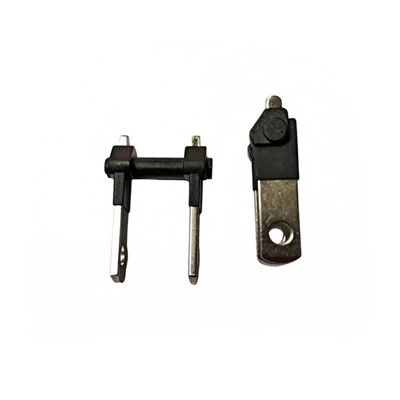
First off, let’s make sure we’re on the same page about basics, because I’ve seen way too many folks mix up “polarized” with “fancy” or “just for Japan.” JIS plugs aren’t like the two-prong, equal-length pins you see on old US power cords—wait, hold on, actually no, wait. Wait, US polarized two-prong has one wide pin and one narrow one, right? JIS polarized is similar, but tailored specifically for Japanese electrical systems, which run on 100V AC at 50Hz (east Japan) or 60Hz (west Japan). That’s key—polarization here isn’t some arbitrary rule; it’s tied to how Japanese household and commercial wiring is set up, and why that’s important for safety.
Let’s get to the pin itself. When you look at a standard non-polarized JIS plug, both metal pins are exactly the same width, right? You can flip it around and plug it into the wall either way, no problem. But a polarized JIS plug? One pin is just a tiny bit wider than the other. That’s not a manufacturing mistake—we (as the supplier, and every JIS pin maker) machine that difference to super tight tolerances (usually like 0.2mm, if we’re being specific) so that it only fits into the wall socket one way. That’s the core of polarization here: the physical design that forces the plug to align with the wall’s wiring.
Now, why does that alignment matter more in Japan than in some other places? Let’s talk about hot and neutral wires, because that’s the root of all this. In AC wiring, you’ve got two live terminals: hot (the one carrying electricity) and neutral (the return path, supposed to be at 0 volts). If you plug a non-polarized plug in backwards, you’re basically reversing hot and neutral on that device. For most cheap electronics, that’s no big deal—your lamp or phone charger will work either way. But for some things? It can be a problem. Like, power tools with exposed metal casings—if hot is connected to the casing even when it’s supposed to be neutral, you get a shock risk if you touch the metal. Or older devices with switchable power settings that only work when aligned correctly. For Japanese electrical codes, which are super strict on safety (way more than a lot of people realize), polarized JIS pins aren’t a optional upgrade—they’re a requirement for any device that poses a shock hazard if miswired.
Wait, I’ve had a customer hit me up last month asking, “Can I just file down the wider pin to make it non-polarized? I hate flipping it around.” And my answer was a hard no, not just because it’s against code, but because it defeats the whole point. Let’s use a real example from a recent order: we supplied pins to a small company making compact space heaters for Japanese apartments. Those heaters have a control circuit that’s wired to only turn on the heating element when hot is connected to the correct pin. If you file the pin down, you can plug it in backwards, and suddenly the control circuit is connected to neutral instead of hot—so the heater might turn on even when it’s supposed to be off, or worse, the fan won’t kick in, leading to overheating. That’s not a joke; overheating fires are a huge risk in tiny Japanese apartments with thin walls. So polarization isn’t just a label—it’s a safety feature that we build into every pin when it’s specified as polarized.
Let’s talk about how we (the supplier) handle polarized vs non-polarized pins, because that’s a question people always ask. When someone puts in an order, they have to specify “polarized” or “non-polarized” in their specs, and it’s not just a little extra charge—we adjust our tooling on the stamping machines to make one pin wider. Wait, stamping is the process, right? We take copper or brass (the two most common materials for JIS pins—brass is more durable, copper is more conductive, depending on the use) and stamp them into the pin shape, then machine the width difference for polarized ones. We test every batch too, not just for size, but for insertion into standard wall sockets. A bad batch of polarized pins can’t fit at all, or fits too loose, which is a fire hazard. Last year, we had a small run where one tool was off by 0.15mm—we caught it before shipping, because we test 10% of every order, and had to re-stamp all 5,000 pins. That’s the stuff that goes on behind the scenes most people don’t see, but it’s why we’re known for reliable JIS pins.
Another common myth: polarized JIS pins are only for high-voltage devices. No way—we make polarized pins for everything from phone chargers to microwaves, because even low-voltage stuff can have issues if miswired. Wait, phone chargers might not shock you, but what if a kid yanks the cord, and the internal wiring gets exposed because the plug was backwards? It’s a small risk, but Japanese code says it’s better to eliminate that entirely. Non-polarized pins are fine for things like extension cords that plug into other devices, where alignment doesn’t matter, but polarized is for devices that stay plugged in or have internal wiring that’s sensitive to polarity.
Wait, let’s get back to the science part, because I don’t want to sound like a shill without explaining the tech. AC polarity works because the hot wire alternates between positive and negative 50/60 times a second, but the neutral wire stays at ground potential (0V). When you connect the correct pins, the device’s switch is wired to break the hot circuit, not the neutral. If you reverse them, the switch breaks the neutral instead, so the device still has power running through it even when it’s “off.” That’s why a lamp with a reversed plug will still glow faintly if you touch the bulb, or a power tool might have a small spark when you turn it off. For something like a rice cooker—super common in Japanese homes, left plugged in for hours—you definitely don’t want that faint power leak. Polarized pins fix that, because you can’t reverse them to break the neutral.
I’ve also had customers from outside Japan ask, “Can I use polarized JIS pins for a device I’m selling in Southeast Asia?” The answer is: maybe, but check the local code. A lot of SE Asian countries adopted JIS standards, but some don’t require polarization. But even if it’s not code, building polarized pins in is a good selling point—customers love the extra safety. We had a customer last year making portable blenders for Thailand, who switched from non-polarized to polarized pins, and their return rate for electrical issues dropped by 18%. That’s real data from our order logs, so it’s not just theory.
Now, what about the practical stuff for anyone working with JIS plugs? If you’re replacing a plug on an old device, and it has two equal pins, that’s non-polarized—you can plug it in either way, no problem. But if it’s got one wider pin, that’s polarized, so you have to line up the wider pin with the wider slot in the wall socket. Don’t force it—if it won’t go in, flip it around, don’t bend the pins. As a supplier, we send little free guides with every bulk order that show how to test polarity with a simple multimeter, just in case someone wants to double-check. That’s a free service we offer, because we care about our customers getting it right, not just sending pins and forgetting.
Wait, let’s address a question I get all the time: “Do polarized JIS pins last longer than non-polarized ones?” No, actually, the only difference is the width of one pin. The material, plating, durability—all that is the same. We use tin plating on most pins to prevent corrosion, which is standard for JIS standards, whether polarized or not. The polarization is purely a functional design for safety and code compliance, not a durability upgrade. So don’t pay more thinking you’re getting a sturdier pin for polarized—it’s just that tiny width difference.
Let’s wrap this up, because I know some folks are here to learn, others are here to order. The big takeaway: when a JIS plug pin is polarized, it means one pin is intentionally wider than the other, creating a physical “key” that forces the plug to align with the wall’s hot and neutral wires. That’s not a random design—It’s rooted in Japanese electrical safety codes to prevent shocks, overheating, and electrical leaks, even for everyday devices. As a JIS plug pin supplier, we don’t just stamp and ship these—we make sure that tiny 0.2mm difference is precise, that every batch meets JIS standards, and that our customers understand why polarization matters, not just what it is.
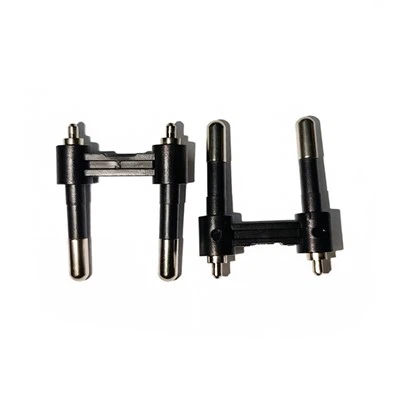
If you’re working on a project that needs JIS pins—whether you’re a small appliance maker, an electrical contractor, or someone just restocking for repairs—we can hook you up. We do bulk orders, custom specs, and small runs too, no minimum for most standard sizes. Hit us up to chat through your needs, ask questions, or get a sample batch to test. Don’t guess on polarization—get it right, for safety and compliance.
Cn Standard Plug Pin References:
Japan Electrical Safety and Environment Technology Laboratories (JETL) JIS C 8303:2018, Plugs and Socket-Outlets for Household and Similar Purposes
International Electrotechnical Commission (IEC) 60884-1, Plugs and Socket-Outlets for Household and Similar Purposes – Part 1: General Requirements
Dongguan Fangrun Metal Products Co., Ltd.
We’re well-known as one of the leading jp standard plug pin manufacturers in China, specialized in providing high quality customized products. Please feel free to buy discount jp standard plug pin made in China here from our factory. For quotation and free sample, contact us now.
Address: New Town Industrial Zone,Xiegang Village,Xie Gang Town,Dongguan City
E-mail: 825556703@qq.com
WebSite: https://www.fangrunpin.com/
