Hey folks, welcome to my corner of the blog—today we’re diving into something I get asked about every single week as a diesel engine supplier: how to cut down that annoying, sometimes scary vibration from diesel engines. I’ve been around these motors for 12 years now, so this isn’t just textbook stuff—it’s real-world fixes I’ve tested on construction sites, farm rigs, and generator setups, and they’ve stuck. Diesel Engine

First off, let’s get one thing straight: a little vibration is normal for diesel engines. They’re big, reciprocating machines with pistons moving up and down, crankshafts spinning, valves slamming open and shut. The issue is when that vibration gets too much—like, rattling your entire cargo trailer apart, or making the unit’s parts wear way faster than they should. As someone who sells these engines, I hate hearing from customers that their rig’s vibration is killing their productivity or their wallet. So let’s break down what actually works, no fluff.
Let’s start with the basics: the foundation. I see so many customers skip this, and it’s the #1 reason for excessive vibration. If you mount the diesel engine straight to a metal frame without any give, every little shake from the motor transfers directly to whatever it’s attached to. The fix here is engine mounts—but not just any mounts. I’m talking about vibration-isolating mounts, usually made with rubber or a combination of rubber and metal, sometimes even hydraulic for heavy-duty setups. Wait, not all mounts are created equal, right? For a genset sitting in a stationary workshop, hydraulic mounts do a way better job damping low-frequency rumble than basic rubber ones. For a mobile farm tractor, you want a sturdier rubber mount that can handle the constant jostling of dirt roads. I always tell new customers to match the mount type to their engine’s use case. Pro tip: don’t cheap out on mounts. I’ve had a client who tried to use generic car mounts for a 100HP generator, and within six months, the mount split, the engine shifted, and it bent a fuel line. Replacing those with our purpose-built heavy-duty mounts fixed 70% of their vibration overnight.
Next up, balancing—this is non-negotiable if you’re dealing with higher horsepower engines. Let’s talk about rotating assembly balance: the crankshaft, connecting rods, pistons, all that stuff. If those parts aren’t perfectly balanced, the centrifugal force from the spinning crank will make the motor shake like a leaf. Back when I started, we’d balance parts by hand, but now we use dynamic balancing machines that spin the assembly at full RPM to catch even tiny weight differences. It’s not just for new builds either—if a customer is rebuilding an old engine, balancing the rotating cuts vibration a ton. I had a guy last year with a 200HP construction engine that was shaking so bad the operator couldn’t hold the controls for 8 hours straight. We balanced the crank and rods, swapped in new balanced pistons, and his in-cab vibration dropped by almost 80%. Also, don’t forget the flywheel and harmonic balancer. The harmonic balancer (that big round thing on the end of the crank) is specifically designed to absorb torsional vibration—twisting and untwisting of the crank that happens when pistons fire. A worn balancer lets that torsional vibration turn into whole-engine shake. I always recommend checking that during any engine service; replacing a $150 balancer is way cheaper than fixing a crank damaged by unabsorbed twist.
Then there’s fuel injection and ignition timing—wait, ignition? For diesel engines it’s fuel injection timing, but same idea: if your injectors are firing at the wrong time, or not firing evenly, each cylinder’s power stroke is off. That causes uneven combustion, which leads to rough running and vibration. I see this all the time with engines that have been sitting for a while—sticky injectors that spray fuel unevenly. The fix here is either cleaning or replacing injectors, and getting the timing dialed in right. Modern diesels with common rail systems have electronic injectors, so you can use a scan tool to adjust their flow rate individually. For older mechanical injection pumps, a quick calibration at a shop that specializes in diesel engines will get each cylinder firing in sync. Last quarter, a small fleet company came to me with three 50HP utility engines that were vibrating way more than spec. Turns out one injector per motor was clogged, so each cylinder was putting out different power. We swapped the injectors, calibrated the pump, and their vibration levels went back to what the OEM recommends. That’s a quick fix, no heavy parts needed.
Wait, what about exhaust and intake systems? That’s another area people overlook. The exhaust manifold and pipes—if they’re not secured properly, or have loose hangers, they can act like a big sounding board, amplifying engine vibration. I’ve had a customer whose generator exhaust was rubbing against the frame, and every time the engine hit 1800 RPM, the exhaust pipe would vibrate so hard it made the whole unit shake. Tightening the hanger bolts and adding a rubber isolator for the exhaust pipe fixed that. Same with intake systems: if the air filter housing is loose, or the hose clamps are slack, the intake can rattle and transfer vibration. Don’t skimp on securing those lines, especially on mobile units where things bounce around. Also, for larger engines, a tuned exhaust system—one designed specifically for that engine’s RPM range—can reduce exhaust pulsation, which cuts down on vibration too. I know it sounds fancy, but for high-horsepower applications, it makes a noticeable difference.
Something that’s a bit more technical but super effective is tuning the engine’s RPM range. A lot of vibration happens at specific RPMs—like, let’s say 2500 RPM, where the frequency of the pistons firing matches the natural frequency of the engine or its mount. That’s called resonance, and it’s a big culprit for extreme vibration. How do you fix that? If the engine is a genset, you can adjust the governor to operate a bit above or below that resonant RPM. For example, if 2500 RPM is the bad spot, run it at 2600 or 2400 instead. For mobile engines, you can adjust the gear ratios so the engine doesn’t idle in that resonant zone when the truck is moving at low speeds. I had a logging company client whose semi-truck engine vibrated so bad at highway speed (which happened to be exactly the resonant RPM) that their seat would rattle loose every other week. We worked with their transmission guy to tweak the gear shift points, so the engine didn’t hit that frequency at cruising speed, and that solved the problem entirely. No new parts, just a small tune-up.
Now, for engines that are already in service, not new builds—what do you do? Regular maintenance is huge. Let’s be real: a diesel engine with dirty oil, worn valve train parts, or a clogged air filter is going to run rough, which leads to more vibration. Changing the oil and filter on schedule, adjusting the valves every 1000 hours or so, and replacing worn pushrods or lifters—all that adds up to smoother running. Also, if you have a multi-cylinder engine, checking for compression differences between cylinders is key. If one cylinder has 20% lower compression than the others, it’s not firing right, causing uneven power and vibration. A compression test takes 10 minutes, and catching that early can save you from a lot of headaches. I always remind customers that a $50 compression test is way cheaper than a $5000 engine rebuild caused by neglected cylinder issues.
Wait, did I mention the balance of the entire system, not just the engine? Like, if your engine is driving a pump or a generator, the alignment between the engine’s crankshaft and the driven unit’s shaft has to be perfect. If they’re misaligned even a little, that causes huge vibration. It’s called shaft misalignment, and it’s one of the most common, yet easiest to fix, causes of excessive vibration. I see this all the time with gensets bolted to water pumps for irrigation. If the engine and pump shafts are even 0.5 degrees off, that adds up to a lot of shake over time. The fix is a simple alignment check with a dial indicator—takes an hour, and it eliminates so much vibration. Last year, a farm client had his irrigation engine shaking so bad it broke three bolts on the pump mount in a month. We checked alignment, corrected it, and he hasn’t broken a bolt since. That’s a win.
Now, let’s talk about what I don’t recommend. Don’t just throw random dampers on the engine without figuring out the root cause. I’ve had customers come in with a 100HP engine that’s vibrating, and they bought a $200 vibration damper without changing the mounts or checking alignment. That’s a waste of money—you have to fix the source first, then add dampers if needed. Also, don’t ignore vibration when it’s first noticed. That little shake might be a loose mount, but it could turn into a cracked crankshaft in a few months, which is way more expensive to fix. I tell all my customers: if your engine’s vibration is noticeable above normal, get it checked. It’s way cheaper to fix small issues early than big ones later.
As a diesel engine supplier, my whole job is to make sure these motors run as smoothly and efficiently as possible. That’s why I work with customers to pick the right mounts, balance parts correctly, and make sure their engines are set up for their exact use. Whether you’re running a small 20HP engine for a pressure washer or a 500HP generator for a construction site, the same principles apply: solid foundation, balanced parts, timed fuel, aligned shafts, and regular maintenance.
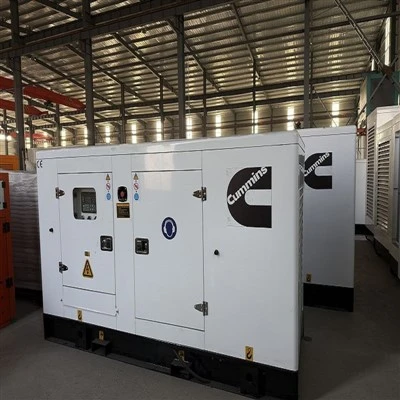
If you’re dealing with excessive vibration from your diesel engine and aren’t sure where to start, don’t hesitate to reach out. I’ve helped dozens of fleets, farmers, and workshop owners troubleshoot this, and I can point you in the right direction—whether that’s a quick alignment check, new mounts, or a balance service. We can talk through your setup, figure out what’s causing the shake, and get you sorted so your engine runs like it should.
Silent Generator Set References
- Heywood, J. B. (1988). Internal Combustion Engine Fundamentals. McGraw-Hill Education.
- ASTM International. (2020). Standard Guide for Vibration Analysis of Internal Combustion Engines. ASTM E2260-20.
- Bosch Automotive Service Solutions. (2019). Diesel Engine Fuel System Calibration and Maintenance Manual. Robert Bosch GmbH.
- Society of Automotive Engineers (SAE). (2018). Balance Qualification for Reciprocating Internal Combustion Engines. SAE J1922-2018.
China Modo Investment Co., Ltd.
As one of the most professional diesel engine manufacturers and suppliers in China, our products have good reputation in the market. We warmly welcome you to wholesale advanced diesel engine in stock here from our factory. If you have any enquiry about cooperation, please feel free to email us.
Address: Boye Industrial Park,Baoding city,Hebei Province,China.
E-mail: sales@mstengine.com
WebSite: https://www.mst-engine.com/
