When it comes to the maintenance of a Tissue Processor, selecting the appropriate cleaning agents is crucial. As a long – standing Tissue Processor supplier, I’ve witnessed firsthand the impacts that different cleaning agents can have on the performance and lifespan of these vital laboratory instruments. In this blog, I’ll share insights into which cleaning agents are suitable for Tissue Processors. Tissue Processor
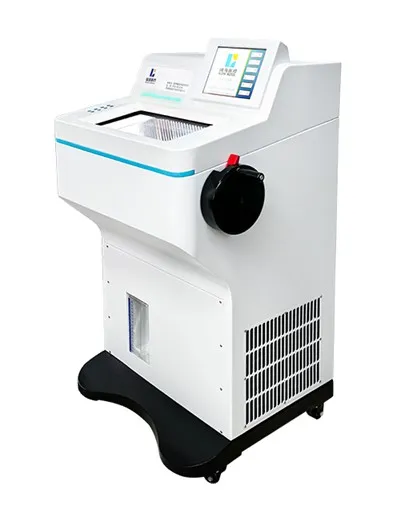
Understanding the Tissue Processor
Before we delve into the details of cleaning agents, it’s essential to understand the basic components and functions of a Tissue Processor. A Tissue Processor is designed to process biological specimens, such as tissue samples, through a series of steps including fixation, dehydration, clearing, and infiltration. Over time, residues from chemicals used in these processes, as well as biological materials, can accumulate inside the processor, affecting its efficiency and the quality of specimen processing.
General Requirements for Cleaning Agents
Compatibility
The first and most important factor when choosing a cleaning agent is its compatibility with the materials used in the Tissue Processor. Most Tissue Processors are made of a combination of plastics, metals, and rubber seals. The cleaning agent should not cause corrosion, degradation, or swelling of these materials. For example, some strong acids or alkalis can corrode metal parts, while certain solvents can dissolve or damage plastic components.
Effectiveness
A good cleaning agent should be effective in removing a variety of contaminants, including formaldehyde residues from fixation, ethanol and xylene residues from dehydration and clearing steps, as well as protein and lipid residues from biological specimens. It should be able to penetrate and break down these contaminants quickly and thoroughly.
Safety
Safety is a top priority in any laboratory environment. The cleaning agent should have low toxicity, minimal flammability, and should not produce harmful fumes or by – products. This is not only important for the safety of laboratory personnel but also for the overall well – being of the laboratory environment.
Specific Types of Cleaning Agents
Detergent – Based Cleaning Agents
Detergent – based cleaning agents are widely used for general cleaning of Tissue Processors. These agents typically contain surfactants, which reduce the surface tension of water and help to dislodge dirt and residues. They are effective in removing organic and inorganic contaminants, including grease, oil, and biological debris.
Non – ionic detergents are often preferred for Tissue Processor cleaning. They are mild and less likely to cause damage to sensitive components. They can be used for cleaning the exterior surfaces of the processor, as well as for gently cleaning interior parts that are not in contact with highly reactive chemicals. For example, a 1 – 2% solution of a non – ionic detergent can be used to wipe down the exterior of the processor to remove dust and fingerprints.
Solvent – Based Cleaning Agents
Solvent – based cleaning agents are useful for removing stubborn residues, especially those that are not easily soluble in water. For Tissue Processors, solvents such as isopropyl alcohol and acetone are commonly used.
Isopropyl alcohol is a mild solvent that can dissolve a variety of organic compounds, including lipids and some resins. It is relatively safe to use in a laboratory setting, with low toxicity and flammability when used in appropriate concentrations. A 70% isopropyl alcohol solution can be used to clean the internal parts of the processor, such as the transfer lines and reagent reservoirs, to remove ethanol and xylene residues.
Acetone is a stronger solvent that can dissolve more difficult – to – remove substances, such as some types of adhesives and certain polymers. However, it is more volatile and flammable than isopropyl alcohol, so it should be used with caution. It is typically used for cleaning small parts that can be removed from the processor and soaked in a container filled with acetone.
Enzyme – Based Cleaning Agents
Enzyme – based cleaning agents are specifically designed to break down biological materials. They contain enzymes such as proteases, lipases, and amylases, which can digest proteins, lipids, and carbohydrates respectively. For Tissue Processors, enzyme – based cleaners are particularly useful for removing protein and lipid residues from biological specimens.
Enzyme – based cleaners are usually used in a soak – type cleaning process. The parts to be cleaned are immersed in a solution of the enzyme – based cleaner at a specific temperature and for a set period of time. This allows the enzymes to break down the biological contaminants effectively. After soaking, the parts can be rinsed thoroughly with water to remove the dissolved residues.
Cleaning Procedures
Exterior Cleaning
The exterior of the Tissue Processor should be cleaned regularly to maintain its appearance and prevent the accumulation of dust and dirt. Use a soft cloth dampened with a mild detergent solution to wipe the surfaces. Pay special attention to areas around the control panel and display, as these can be easily soiled by fingerprints. After cleaning, dry the exterior with a clean, dry cloth.
Interior Cleaning
Interior cleaning is more complex and requires careful consideration. Start by draining all the reagents from the processor. Then, use a solvent – based or detergent – based cleaning agent to clean the transfer lines, reagent reservoirs, and other internal components. For transfer lines, use a syringe or a pump to circulate the cleaning solution through the lines to ensure thorough cleaning.
For enzyme – based cleaning, follow the manufacturer’s instructions regarding the concentration of the solution, the soaking time, and the temperature. After cleaning, rinse all the parts thoroughly with distilled water to remove any traces of the cleaning agent.
Seal and Gasket Cleaning
Seals and gaskets are important components of a Tissue Processor, as they prevent leakage of reagents. Use a non – abrasive cleaning agent to clean these parts. A solution of isopropyl alcohol can be used to wipe the seals and gaskets, which removes any residues and helps to maintain their flexibility.
Testing and Quality Control
After cleaning, it’s important to perform some tests to ensure that the Tissue Processor is in good working condition. Check for any signs of damage or corrosion on the cleaned parts. Run a test cycle with water or a test solution to check the flow of fluids through the processor. Analyze the results of the test cycle to ensure that there are no blockages or other issues.
Regular quality control checks should also be performed to monitor the performance of the Tissue Processor over time. This includes checking the accuracy of temperature and vacuum settings, as well as the quality of specimen processing.
Conclusion

Selecting the right cleaning agents for a Tissue Processor is essential for maintaining its performance and ensuring the quality of specimen processing. As a Tissue Processor supplier, I recommend using a combination of detergent – based, solvent – based, and enzyme – based cleaning agents, depending on the type of contaminants and the parts to be cleaned. Always follow the manufacturer’s guidelines for cleaning and maintenance, and perform regular quality control checks to keep the processor in optimal condition.
Cassette Printer If you are a laboratory manager, researcher, or anyone involved in tissue processing and have questions about Tissue Processors or the appropriate cleaning agents, I’d be more than happy to have a discussion with you. Contact us to learn more about our Tissue Processors and to start a procurement negotiation tailored to your specific needs.
References
- "Laboratory Instruments and Equipment Handbook", 3rd Edition
- "Principles and Practice of Histological Techniques", 5th Edition
- Product manuals from leading Tissue Processor manufacturers
Xiaogan Kuohai Medical Technology Co., Ltd.
Xiaogan Kuohai Medical Technology Co., Ltd. is one of the leading tissue processor manufacturers and suppliers in China. We warmly welcome you to buy cost-efficient tissue processor for sale here from our factory. All customized products are with high quality and competitive price. Contact us for OEM service.
Address: Shuyuan Technology Industrial Park, Changxing Road, Xiaonan District, Xiaogan City, Hubei Province,China
E-mail: henry@kuohaitech.com
WebSite: https://www.kuohaitech.com/
