In the current global era, energy efficiency has emerged as a critical concern for manufacturing industries across the globe. As a supplier specializing in front assembly riveting production lines, I’ve witnessed firsthand the increasing emphasis on energy – efficiency in the manufacturing sector. This blog aims to delve into the question: Is the front assembly riveting production line energy – efficient? Front Assembly Riveting Production Line
Understanding the Front Assembly Riveting Production Line
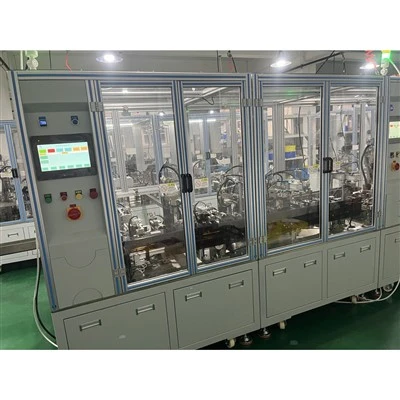
Before we can assess its energy efficiency, it’s essential to understand what a front assembly riveting production line is. A front assembly riveting production line is a specialized manufacturing setup designed for the precise and automated riveting of front assemblies. These assemblies can be found in a wide range of products, from automotive components to electronic devices.
The process typically involves several key steps. First, the parts to be assembled are loaded onto the production line. This may include using conveyors or robotic arms for efficient material handling. Then, the riveting process commences, where rivets are inserted and deformed to securely join the components together. This entire process is often controlled by advanced automation systems to ensure accuracy and consistency.
Factors Influencing Energy Consumption
To evaluate the energy efficiency of a front assembly riveting production line, we need to examine the factors that contribute to its energy consumption.
Machinery and Equipment
The primary energy consumers in the production line are the machines themselves. Riveting machines, which use hydraulic, pneumatic, or electric power, require a significant amount of energy to operate. For instance, hydraulic riveting machines use hydraulic pumps to generate the force required for riveting. These pumps consume electricity constantly, especially if they are running at high – pressure settings.
Conveyor systems are another major energy – user. The continuous movement of parts along the production line demands a steady supply of power. The size and speed of the conveyors play a crucial role in energy consumption. Larger and faster conveyors tend to use more energy than smaller, slower ones.
Automation and control systems also contribute to energy consumption. These systems include sensors, programmable logic controllers (PLCs), and human – machine interfaces (HMIs). Although they typically consume less energy compared to machinery, over time, their cumulative energy usage can be substantial.
Production Efficiency
The overall production efficiency of the line directly impacts energy consumption. Frequent stoppages, delays, or misalignments in the riveting process can lead to increased energy usage. For example, if the riveting machine needs to be restarted multiple times due to incorrect part placement, it consumes additional energy during the startup phase.
The production volume also matters. Higher production volumes generally require the production line to run continuously, which can lead to increased energy consumption. However, modern production lines are designed to optimize energy consumption based on the production volume. For instance, some lines can adjust the speed of the conveyors and the power output of the riveting machines according to the number of parts being processed.
Environmental Conditions
The environmental conditions in which the production line operates can also affect its energy efficiency. For example, in a hot environment, the cooling systems for the electrical equipment and machinery need to work harder, consuming more energy. Similarly, in a cold environment, heating may be required to maintain the optimal operating temperature of the equipment.
Energy – Efficiency Measures in Front Assembly Riveting Production Lines
Thankfully, there are several strategies and technologies that can enhance the energy efficiency of front assembly riveting production lines.
Advanced Riveting Technology
Modern riveting machines are being developed with energy – saving features. For example, some new hydraulic riveting machines use variable – displacement pumps. These pumps can adjust the flow rate of the hydraulic fluid according to the actual load requirements, reducing energy consumption.
Electric riveting machines are also becoming more popular. They offer better energy efficiency compared to hydraulic and pneumatic ones, as they can convert electrical energy into mechanical energy more directly. Additionally, electric riveting machines can be easily integrated with advanced control systems to optimize their energy usage.
Smart Conveyor Systems
Conveyor systems can be made more energy – efficient by using smart technologies. For instance, conveyor belts can be equipped with sensors that detect the presence of parts. If there are no parts on the conveyor, it can automatically slow down or stop, reducing unnecessary energy consumption.
Some conveyor systems also use regenerative braking technology. When the conveyor is decelerating or stopping, the energy generated during this process is captured and stored. This stored energy can then be reused later, reducing the overall energy demand from the power grid.
Energy – Management Systems
Energy – management systems (EMS) play a crucial role in improving the energy efficiency of front assembly riveting production lines. These systems use real – time monitoring and analysis to optimize the energy usage of the entire production line.
An EMS can collect data on the energy consumption of each machine and component in the production line. It can then identify areas where energy is being wasted and suggest improvements. For example, if it detects that a certain riveting machine is consuming more energy than normal, it can alert the maintenance team to check for malfunctions.
Assessing the Energy Efficiency of a Specific Front Assembly Riveting Production Line
To accurately determine the energy efficiency of a front assembly riveting production line, we need to conduct a comprehensive energy audit. This audit involves several steps.
Data Collection
The first step is to collect data on the energy consumption of the production line. This includes measuring the electricity usage of each machine, the compressed air consumption (if applicable), and the heat energy consumption (for heating or cooling purposes).
We also need to collect data on the production volume, production speed, and the number of stoppages and delays. This information will help us understand how the energy consumption is related to the production process.
Comparison and Benchmarking
Once we have collected the data, we can compare the energy consumption of the production line with industry benchmarks. There are various organizations and research institutions that publish data on the typical energy consumption of front assembly riveting production lines. By comparing our production line’s energy consumption with these benchmarks, we can identify whether it is energy – efficient or not.
Analysis and Recommendations
Based on the data and benchmarking results, we can analyze the energy – consuming processes in the production line. We can then recommend specific measures to improve energy efficiency, such as upgrading the equipment, optimizing the production schedule, or implementing an energy – management system.
Conclusion
In conclusion, a front assembly riveting production line has the potential to be energy – efficient, but it requires the right technologies and management strategies. By investing in advanced riveting machines, smart conveyor systems, and energy – management systems, manufacturers can significantly reduce the energy consumption of their production lines.
As a supplier of front assembly riveting production lines, we are committed to providing our customers with energy – efficient solutions. Our production lines are designed with the latest technologies and energy – saving features to help manufacturers reduce their energy costs and environmental impact.
If you are interested in learning more about our energy – efficient front assembly riveting production lines or would like to discuss a potential purchase, we encourage you to reach out to us. We are here to assist you in finding the best solution for your manufacturing needs.
Enclosed Integrated Lead Screw Linear Module References
- Smith, J. (2020). Energy Efficiency in Manufacturing Processes. Journal of Industrial Engineering, 15(2), 98 – 110.
- Johnson, R. (2021). Advances in Riveting Technology for Energy – Saving Applications. International Journal of Manufacturing Science, 22(3), 234 – 250.
- Brown, A. (2019). Smart Conveyor Systems for Sustainable Manufacturing. Proceedings of the World Manufacturing Congress, 45 – 52.
Yangning (Xiamen) Intelligent Technology Co., Ltd.
With abundant experience, we are one of the most professional front assembly riveting production line manufacturers in China. As we have world-leading production equipment and strong manufacturing capabilities, we warmly welcome you to buy bulk advanced front assembly riveting production line from our factory. Customized orders are welcome.
Address: Room 307-2, No. 15 Duiying Road, Software Park Phase III, Torch Hi-Tech Zone, Xiamen, Fujian, China
E-mail: mia@ynautos.com
WebSite: https://www.ynautos.com/
