If you’ve ever stood in a rice mill, watching workers sort and test batches of freshly milled grain, you’ve likely heard this question a hundred times: can grain destoning equipment—built for wheat, corn, or other small grains—actually work for rice? As a supplier of grain destoning systems, I get this question at least once a week, and the short answer is yes—but with a lot of nuance that matters if you’re running a rice operation, big or small. Grain Destoning Equipment

I started in this industry nearly 12 years ago, back when my family ran a small rice mill in central Ohio. We spent years hand-picking stones from rice sacks, a tedious, error-prone job that left whole batches with hard, gritty debris. When we finally upgraded to a destoner, we figured it would work the same as the unit we used for wheat. Spoiler: it didn’t. That trial taught me that grain destoning isn’t a one-size-fits-all technology, and that’s why so many rice processors either waste money on the wrong equipment or struggle with inconsistent separation.
Let’s break down how grain destoning equipment works in general, then dive into why rice is unique, and how our systems are built to adapt to that. At its core, a grain destoner separates materials based on specific gravity, particle size, and surface friction. Most units use a vibrating deck sloped at an angle, with air flowing upward through small holes in the deck. Lighter, less dense grain gets carried toward the top of the slope, while heavier stones and sand sink down, where a scraper or conveyor pulls them away. That basic principle works for any grain—but rice’s physical properties change how that setup needs to be tuned.
Rice has a few key differences from other grains that throw standard destoners off. First, its specific gravity is different. White long-grain rice, for example, has a specific gravity around 1.5, while wheat runs closer to 1.3, and corn around 1.2. That small difference might seem trivial, but it means the air flow and deck vibration calibrated for wheat won’t lift rice enough to separate it from denser debris. Stones, meanwhile, have a specific gravity of 2.6 to 2.7, so the gap between rice and stone density is smaller than between wheat and stone, which makes separation trickier.
Then there’s rice’s shape and surface texture. Most small grains like wheat are plump, rounded, and relatively uniform in size. Rice—especially brown or milled rice—can be long, slender, or even broken, depending on the milling stage. Broken rice is smaller and lighter, so it gets carried along with the main grain stream unless the destoner’s deck has adjustable slits or vibration settings to separate it. Unmilled paddy rice has a husk that’s rough and porous, while milled white rice has a smoother, harder surface. That texture changes how rice moves on the vibrating deck, too; smoother grains slide more easily, so the deck’s slope and friction pads need to be adjusted specifically for rice.
I’ve seen too many rice mills that tried to use standard wheat destoners and ended up with two problems: either they lost good rice in the stone bin (because the air flow was too strong, carrying rice down with the heavy debris) or they left too many stones in the finished rice (because the air flow was too weak, so stones weren’t pulled away from the grain). A friend who runs a 50-ton-per-day rice mill in Louisiana told me his first standard destoner left 12 pounds of stones in every 1,000 pounds of rice—enough to make customers complain about gritty texture, and even risk damaged equipment downstream from stones clogging conveyors or breaking hulling machinery.
So how do we adjust grain destoning equipment to work for rice? Our rice-specific destoners have three key tweaks that solve those early issues. First, we tune the air flow and deck vibration to match rice’s specific gravity. Instead of the broad, high-volume air streams used for wheat, our rice destoners have variable air chambers with smaller, more precise nozzles. That lets technicians adjust the air pressure to just enough to lift rice grains, while leaving heavier stones to sink. The deck itself is also sloped slightly steeper than wheat destoners—usually a 10 to 12 degree slope, compared to 8 degrees for wheat—to account for rice’s smoother surface, so it moves along the deck at the right speed for separation.
Second, we add adjustable deck sections and slotted screens for different rice types. Short-grain rice, for example, is denser than long-grain rice, so it needs a different deck tension than aromatic rices like jasmine or basmati, which are lighter and slimmer. Brown rice, which is still partially covered in a rough husk, has more friction, so the deck’s friction pads are harder to keep it from moving too fast. Milled white rice, being smoother, uses softer pads to slow it down just enough to separate from stones. For operations that handle multiple rice types, we design our destoners with quick-change deck inserts, so a mill can switch between long-grain and short-grain rice in 15 minutes, no tools needed.
Third, we address broken rice, a big pain point for rice processors. Many destoners lump whole and broken rice together, which is a problem because broken rice often sells for 30 to 50 percent less than whole grain. Our rice-specific destoners have dual output systems: one stream for whole rice, and a separate stream for smaller broken grains, which are then re-routed to a secondary sizer or sold as a separate product. That not only improves separation accuracy but also adds a revenue stream for mills that would have otherwise discarded broken rice with stones.
I know a small family mill in Arkansas that switched from a generic grain destoner to our rice-specific unit two years ago. Before, they had two full-time workers hand-sorting stones from 2,000 pounds of rice a day. After installing our system, that step is fully automated, and they’ve cut stone contamination to less than 0.01 percent—well below the USDA’s limit for milled rice. They also tested the broken rice separation: in the first six months, they sold $12,000 worth of broken rice that had previously been hauled to a landfill. That’s not just better quality rice; that’s extra profit they never had before.
Of course, there are exceptions. If you’re running a very small operation—say, a 1-ton-per-day home mill or artisanal rice producer—you might get away with a multi-use grain destoner, as long as you calibrate it properly. But for any commercial operation, even a small 10-ton-per-day mill, a rice-tailored destoner will save you time, reduce product loss, and keep your final rice safe to sell. I’ve heard people argue that you can modify a generic destoner with extra screens or adjusted air flow, and while that works in a pinch, it’s rarely worth the long-term hassle. Generic units aren’t built to handle the continuous, high-throughput operation that rice mills rely on, so they break more often and need more maintenance.
I also want to be clear: destoning equipment isn’t just a convenience for rice mills. Stones and sand in rice are a food safety risk. They can break consumer teeth, damage kitchen appliances, and lead to costly product recalls. The FDA has issued multiple alerts about rice contaminated with mineral debris, especially from mills located near riverbeds where rice is grown. A good rice destoner is a food safety investment as much as a productivity one.
Over the years, we’ve designed our rice destoners to handle not just milled rice, but also paddy rice (before hulling) and parboiled rice, which has a different texture and moisture content than raw rice. Parboiled rice, which is soaked and steamed before milling, is slightly denser, so we adjust the air flow accordingly. We also make units that work with both dry and damp rice, since some mills process rice right after drying it, when moisture levels can affect grain movement.
If you’re considering adding destoning to your rice processing line, my advice is to skip the generic “grain destoner” and look for a system engineered specifically for rice. The small upfront difference in cost pays off quickly in less labor, less product waste, and higher quality finished rice. When we tested our first rice-specific prototype, we spent six months working with a local rice mill to adjust every setting, from air pressure to deck tension, and that feedback is what we build into every unit we make now.
I don’t sell one-size-fits-all equipment, either. Every rice mill has different throughput, processes different rice types, and has different space constraints. That’s why I work with each customer to test a sample of their rice on our demo unit before they buy. We’ll run their paddy or milled rice through the destoner, check the stone separation rate, see how broken rice is handled, and adjust the setup to match their exact needs. No two rice operations are the same, so their equipment shouldn’t be either.
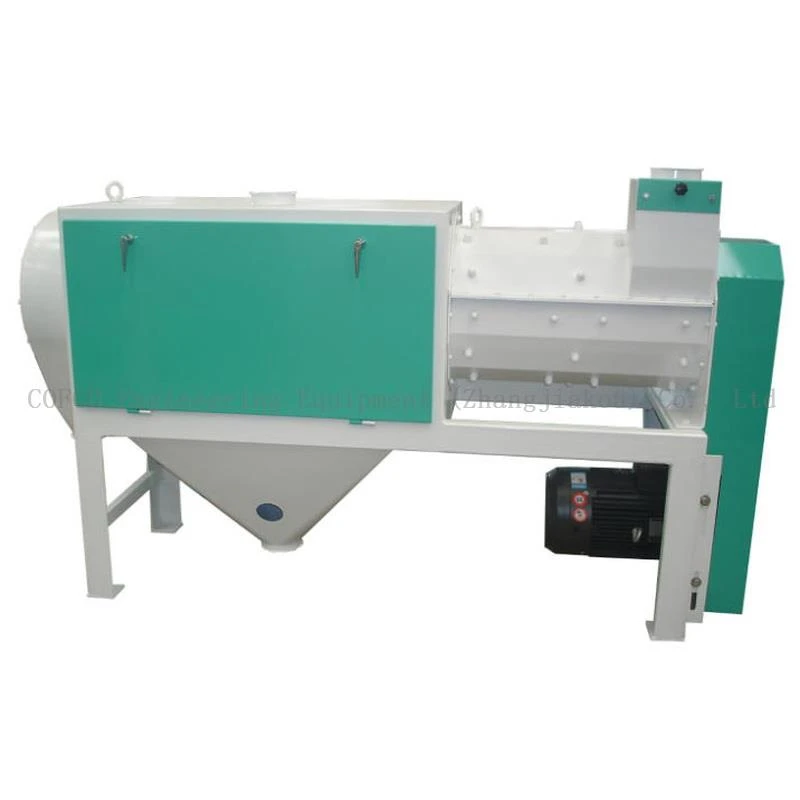
If you’re tired of hand-sorting stones, dealing with inconsistent separation, or losing money on broken rice mixed in with debris, it’s time to talk about a rice-specific grain destoning system. We’ve helped rice mills across the country upgrade their processing lines, and we can help yours too. Reach out to discuss your needs, schedule a demo, or get a custom quote that fits your operation. There’s no one-size-fits-all solution, but there is a destoner that will work for your rice—you just need the right partner to build it.
Grain Scouring Equipment References
- Food and Agriculture Organization of the United Nations. (2019). Rice Post-Harvest Operations Manual. Rome: FAO.
- USDA Agricultural Marketing Service. (2021). Rice Grading and Inspection Standards. Washington, D.C.: U.S. Department of Agriculture.
- Zhang, Y., et al. (2020). “Separation Characteristics of Rice and Stone in Gravity Separation Equipment.” Journal of Food Process Engineering, vol. 43, no. 6.
- American Society of Agricultural and Biological Engineers. (2018). Standard for Grain Destoning Equipment. St. Joseph, MI: ASABE.
COFCO Engineering Equipment (Zhangjiakou) Co., Ltd.
COFCO Engineering Equipment (Zhangjiakou) Co., Ltd. is one of the most professional grain destoning equipment manufacturers and suppliers in China, also supports customized service. Please feel free to wholesale advanced grain destoning equipment for sale here from our factory. Quality products and reasonable price are available.
Address: No.4 ZhongLiang Street, high-tech industrial development zone, Zhangjiakou, Hebei, PRC
E-mail: mayihui@cofco.com
WebSite: https://www.ceeflourmill.com/
