If you’ve ever driven past a steel bridge, leaned on a streetlight, or lifted a steel beam for a commercial building, you’ve probably interacted with hot-dip galvanized steel. That silver, slightly spangled finish isn’t just for looks—it’s a 70+ year-old corrosion protection system that turns raw steel into something that can survive decades of rain, salt, and temperature swings. But if you’re in the structural components hot-dip galvanizing equipment space (hey, that’s us!), you’ve likely bumped into ASTM A123 at some point. For a long time, I saw it as just another random code on a spec sheet until I dug into what it actually does—and how it’s tied directly to every piece of equipment we build, sell, and troubleshoot for our clients. Let’s break this down, no jargon overload, just the real stuff we deal with every day. Structural Components Hot-dip Galvanizing Equipment
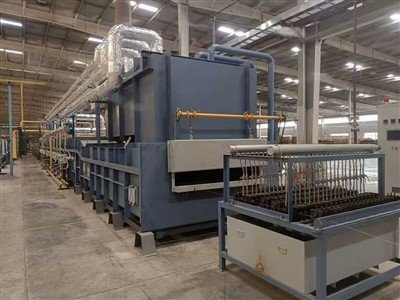
First off, let’s demystify what ASTM A123 actually is. ASTM stands for the American Society for Testing and Materials, right? It’s the group that writes consensus standards for all kinds of materials, processes, and tests—nothing super fancy, just folks from industry, labs, and end users agreeing on what “good” looks like. A123 is specifically titled “Standard Specification for Zinc (Hot-Dip Galvanized) Coatings on Structural Steel Products.” That’s it—straight to the point. It’s not a process manual, it’s a benchmark. For structural steel—think I-beams, angles, pipes, those big structural components that go into buildings, bridges, and transmission towers—A123 sets the rules for how thick that zinc coating needs to be, how it has to stick, and what defects are allowed. No cutting corners, no “close enough” for the guys spec-ing the steel for a hospital or a highway bridge.
Now, why does that matter for hot-dip galvanizing (HDG) equipment? Let’s start with how hot-dip galvanizing works, because you can’t talk about A123 without context. The process is pretty straightforward in theory: you clean steel super thoroughly (remove oil, rust, mill scale, all that gunk), flux it to prep the surface so zinc sticks, then submerge it in a 840°F (450°C) molten zinc bath for a set amount of time. The reaction between iron in the steel and zinc in the bath forms those layered zinc-iron alloy coatings—three main layers, actually: a thin layer right against the steel, a middle thicker one, and a top pure zinc layer. That’s the stuff A123 regulates.
Here’s where the equipment tie-in hits home: every piece of our hot-dip galvanizing lines—from cleaning tanks to zinc bath heaters to pull-out hoists—has to be calibrated, adjusted, and maintained to make sure we hit A123’s requirements. If even one part of the line is off, you either don’t meet A123 specs, or you waste zinc, or you have rejects that cost our clients time and money. Let’s walk through the key A123 requirements and how equipment directly impacts each one, because that’s the stuff we explain to every new customer who calls us looking to upgrade their line.
First big A123 requirement: coating thickness. For structural steel, A123 says the average coating thickness has to be at least 5 mils (that’s 0.005 inches) for steel sections thicker than 3/16 of an inch. For thinner steel? It’s 3.5 mils, but let’s be real—structural components are almost always thicker than that. Now, how do we get 5 mils? It’s not just dumping the steel in the zinc bath and hoping. The thickness of the zinc coating is driven by three main things: zinc bath temperature, dwell time in the bath, and the composition of the zinc alloy in the bath. All of these are controlled by our equipment.
If our zinc bath heaters are old and won’t hold a consistent 840°F? One minute the bath is too cold, so zinc doesn’t react with the iron enough, and you get a coating thinner than 5 mils, which fails A123. The next minute, the bath is too hot, so the reaction goes too far—you get a thick, brittle coating that chips off after a few months, which also fails A123. We’ve seen this so many times: a client with a 10-year-old line whose bath temperature drifts 20°F over the course of a run, leading to 15% of their structural parts getting rejected for thin or brittle coating. That’s why our equipment uses precision PID temperature controllers—they hold the bath within ±2°F, every minute of every run. That’s not overkill, that’s exactly what A123 requires.
Then there’s dwell time. A123 doesn’t say “dwell 5 minutes.” It actually has a formula: the minimum dwell time is based on the thickness of the steel. For every 1/8 inch of steel thickness, you need at least 1.5 minutes in the bath. So a 1-inch I-beam needs at least 12 minutes. If your pull-out hoist (the part that lifts and lowers parts into the bath) is slow, you might dwell too long—brittle coating. If it’s too fast, you dwell too short, thin coating. Our hoists have variable speed controls that let operators dial in the exact dwell time for each part, based on A123’s formula. No guessing, no flying blind. We once worked with a small galvanizer who was using a cheap hoist that only ran at one speed, so they had to make every part dwell the same time—leading to some thick, some thin, and a 12% reject rate. Swapping to our adjustable hoist cut their rejects to under 2% and kept them compliant with A123 for every structural part they ran. That’s the kind of win we live for.
Next A123 rule: coating adherence. A123 says the coating has to stick, no flaking, no peeling, no powdery stuff. How does equipment impact that? Again, it ties back to cleaning and fluxing. If your pickling tanks (the ones that remove mill scale and rust) have old acid that’s too weak, or the agitation in the tank is too low, you’ll leave residual gunk on the steel. That means when you pull it out of the zinc bath, the coating doesn’t bond properly, so it flakes off. We’ve seen parts that look great right after galvanizing, but a week later they’re peeling because their cleaning process was off, which is an A123 fail. Our cleaning lines use recirculated acid with conductivity sensors that let operators know exactly when to refresh the acid—no guessing if it’s strong enough. We also add high-velocity spray rinse after pickling, which removes residual acid so it doesn’t mess up the flux step. Fluxing is another big one: if your flux tank is too cold, or the flux is old and contaminated, you get “bare spots” on the steel, which also fail A123. Our flux tanks have temperature controls to keep flux at the right temp, and automated skimmers to remove oxides that build up on the flux surface. That’s all equipment stuff—no amount of manual labor can replace consistent, calibrated gear here.
Another key A123 requirement for structural steel: surface finish and defect limits. A123 lists specific defects that are not allowed, or only allowed in small amounts. Things like bare spots, voids, excessive spangle, or rough texture. Wait, rough texture? A123 allows some roughness, but excessive roughness is a problem because it can cause issues when the steel is painted later, or if it’s being bolted together. How does equipment impact surface finish? The main thing here is the zinc bath’s aluminum content. Pure zinc bath can lead to a rougher coating, but adding a tiny amount of aluminum (0.005% to 0.15%) smooths out the coating and prevents excessive spangle. But if your alloy feeder (the equipment that adds aluminum to the bath) is broken, you’ll have inconsistent aluminum levels, leading to rough, defective coatings that fail A123. Our alloy feeders are automated, so they add exactly the right amount of aluminum, every time, so your coating meets A123’s finish requirements. We also use bath skimmers that remove dross (that gunk that forms on the top of the zinc bath—mix of zinc and iron oxides) before it can stick to your parts. If dross sticks to a structural beam, that’s a defect under A123, so removing it is non-negotiable.
Wait, let’s talk about a common myth I hear from new clients: “A123 is just for the end steel, right? It doesn’t affect my line at all.” That’s wrong. A123 isn’t a pass/fail mark stamped on the steel—it’s a standard that every step of the galvanizing process has to meet. And our equipment is the bridge between what the steel spec requires and what the galvanizer can actually produce. Let’s give a concrete example: last year, a bridge construction company came to us because their structural steel parts were failing A123 specs at their local galvanizer. The galvanizer’s line was 15 years old, their bath temperature was off by 30°F, their dwell time was inconsistent, and their dross removal was almost non-existent. We worked with them to upgrade their zinc bath temperature controls, add variable speed hoists, and install an automatic dross skimmer. After the upgrade, their coating thickness went from an average of 3.8 mils to 5.2 mils, adherence tests passed, and their reject rate dropped from 18% to 1%. That’s all because our equipment lets them hit A123’s requirements reliably, every run.
Now, what about other ASTM standards? I know some folks get confused between A123 and A153, which is for smaller hardware—like nuts, bolts, brackets. A153 is a different spec, thinner coating, different defect limits. But A123 is specifically for structural components, which are way bigger and more critical. A hospital’s steel frame, a highway bridge, a transmission tower—those can’t fail because of a bad zinc coating, so A123 is way more strict than A153. That means our equipment has to be built to handle bigger parts, higher temperatures, and more precise controls than a line built for small hardware. For example, our bath tanks are bigger (we build up to 30 feet long for big I-beams), our hoists have higher weight capacity (up to 50 tons per lift), and our control systems are programmed to follow A123’s dwell time formulas for thick structural steel. That’s not an afterthought—that’s the design core of every one of our lines.
Let’s also talk about testing, because A123 requires specific tests to make sure you’re compliant. The most common test is the thickness test—you pull samples from each batch of parts, use a magnetic thickness gauge to measure coating thickness, and make sure the average is at least 5 mils. There’s also the bend test: you bend a 6-inch section of the galvanized steel 180 degrees, and the coating can’t crack or peel. And the adherence test: you rub the coating with a wire brush, and it can’t flake off. How does equipment tie into testing? If your line is calibrated right, the number of parts that fail these tests is super low. But if you have bad equipment, you’re wasting time and money testing rejects, and you risk losing contracts because you can’t meet the spec. We’ve had clients who switched to our lines and cut their testing time by 40% because they have way fewer rejects, which is a huge cost saver.
Another point: A123 also has requirements for the composition of the zinc bath. It says the zinc has to be at least 98.5% pure, with limited impurities like lead, iron, and cadmium. Wait, iron? Because a little iron in the bath is normal, but too much can cause thick, brittle coatings that fail A123. Our equipment has a dross removal system that takes out iron-rich dross, so you don’t get too much iron building up in the bath. We also have zinc purity testers that let operators know when they need to add new pure zinc to the bath, instead of running with impure zinc that leads to bad coatings. That’s another way our equipment ensures compliance with A123.
I want to be real here—no one’s perfect. We’ve had clients who tried to cut corners, bought cheap equipment, and ended up with A123 failures. Last year, a small galvanizer bought a used hoist that didn’t have variable speed controls, so they couldn’t adjust dwell time for different steel parts. They had a batch of 20-foot I-beams, didn’t dwell long enough, and ended up with average coating thickness of 4.2 mils—just 0.8 mils under A123’s requirement. That’s enough to get the whole batch rejected, which cost them $15,000 in materials and missed a deadline. That’s the kind of mistake that comes from not having equipment aligned with A123 specs. It’s not just a “rule” on a paper—it’s money, reputation, and contracts on the line.
Now, if you’re someone who runs a structural components hot-dip galvanizing line, or someone who’s looking to build or upgrade one, here’s the thing: A123 isn’t something you can ignore. It’s the non-negotiable standard that every part you galvanize has to meet. And the only way to consistently hit that standard is with equipment that’s built to follow A123’s rules, not just work. Our lines aren’t just generic HDG lines—they’re built from the ground up with A123 in mind. We calibrate every component to hold temperature within ±2°F, build hoists with variable speed for exact dwell times, install automated dross and alloy feeders to keep the bath in spec, and program our control systems to flag if something’s off before you get rejects.
If you’re struggling with A123 compliance, or your line is costing you too much in rejects, or you’re looking to upgrade to handle bigger structural parts, we’re the folks to talk to. We don’t sell one-size-fits-all equipment—we work with your specific needs, the structural parts you run, and make sure every piece is aligned with A123 so you can stop worrying about spec compliance and start growing your business.
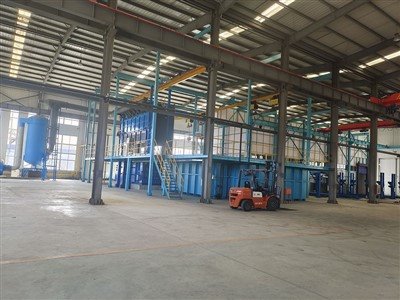
Don’t overcomplicate it: hot-dip galvanizing is all about turning steel into something that lasts. A123 is the rulebook for that, and our equipment is the hands that follow that rulebook. If you want to make sure every part you galvanize meets A123, no cutting corners, no rejects, hit us up to chat through your needs.
Thin Coating Blown Hot Dip Galvanizing Equipment References
- ASTM International. 2023. Standard Specification for Zinc (Hot-Dip Galvanized) Coatings on Structural Steel Products. ASTM A123/A123M-23.
- ASM International. 2018. Hot-Dip Galvanizing of Steel Products. Volume 4A: Materials Park, OH.
- Galvanizers Association. 2022. Hot-Dip Galvanizing for Structural Steel: Compliance Guide.
Jinzhou Hongri Galvanizing Equipment Co., Ltd.
As one of the most professional structural components hot-dip galvanizing equipment manufacturers and suppliers in China, we’re featured by quality products and good price. Please rest assured to buy durable structural components hot-dip galvanizing equipment for sale here from our factory. We also accept customized orders.
Address: Yingpan Industrial Park, Taihe District, Jinzhou City. Address: No. 90, Gongwei Street.
E-mail: rsea.jz@163.com
WebSite: https://www.hrgalvanize.com/
