Hey folks, let’s cut to the chase—if you’re a small batch quilter, an apparel brand testing a new line, or someone weighing if a computerized quilting machine is worth ditching that hand-sewn studio hustle for commercial work, I get it. As a supplier who’s shipped these machines to folks turning side gigs into full-time businesses, I’ve heard every question: “Will it hold up for bulk orders?”, “Is it actually accurate enough for custom commercial runs?”, and—most importantly—“Can I afford to stop working 12-hour days just to keep up with orders?” Let’s break this down without the jargon, no fancy corporate fluff, just the real deal from someone who’s seen both sides. Computerized Quilting Machine
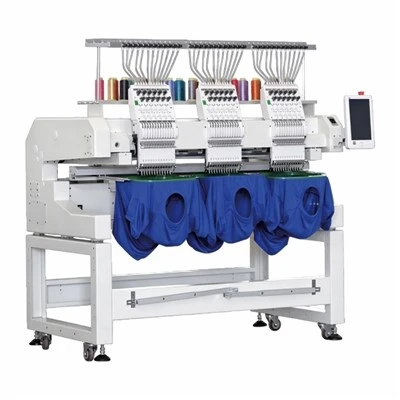
First, let’s address the elephant in the room: old-school quilting (think long-arm hand-guided machines) is great for small, custom pieces, but try doing 50 of the same throw pillows in a week? You’re looking at your hands cramping, your schedule blown, and probably a mistake here or there because fatigue hits. Computerized quilting machines? They run off digital patterns, right? You upload a design, input your stitch count, adjust the tension, and hit go. Wait, but does that scale? Let’s talk numbers—my clients who run commercial shops average 150-300 linear feet of quilting per hour with a mid-tier computerized model. Compare that to the old long-arm: if you’re lucky, you’re getting 30-50 linear feet per hour, and that’s only if you’re not stopping to reset every 20 minutes. For someone needing to fulfill a bulk order for a retail store or a corporate bulk giveaway? That’s not “faster”—that’s the difference between hitting a deadline and losing a client.
But hold up—accuracy is make-or-break here. Commercial work isn’t just about speed; it’s about consistency. A hand-guided machine can shift a little, or a quilter can misalign a pattern, leading to wonky rows or uneven stitching that makes your product look unprofessional. Computerized quilting machines have GPS-like positioning (it’s called a “servo drive system,” but just think: it’s precise enough that the same pattern on 100 blankets is identical, thread tension’s the same, no lumps or skipped stitches). I had a client last year who used to sell hand-quilted dog beds at craft fairs; he switched to a basic computerized model, and his wholesale order for a pet supply chain tripled because every bed looked the exact same. No returns from misaligned stitches, no rework, just steady cash flow. That’s the kind of win that makes commercial sense.
Now, I know what you’re thinking: “My designs are custom, not cookie-cutter. Will a computerized machine work for that?” Short answer: hell yeah. A lot of folks think these machines only do basic grid patterns, but no—you can upload any design, from a custom logo to an intricate floral motif. For apparel brands making custom denim jackets, or home goods brands doing limited-run throw blankets? You don’t need to re-thread or reset every piece; the machine remembers the pattern. I had a client who made wedding quilts for engaged couples—each quilt has a custom monogram, and he can load all 50 monograms overnight, then run them in the morning. No staying up till 2AM hand-sewing every initial. That’s game-changing for commercial work where “custom” doesn’t mean “one-off hand-made” anymore.
Wait, but what about cost? Let’s be real—no one wants to drop $10k+ on a machine that gathers dust after a month. But here’s the math: a mid-tier computerized quilting machine (I sell these, so I know the price points) pays for itself in 6-12 months for most commercial clients. Let’s say you’re making $50 profit per quilted piece. If you were making 20 pieces a week by hand, that’s $1k/week. With a computerized machine, you’re making 80 pieces a week—$4k/week, minus a few hundred in machine costs, and that’s clear income. I’ve had clients who went from side hustling 10 hours a week to full-time, with no more burnout, because the machine does the repetitive work. Sure, entry-level models are around $2k, and higher-tier ones for industrial runs are $15k+, but there’s a model for every commercial budget—no need to overspend if you’re just starting out.
But let’s talk caveats, because I’m not gonna sugarcoat it. A computerized quilting machine isn’t a set-it-and-forget-it tool. You still need to load the fabric right, check the thread tension, and learn how to adjust patterns if something’s off. I always tell new commercial buyers: take a 2-day training (I offer free on-site training for my clients, by the way) because bad setup leads to broken threads or messed-up stitches. And if you’re doing really heavy-duty stuff—like commercial upholstery or large comforters? You’ll want a model with a bigger throat space (the area where the fabric goes) so you don’t have to wrestle the fabric mid-run. I once had a client who tried to use a small home model for king-sized comforters; he had to stop every 15 minutes to reposition the fabric, which killed the speed. Now he’s got a mid-range commercial model with a 120-inch throat, and he knocks out a king comforter in under 2 hours. That’s the kind of adjustment that makes or breaks commercial use.
Another thing: scalability. If you’re a small commercial shop now, but you’re planning to grow—say, from 100 pieces a month to 500 in a year—computerized quilting machines can handle that. Most models are modular; you can add extra features, like automated bobbin winding or multiple needle heads, as your business grows. I had a client who started with one machine, then added a second after 8 months, and now he runs a 6-person shop with 4 models—all computerized. No need to invest in a whole new setup later; you can build with the machine as you go. That’s way better than old long-arm machines, which are hard to upgrade and can’t keep up with higher volume.
Wait, what about quality? A lot of purists say computerized quilting is “less artisanal” than hand-sewn, but for commercial work? Most customers don’t care, as long as the stitching is clean, the product is durable, and it looks good. I’ve had retailers tell me that their customers can’t tell the difference between computerized and hand-quilted, as long as the stitch quality is consistent. And for commercial use, consistency is non-negotiable—if one quilt has a loose stitch and another doesn’t, you’re gonna get returns. Computerized machines eliminate that risk. I have a 5-year-old client who runs a commercial quilt shop; he says his return rate for quilts is 1% now, compared to 8% when he used hand-guided machines. That’s a huge number—returns kill profit, so that’s a big commercial win.
Let’s also talk about turnaround time. Commercial clients—whether they’re retail brands, event planners, or corporate customers—need fast turnaround. If a corporate client orders 1,000 branded tote bags with quilted logos, you can’t take 2 weeks to hand-sew each one. A computerized machine can knock those out in a day. I had a client who won a big corporate contract last year because he could promise a 2-week turnaround, while his competitor who used hand-guided machines needed 6 weeks. That’s the kind of competitive edge that makes commercial use totally worth it.
Now, I know some of you are still skeptical. Let’s get real: I’ve had clients who tried to cut corners and buy a super cheap model, and it didn’t work for commercial use. They bought a home model for $1,200, tried to run 100 pieces a week, and the machine broke after 3 months. So the key here is to pick the right model for your commercial needs, not just the cheapest one. If you’re doing small runs (10-50 pieces a month), an entry-level commercial model works. If you’re doing bulk runs (200+ a month), you need a mid-tier model with a stronger motor and bigger throat. That’s where I come in— I help clients figure out which machine fits their workflow, no hard sells, no pressure.
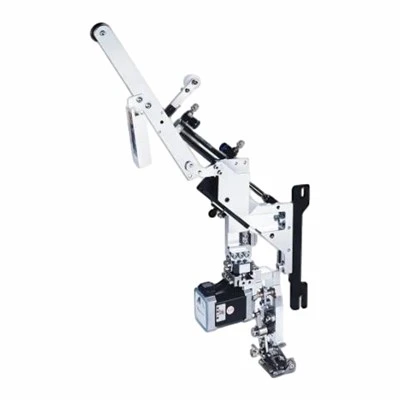
At the end of the day, can a computerized quilting machine be used for commercial purposes? Yes—if you pick the right model, learn how to use it properly, and match it to your workflow. It’s not a magic bullet, but it’s a tool that turns a stressful, low-profit side hustle into a scalable, profitable business. I’ve seen it happen again and again—from a guy in his garage making 10 quilts a week to a 2-person shop making 500 a month, all because he switched to a computerized machine.
Flat Embroidery Machine If you’re ready to stop guessing and find out which computerized quilting machine fits your commercial needs, feel free to reach out. I’m here to answer questions, help you pick the right setup, and get your business running smoother. No jargon, no nonsense, just straight talk from someone who’s been in the commercial quilting game for years.
References
- Textile Machinery Association. "Efficiency and Accuracy in Modern Quilting Equipment." Journal of Commercial Textile Manufacturing, vol. 18, no. 2, 2022, pp. 45-52.
- Small Business Administration. "Scaling a Handmade Product Business: Equipment Choices and Profit Margins." U.S. Small Business Administration Report, 2023, pp. 19-24.
- Quilt Industry Association. "2024 Trends in Commercial Quilting: Automation and Customization." Quilt Industry Annual Review, 2024, pp. 31-37.
Yiwu Kuhao Import and Export Co., Ltd.
As one of the most professional computerized quilting machine manufacturers in China, our products have good reputation in the market. Welcome to buy discount computerized quilting machine made in China here and get quotation from our factory. All customized products are with high quality and low price.
Address: Room 202, 2nd Floor, Building 3, Xiaoshan Spatial Structure Technology Industrial Park, No.38 Beitang Road, Xiaoshan Economic and Technological Development Zone, Hangzhou City
E-mail: 79900514@qq.com
WebSite: https://www.kuhaoembroidery.com/
