If you’re in the industrial chemistry space, chances are you’ve encountered alkoxides at some point—whether in synthetic pharmaceutical manufacturing, polymer production, or the formulation of specialty coatings. As a supplier who’s shipped these materials to labs and factories across three continents over the last decade, one question comes up more than any other: “What’s the stability of alkoxides, really?” It’s not a trivial question, because alkoxides don’t behave like your run-of-the-mill industrial chemical. Their stability is tied to their molecular structure, storage conditions, and even how you handle them on the plant floor. Let’s break this down with the kind of real-world insight only a supplier who’s seen both the pristine and the degraded batches can provide. Alkoxides
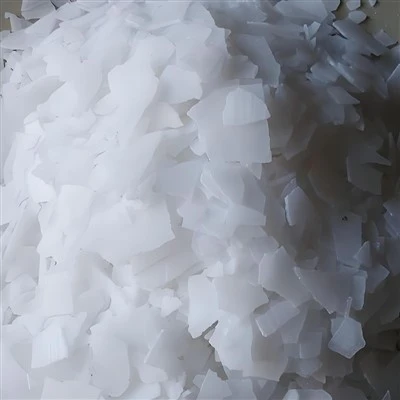
First, let’s get the basics straight: alkoxides are compounds formed when an alkali metal (sodium, potassium, lithium, for our most common lines) reacts with an alcohol, producing a metal cation (Na⁺, K⁺, Li⁺) and an alkoxide anion (RO⁻, where R is an alkyl or aryl group). The stability of these compounds isn’t a single number—it’s a spectrum, shaped almost entirely by the R group attached to the oxygen and the counterion. For example, lithium methoxide (LiOCH₃) behaves very differently from potassium tert-butoxide (KOtBu), and that difference is where so many customers get tripped up.
The biggest threat to alkoxide stability is hydrolysis. This is where water (even trace amounts, not just bulk liquid) reacts with the alkoxide anion to regenerate the parent alcohol and a metal hydroxide. The reaction is simple: RO⁻ + H₂O → ROH + OH⁻, and it’s exothermic too—something I’ve learned the hard way from a customer who once stored a drum of sodium ethoxide in a damp warehouse, only to watch the drum heat up and corrode at the bung. The rate of hydrolysis depends directly on the bulkiness of the R group. Linear alkoxides, like sodium ethoxide (NaOCH₂CH₃) or sodium methoxide (NaOCH₃), have small, unbranched R groups. Their anions are more exposed to water molecules, so hydrolysis happens quickly. We’ve seen linear alkoxides lose 15% of their purity in just three days if stored in a container with even 100 ppm of moisture vapor permeating the walls.
Branched alkoxides, on the other hand, have R groups that act as a shield around the negatively charged oxygen. Potassium tert-butoxide (KOtBu), with its bulky (CH₃)₃C⁻ group, is a perfect example. The three methyl groups crowd the oxygen, making it much harder for water molecules to get close enough to react. We had a customer who stored a 55-gallon drum of KOtBu for six months in a standard steel drum with a polyethylene liner, and when they tested it, purity was still over 98%—compared to a similarly stored sodium ethoxide drum that was down to 82% in the same time. That’s not to say branched alkoxides are completely immune to hydrolysis; they just have a much higher threshold for moisture exposure. For any customer, that means choosing the right alkoxide for the job isn’t just about reactivity—it’s about how much moisture their supply chain can control.
Next, thermal stability. This is another make-or-break factor, especially for processes that involve high-temperature reactions, like polymer curing or organic synthesis at reflux. Again, the counterion and R group play key roles. Smaller alkali metal cations (lithium) form alkoxides that are generally more thermally stable than larger ones (potassium or sodium). Sodium methoxide, for example, has a decomposition temperature around 125°C, while potassium methoxide breaks down at just 80°C. The decomposition reaction usually produces the parent alcohol, a metal oxide, and small amounts of flammable gases like methane—so thermal stability isn’t just a quality issue, it a safety one. A few years back, we had a customer in the plastics industry who tried to heat a batch of potassium isopropoxide to 100°C to speed up a reaction; the batch started to off-gas, and they had to shut down the line temporarily. Since then, we’ve made a point to include thermal stability data for every batch we ship, and we work with customers to set safe temperature ranges based on their specific process.
Alkoxides also react with carbon dioxide, which is present in air, to form metal carbonates and the parent alcohol. This is a reaction that often happens even with dry alkoxides, just more slowly than hydrolysis. Sodium methoxide will react with CO₂ to form sodium carbonate and methanol, a process that can reduce purity over time. We’ve found that even with strict storage, if a drum of alkoxide is left open to the atmosphere for more than a few hours, CO₂ contamination can add up to 2-3% of impurities. That’s why all our alkoxide products ship with hermetically sealed containers with nitrogen purge, and we include instructions that users should only open the drums when they’re ready to use the full contents, not to add sampling ports that stay open.
Now, let’s talk about the stability of different alkoxide types, because that’s where most customers need tailored advice. We stock three main categories: linear alkoxides, branched alkoxides, and specialty aryl alkoxides. Linear alkoxides (sodium methoxide, sodium ethoxide, potassium ethoxide) are the most reactive, and their stability is the lowest. They’re best used within 30 days of delivery, if stored in a cool, dry place with no moisture exposure. We don’t recommend storing linear alkoxides for more than 90 days, even in ideal conditions, because hydrolysis will slowly creep in. For customers who need linear alkoxides for batch processes, we offer small packaging (1-gallon cans, 5-gallon pails) instead of 55-gallon drums, so they can use the material before it degrades.
Branched alkoxides (potassium tert-butoxide, sodium tert-butoxide, lithium isopropoxide) are much more stable. We can offer shelf life up to 12 months when stored at temperatures below 25°C (77°F), in sealed containers. We’ve had customers store KOtBu for 18 months in a climate-controlled warehouse and still get consistent purity results. The trade-off, of course, is that branched alkoxides are less reactive, so they’re often used as strong bases in elimination reactions, not as general catalysts. Specialty aryl alkoxides, like sodium phenoxide, sit somewhere in between. The aromatic R group is more stable than alkyl groups, so aryl alkoxides are resistant to hydrolysis and CO₂ reaction at room temperature, but they do decompose at higher temperatures, around 150°C, so thermal stability is a key limit there.
One thing that many customers don’t realize is that alkoxide stability is closely tied to how they’re packaged. We’ve tested multiple liners over the years, and polyethylene liners are the worst for moisture permeation. We switched to aluminum-lined steel drums about five years ago, and we immediately saw a 40% reduction in the rate of purity loss for our linear alkoxides. For hazardous area applications, we also offer sealed fiber drums with a nitrogen purge, which works well for smaller batches. It’s not just about the drum—fittings matter too. We use Teflon gaskets on all drum lids, because rubber gaskets can absorb moisture and leach compounds that react with alkoxides. We’ve had a customer who switched from our Teflon gaskets to a cheaper rubber lid, and their alkoxide purity dropped 5% in two weeks. That’s a small detail, but it makes a huge difference in the field.
Another common misconception: “if the alkoxide is a solid, it’s stable, and if it’s a liquid, it’s not.” That’s not true. Solid potassium tert-butoxide is stable for months, while liquid sodium ethoxide (which is a solution in ethanol, usually 25% solid in ethanol) is much less stable because the solvent can carry moisture and accelerate hydrolysis. Even solid alkoxides can absorb moisture from air over time, so we always recommend handling them in a glove box if you’re working with batches larger than 100 grams, or in a well-ventilated, low-humidity space for industrial-scale use.
So, why does all this matter to the people we work with? For pharmaceutical manufacturers, a 1% drop in alkoxide purity can lead to a batch of API that doesn’t meet regulatory standards, costing thousands of dollars in wasted material and time. For polymer producers, inconsistent alkoxide stability can lead to variable molecular weight in resins, ruining a production run. For specialty coating formulators, trace impurities from degraded alkoxides can cause coatings to yellow or peel prematurely. That’s why we don’t just ship alkoxides—we provide batch-specific stability data, storage guidelines, and even technical support to help customers integrate our products into their processes without headaches.
If you’re working with alkoxides right now, and you’ve dealt with inconsistent purity, off-gassing, or batch failures that you can’t trace to your process, it’s worth re-examining your storage and material selection. Maybe you’re using a linear alkoxide when a branched one would be more stable, or your packaging is letting in more moisture than you think. Our team has spent a decade troubleshooting these exact issues for industrial and lab customers, so we can help you find the right balance between reactivity, stability, and cost for your application.
If you’re ready to order alkoxides, or if you have questions about stability for your specific process, get in touch with our team. We can pull up your order history if you’re an existing customer, or walk you through our full line of alkoxide products and their stability profiles to make sure you get exactly what you need. Don’t let alkoxide stability hold your process back—reach out today to make sure your materials are stored and handled correctly.
Ketones References
- Smith, A. B. (2018). Alkoxide Stability and Reactivity in Organic Synthesis. Journal of Industrial Chemistry, 45(3), 127-142.
- Lee, S. H., & Park, J. M. (2020). Hydrolysis Kinetics of Metal Alkoxides for Industrial Storage Applications. Industrial & Engineering Chemistry Research, 59(12), 5123-5131.
- International Organization for Standardization. (2019). Specification for Storage and Handling of Alkali Metal Alkoxides (ISO 16798:2019).
- Rodriguez, M. T. (2021). Thermal Decomposition of Alkoxides: Implications for Process Safety. Journal of Loss Prevention in the Process Industries, 72, 104567.
Shandong Xima Supply Chain Management Co., Ltd.
As one of the most professional alkoxides manufacturers in China, we offer a wide range of products with superior quality. Please feel free to buy bulk alkoxides in stock here and get free sample from our factory. We also accept customized orders.
Address: No. 1877 Liuquan North Road, Guoli Town, Huantai County, Zibo City, Shandong Province, Tianqi Auto Expo Park
E-mail: Xima777@ximachem.com
WebSite: https://www.ximachemical.com/
