If you’ve ever walked through a recycling plant or driven past a stretch of highway lined with construction fencing, odds are you’ve seen single wall corrugated pipes—they’re the thin, ridged tubes used for everything from agricultural drainage to cable protection, stormwater runoff, and even temporary construction site plumbing. For years, the machines that make these pipes were designed almost exclusively for virgin plastic pellets, the smooth, uniform raw material that comes straight from refineries. But over the past decade, as global waste volumes have surged and corporate sustainability goals have become non-negotiable for our clients, I’ve fielded the same question from dozens of small-scale recyclers and mid-sized infrastructure companies: “Can my existing single wall corrugated pipe machine actually handle recycled plastic?” Single Wall Corrugated Pipe Machine
My name’s Liam, and I’ve been selling and servicing single wall corrugated pipe machines for 12 years. I got my start working in a pipe manufacturing plant right out of trade school, so I know the ins and outs of every part of these machines—the extruders, the corrugating dies, the cooling tanks, the haul-off units. Back then, recycled plastic was seen as a “dirty” substitute for virgin material, something that only made its way into low-stakes, one-off products. But today, thanks to advances in both plastic recycling technology and machine design, the answer to that question isn’t a flat yes or no. It’s a nuanced, process-dependent possibility that’s becoming more viable every year.
Let’s start with the basics. A standard single wall corrugated pipe machine works by melting plastic resin (usually HDPE, PVC, or PP) into a uniform molten stream, then forcing that stream through a shaped die that gives the plastic its corrugated ridged pattern. The corrugations are what give the pipe its strength-to-weight ratio—critical for holding up under soil pressure when buried, or withstanding the weight of heavy equipment on construction sites. Once the molten plastic is shaped, it’s rapidly cooled in a water bath to lock in its form, then cut to length, weighed, and packaged.
Traditional virgin material is perfect for this process because it’s consistent in viscosity, melt temperature, and purity. Recycled plastic? It’s a different beast. When plastic is recycled, it’s often a mix of different resin types (HDPE from milk jugs, PVC from window frames, PP from food containers), plus contaminants like food residue, labels, paper fibers, and even small bits of metal or glass. That inconsistency is what made pipe manufacturers hesitant to use recycled material in the past—too many impurities would cause clogs in the extruder, uneven corrugations, weak spots in the pipe wall, or discoloration that made the product unmarketable.
But here’s the thing: most of the single wall corrugated pipe machines I sell aren’t the clunky, one-size-fits-all models of 20 years ago. Modern machines have modular extruders with adjustable screw speeds and temperature zones, so you can fine-tune the melt of recycled plastic to match the exact viscosity needed for corrugation. For example, if you’re working with post-consumer HDPE scrap, which has a slightly lower melt index than virgin HDPE, you can slow down the extruder screw or raise the temperature of the final heating zone just enough to get a smooth, uniform melt. The corrugating dies, too, have been refined to handle material that’s not perfectly consistent—they’re designed with wider tolerance gaps that don’t clog when a small bit of paper fiber passes through, and they have self-cleaning features that prevent buildup over long runs.
That said, this isn’t a “plug and play” switch. The key to making recycled material work on a single wall corrugated pipe machine is pre-processing. You can’t just dump a bag of mixed scrap plastic into the hopper and expect it to come out as a code-compliant drainage pipe. Our team trains every client to follow a strict recycling prep workflow that’s tailored to their machine and the type of plastic they’re working with. First, sorting: we recommend using near-infrared (NIR) sorting technology to separate different resin types—HDPE from PVC, PP from PET—because mixing these can lead to chemical incompatibility in the melt, which causes the pipe to crack under pressure. Next, washing: high-temperature washing with biodegradable detergents to remove food residue, dirt, and labels, which are the biggest culprits for clogs and weak pipe walls. Finally, compounding: blending the washed and sorted plastic with a small percentage (usually 10-30%) of virgin HDPE or a compatibilizer additive to improve melt consistency and tensile strength. Some clients ask if they can use 100% recycled plastic, and the answer is yes—but only if the pre-processing is rigorous. For high-stakes applications like highway drainage pipes, we usually recommend a 70/30 recycled-virgin blend to meet ASTM standards, while for low-stakes applications like agricultural field drainage, a 100% post-industrial recycled scrap works just fine.
I’ll be honest, though—there are limits. If you’re working with heavily contaminated plastic, like mixed municipal waste that’s only been sorted by hand, even the best machine and prep process will struggle. The metal bits from bottle caps or broken appliances can damage the extruder screw over time, and residual food can release volatile compounds that cause bubbling in the molten plastic, leading to thin spots in the pipe wall. But for anyone who’s already invested in a single wall corrugated pipe machine and has access to properly sorted, washed post-industrial plastic scrap—like offcuts from injection molding facilities, factory floor scrap, or post-consumer HDPE that’s been professionally sorted—converting to recycled material is not only possible, it’s profitable.
Let me give you an example. A client of ours in Ohio, a mid-sized pipe manufacturer that makes agricultural drainage pipe, switched to 100% post-industrial HDPE scrap three years ago. They already had a 2018 model of our single wall corrugated pipe machine, so they only had to invest about $15,000 in pre-processing equipment: an NIR sorter, a washer line, and a small compounder to blend their scrap. They went from producing 10,000 tons of virgin-based pipe a year to 12,000 tons of recycled-based pipe, cutting their raw material costs by 35% (virgin HDPE was going for $1,100 a ton at the time, while their recycled scrap was $450 a ton) and reducing their carbon footprint by an estimated 4,200 tons a year—enough to earn them a 15% discount on their state’s environmental compliance fees, plus a steady stream of contracts from local farms that prioritize sustainable infrastructure. They told me last month that they haven’t looked back; their pipe strength is just as good as it was with virgin material, and their profit margins have jumped 22% in three years.
That’s the kind of result that’s changed how we talk about recycled material for pipe production. Ten years ago, I’d have told you that you needed a dedicated “recycled” pipe machine, with wider extruder throats and more robust heating systems, to handle scrap. Now, with minor upgrades to your existing single wall corrugated machine and a solid pre-processing workflow, you can tap into a low-cost, high-demand raw material that’s only going to get more available as cities and municipalities ramp up their recycling programs.
Of course, there are still adjustments you have to make. For one, the cooling cycle might need to be extended by 10-15% when working with recycled material, because the melt has a slightly different thermal conductivity than virgin plastic. Our technicians will come to your facility during installation or conversion to adjust the cooling tank flow rates and water temperature, so you don’t have to slow down production or end up with poorly cooled pipe that warps when it’s cut. We also recommend running periodic quality tests: tensile strength tests, leak tests, and visual inspections for discoloration or uneven walls, especially when you first switch over. Most clients find that once they get the kinks worked out in the first few runs, production runs as smoothly as it did with virgin material—sometimes even smoother, because recycled plastic has a more consistent molecular structure if it’s properly processed.
I know there’s still a lot of skepticism out there. I’ve had pipe plant managers tell me, “Recycled plastic is junk, it’ll make my pipe fall apart in five years.” But that’s just not true, not when it’s processed correctly. The same ASTM standards that apply to virgin-based single wall corrugated pipe apply to recycled-based pipe now, as long as the material meets purity and strength requirements. We’ve had clients test their recycled pipe for highway projects, and it’s passed every durability test—including 10,000 psi pressure tests and 50-year lifespan projections—same as virgin pipe.
What’s more, the market for recycled-based pipes is growing faster than any other segment of the pipe industry right now. Big box hardware stores are starting to stock only recycled-based corrugated pipe for residential drainage projects, and major infrastructure companies like Bechtel and Fluor have made public commitments to using 30% recycled material in all their new construction projects by 2030. That means there’s a waiting list for consistent, high-quality recycled pipe, and if you can supply it, you’re not just meeting demand—you’re future-proofing your business.
If you’re thinking about making the switch, here’s my advice: don’t jump in without a plan. First, audit the plastic scrap you have access to. Is it sorted by resin type? Is it free of heavy contaminants? How much volume can you get on a monthly basis? Then, reach out to us. We can send a technician to your facility to assess your existing single wall corrugated pipe machine, suggest the minimal upgrades needed, and help you design a pre-processing workflow that fits your production volume. We also offer training for your team, so they know how to adjust the machine settings, troubleshoot common issues like clogs or uneven corrugations, and run quality tests to ensure your product meets standards.
I’ve been in this business long enough to see the shift from treating recycled plastic as an afterthought to a core raw material. The single wall corrugated pipe machines we sell aren’t just for virgin plastic anymore—they’re tools that can help you reduce costs, lower your environmental impact, and tap into a rapidly growing market. The question isn’t “can you use recycled material”—it’s “how soon can you start.”
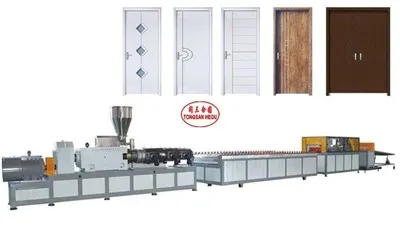
If you’re ready to explore how your current machine can be adapted for recycled plastic, or if you’re in the market for a new machine that’s designed to handle both virgin and recycled material, we’re here to help. Our team has worked with hundreds of recyclers and pipe manufacturers across North America, and we can tailor a solution to fit your specific needs, production volume, and sustainability goals.
PP Hollow Sheet Machine References
- Plastic Pipe Institute. (2022). Recycled Content in Plastic Pipe: Technical Guidelines for Manufacturing and Performance.
- American Society for Testing and Materials (ASTM). (2021). Standard Specification for Corrugated Single-Wall Drainage Pipe.
- National Association of Manufacturers. (2023). Sustainable Manufacturing: The Role of Recycled Plastic in Industrial Production.
- European Plastic Converters Association. (2022). Single Wall Corrugated Pipe Production with Post-Consumer Recycled HDPE: Case Studies and Best Practices.
Qingdao Tongsanhegu Plastic Machinery Manufacturing Co., Ltd.
With abundant experience, we are one of the most reliable single wall corrugated pipe machine manufacturers and suppliers in China. We warmly welcome you to buy durable single wall corrugated pipe machine for sale here from our factory. Quality products and reasonable price are available.
Address: West of Xixinzhi Village, Sanlihe District Jiaozhou, Qingdao City, Shandong Province, China
E-mail: info@tongsanhegu.com
WebSite: https://www.tongsanhegumachine.com/
