Hey there! I’m a supplier of angle steel towers, and today I wanna chat about how to design these bad boys to handle extreme weather conditions. It’s not just about slapping some steel together; it takes careful planning and a good understanding of what Mother Nature can throw our way. Angle Steel Tower
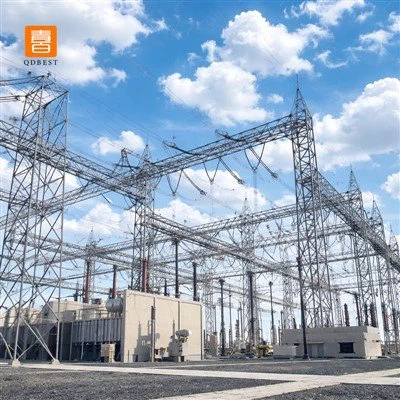
First off, let’s talk about the types of extreme weather we’re up against. We’ve got high winds, heavy snow, ice storms, and even earthquakes in some areas. Each of these conditions poses unique challenges for angle steel towers, but with the right design approaches, we can make them tough enough to stand the test.
High Winds
High winds are one of the most common and destructive forces that angle steel towers face. When the wind blows hard, it creates a lot of pressure on the tower, and if the tower isn’t designed properly, it can bend, twist, or even collapse. So, what can we do to make our towers more wind – resistant?
One of the key things is the shape of the tower. A streamlined shape can reduce wind resistance. We can design the legs and cross – arms of the tower to have smooth curves rather than sharp edges. This helps the wind flow around the tower more easily, reducing the drag force.
Another important factor is the foundation. A solid foundation is crucial for withstanding high winds. We need to make sure the tower is firmly anchored to the ground. Usually, we use deep – drilled foundations or large concrete blocks. The depth and size of the foundation depend on the height and width of the tower, as well as the local soil conditions. In areas with loose soil, we might need to go deeper to reach more stable ground layers.
We also need to consider the spacing of the tower members. If the members are too close together, they can create a "wind tunnel" effect, increasing the pressure on the tower. On the other hand, if they’re too far apart, the tower might not be structurally stable. We use computer simulations to find the optimal spacing that balances wind resistance and structural integrity.
Heavy Snow and Ice
Heavy snow and ice can add a significant amount of weight to the angle steel tower. This extra load can cause the tower to sag or even break if it’s not designed to handle it.
To deal with snow, we increase the strength of the horizontal members of the tower. These are the parts that are most likely to accumulate snow. We can use thicker steel for the cross – arms and increase the number of support brackets. This helps distribute the weight of the snow more evenly across the tower.
Ice is even more tricky because it can form in different shapes and locations on the tower. It can also change the aerodynamics of the tower, making it more vulnerable to high winds. We can use de – icing systems in areas prone to ice storms. These systems can be either electrical or mechanical. Electrical de – icing systems heat up the tower members to melt the ice, while mechanical systems use vibrating devices to shake the ice off.
Another approach is to design the tower with a self – cleaning shape. We can make the surfaces of the tower members sloped so that snow and ice are more likely to slide off on their own.
Earthquakes
In earthquake – prone areas, angle steel towers need to be designed to resist seismic forces. Earthquakes cause the ground to shake, and this can put a lot of stress on the tower.
One of the main design principles for earthquake resistance is flexibility. A rigid tower is more likely to break during an earthquake, while a flexible tower can bend and absorb the energy of the seismic waves. We can use flexible joints in the tower structure to allow some movement without breaking.
We also need to consider the mass distribution of the tower. A more evenly distributed mass helps the tower respond better to earthquake forces. This means avoiding large, heavy components concentrated in one area.
The foundation is also super important in earthquake – resistant design. We can use special types of foundations, like base – isolated foundations. These foundations have a layer of flexible material between the tower and the ground, which helps absorb and dissipate the seismic energy.
Material Selection
The choice of materials is a big deal when designing angle steel towers for extreme weather. We need to use high – strength steel that can withstand the forces exerted by the weather. The steel should also have good corrosion resistance, especially in areas with high humidity, saltwater, or industrial pollution.
We often use galvanized steel, which has a protective zinc coating. This coating helps prevent rust and extends the lifespan of the tower. In some cases, we might also use stainless steel, which is even more corrosion – resistant but can be more expensive.
Testing and Quality Control
Once we’ve designed the angle steel tower, we can’t just assume it will work. We need to test it thoroughly. We use scale models in wind tunnels to simulate high – wind conditions. These tests help us measure the wind forces acting on the tower and identify any potential weak points.
We also do load – testing on the full – scale towers. We apply different types of loads, like snow and ice loads, to make sure the tower can handle them without failing.
Quality control is essential throughout the manufacturing process. We check the dimensions of the steel members, the quality of the welds, and the overall assembly of the tower. Any defects or non – conformities need to be fixed immediately.
Conclusion

Designing an angle steel tower to withstand extreme weather conditions is no easy feat. It requires a combination of smart design, proper material selection, rigorous testing, and strict quality control. But as a supplier, I’m confident that we can create towers that are tough enough to stand up to whatever nature throws at them.
Telecommunication Tower If you’re in the market for angle steel towers that can handle extreme weather, I’d love to have a chat with you. We can discuss your specific requirements, come up with a custom design, and ensure you get a high – quality product that meets your needs. So, don’t hesitate to reach out and start a conversation about your next project.
References
- "Structural Design of Steel Transmission Towers" by Ahammed S. H. and Mahendran M.
- "Design of Steel Structures for Extreme Loading Conditions" edited by Bruneau M.
- "Wind Engineering of Industrial Buildings" by Vickery B. J. and Bloore G. H.
Qingdao BEST Steel Structure Co., Ltd.
Qingdao BEST Steel Structure Co., Ltd. is one of the most professional angle steel tower manufacturers and suppliers in China. We warmly welcome you to buy customized angle steel tower made in China here from our factory. If you have any enquiry about OEM service, please feel free to email us.
Address: Jiaobei Industrial Park, Qingdao, China
E-mail: sales@qdbsstower.com
WebSite: https://www.qdbsstower.com/
