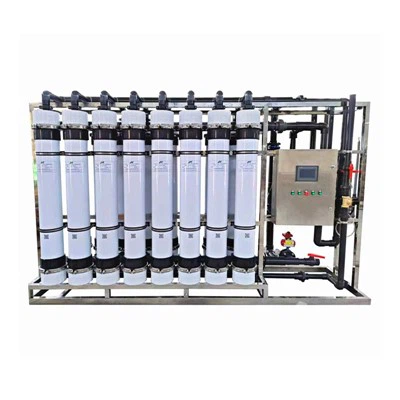
Reverse Osmosis (RO) purified water equipment has become an essential solution for removing heavy metals from water, offering safe and clean drinking water for various applications. As a supplier of RO purified water equipment, I am often asked about how our systems achieve this crucial task. In this blog, I will delve into the scientific principles and mechanisms behind how our RO purified water equipment effectively removes heavy metals from water. RO Purified Water Equipment
Understanding Heavy Metals in Water
Heavy metals such as lead, mercury, cadmium, arsenic, and chromium are common contaminants found in water sources. These metals can enter water supplies through natural processes like erosion and weathering of rocks, as well as through human activities such as industrial waste disposal, mining, and agriculture. Exposure to heavy metals in drinking water can pose serious health risks, including damage to the nervous system, kidneys, and liver, as well as an increased risk of cancer.
The Reverse Osmosis Process
Reverse osmosis is a water purification process that uses a semi-permeable membrane to remove impurities from water. The process works by applying pressure to the water on one side of the membrane, forcing it to pass through the membrane while leaving behind contaminants, including heavy metals.
The semi-permeable membrane used in RO systems has tiny pores that are small enough to allow water molecules to pass through but large enough to block larger molecules and ions, such as heavy metals. When water is forced through the membrane under pressure, the heavy metal ions are unable to pass through and are retained on the concentrate side of the membrane, while the purified water passes through to the permeate side.
Mechanisms of Heavy Metal Removal
There are several mechanisms by which RO purified water equipment removes heavy metals from water:
Sieving
The most basic mechanism of heavy metal removal in RO systems is sieving. The semi-permeable membrane has pores that are typically in the range of 0.0001 to 0.001 micrometers in size, which is much smaller than the size of heavy metal ions. As water passes through the membrane, the heavy metal ions are physically blocked from passing through the pores and are retained on the concentrate side of the membrane.
Electrostatic Repulsion
In addition to sieving, the RO membrane also has a surface charge that can interact with charged particles in the water, including heavy metal ions. Most RO membranes have a negative charge on their surface, which can repel negatively charged heavy metal ions, such as chromate (CrO42-) and arsenate (AsO43-). This electrostatic repulsion helps to prevent these ions from passing through the membrane and further enhances the removal efficiency of heavy metals.
Complexation and Precipitation
Some heavy metal ions can form complexes with other substances in the water, such as organic matter or dissolved salts. These complexes can be larger in size and more easily retained by the RO membrane. In addition, some heavy metal ions can also precipitate out of solution under certain conditions, such as changes in pH or temperature. The precipitated heavy metal particles can then be removed by the RO membrane during the filtration process.
Factors Affecting Heavy Metal Removal Efficiency
The efficiency of heavy metal removal in RO purified water equipment can be affected by several factors:
Feed Water Quality
The quality of the feed water, including the concentration of heavy metals and other contaminants, can have a significant impact on the removal efficiency of RO systems. Higher concentrations of heavy metals in the feed water can increase the load on the RO membrane and reduce its lifespan. In addition, the presence of other contaminants, such as suspended solids, organic matter, and dissolved salts, can also affect the performance of the RO membrane and reduce its removal efficiency.
Membrane Type and Quality
The type and quality of the RO membrane used in the system can also affect the removal efficiency of heavy metals. Different types of RO membranes have different pore sizes and surface properties, which can affect their ability to remove heavy metals. In addition, the quality of the membrane can also affect its durability and resistance to fouling and scaling, which can reduce its performance over time.
Operating Conditions
The operating conditions of the RO system, including the pressure, temperature, and flow rate, can also affect the removal efficiency of heavy metals. Higher pressures can increase the driving force for water to pass through the membrane, which can improve the removal efficiency of heavy metals. However, excessive pressure can also damage the membrane and reduce its lifespan. In addition, higher temperatures can increase the solubility of heavy metals in water, which can reduce their removal efficiency. The flow rate of the water through the system can also affect the contact time between the water and the membrane, which can affect the removal efficiency of heavy metals.
Our RO Purified Water Equipment
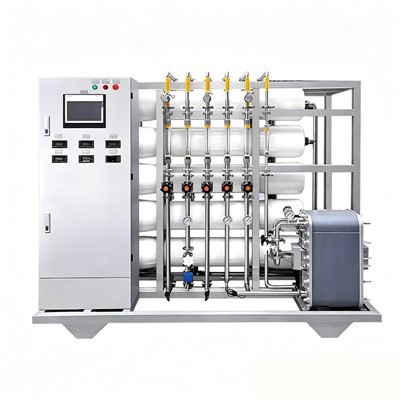
As a supplier of RO purified water equipment, we offer a range of systems that are designed to effectively remove heavy metals from water. Our RO systems are equipped with high-quality membranes that are specifically designed for heavy metal removal. These membranes have a small pore size and a high surface charge, which allows them to effectively block heavy metal ions from passing through the membrane.
In addition, our RO systems are also equipped with advanced pretreatment systems that are designed to remove suspended solids, organic matter, and dissolved salts from the feed water before it enters the RO membrane. This helps to reduce the load on the membrane and improve its performance and lifespan.
Our RO systems are also designed to operate at optimal conditions, including the appropriate pressure, temperature, and flow rate, to ensure maximum heavy metal removal efficiency. We also provide comprehensive after-sales service and support to ensure that our customers’ RO systems are operating at peak performance and are providing safe and clean drinking water.
Conclusion
RO purified water equipment is an effective solution for removing heavy metals from water. The reverse osmosis process uses a semi-permeable membrane to remove impurities from water, including heavy metal ions. The mechanisms of heavy metal removal in RO systems include sieving, electrostatic repulsion, and complexation and precipitation. The efficiency of heavy metal removal can be affected by several factors, including the feed water quality, membrane type and quality, and operating conditions.
SWRO & BWRO Equipment As a supplier of RO purified water equipment, we are committed to providing our customers with high-quality systems that are designed to effectively remove heavy metals from water. Our RO systems are equipped with advanced membranes and pretreatment systems, and are designed to operate at optimal conditions to ensure maximum heavy metal removal efficiency. If you are interested in learning more about our RO purified water equipment or would like to discuss your specific water treatment needs, please contact us to schedule a consultation. We look forward to working with you to provide you with safe and clean drinking water.
References
- American Water Works Association. (2016). Water Quality and Treatment: A Handbook of Community Water Supplies. McGraw-Hill Education.
- Chowdhury, U. K., Kabir, S. J., & Chowdhury, K. R. (2016). Arsenic in drinking water: A global synopsis with emphasis on the Indian subcontinent. Journal of Geochemical Exploration, 166, 83-109.
- Crittenden, J. C., Trussell, R. R., Hand, D. W., Howe, K. J., & Tchobanoglous, G. (2012). MWH’s Water Treatment: Principles and Design. John Wiley & Sons.
- Fawell, J., Bailey, R., Chilton, J., Dahi, E., Fewtrell, L., & Magara, Y. (2006). Arsenic in Drinking Water. World Health Organization.
- National Research Council. (2006). Arsenic in Drinking Water: 2001 Update. National Academies Press.
Shandong Yanuo Environmental Protection Equipment Co., Ltd.
We’re well-known as one of the leading ro purified water equipment manufacturers and suppliers in China, featured by quality products and good price. Please rest assured to buy bulk ro purified water equipment made in China here from our factory. Customized orders are welcome.
Address: North Side of the Road, 1,000 Meters West of the Intersection of Fenghuangshan West Road and Provincial Highway S102, Wangfu Subdistrict, Qingzhou City, Weifang City, Shandong Province.
E-mail: ynhb.499973983@gmail.com
WebSite: https://www.zkyaruo.com/
