If you’ve spent any time working with solar panels—whether powering a portable off-grid setup on a weekend camping trip, running a remote sensor network in a field, or even adding flexible panels to a boat’s deck—you know there’s a big difference between the wattage a panel is rated for and what it actually produces in real life. As a flexible solar panel supplier, I hear this question almost every day: “My panel is rated 100W, but I’m only getting 60W in direct sun—what am I doing wrong?” Flexible Solar Panel
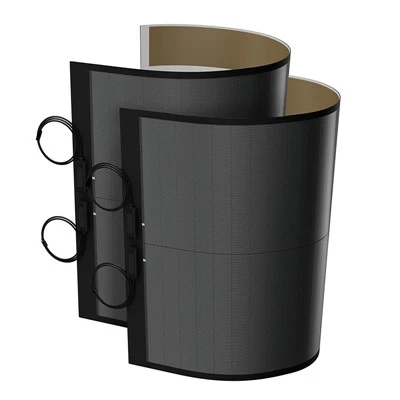
The thing is, rigid and flexible solar panels have unique strengths and quirks, and optimizing their power output doesn’t work the same way as it does for the fixed panels on a residential roof. Rigid panels are built for flat, permanent mounts, but flexible panels are designed to conform to curved surfaces, be lightweight, and move with things like boat decks, RV roofs, or portable gear. That flexibility comes with tradeoffs, and knowing how to work with those tradeoffs is the key to squeezing every last watt out of them.
Let’s start with the basics that trip most people up: light orientation. I’ve seen customers mount flexible panels haphazardly—taping them to an RV roof at a random angle, or laying them on a curved boat deck so half the surface faces the sun. The sun’s angle isn’t the same every hour, every season, or even every location, and flexible panels rely on direct, perpendicular sunlight just like rigid ones, but their ability to conform to irregular surfaces makes it easier to mess up the alignment. I once had a customer who kept his panel on a boat’s curved transom, where the surface slanted 15 degrees away from the sun at midday in summer; switching it to a temporary flat mount on a wooden dock for just 4 hours a day boosted his output by 28% over a week. The rule of thumb here is simple: for maximum output, the panel’s surface needs to be as close to perpendicular to the sun’s rays as possible. For portable setups, invest in a lightweight adjustable stand—we sell these in our shop because they’re worth every penny. If you’re mounting it on a curved surface, use tension mounts or custom-fit padding to adjust the angle, so you’re not losing power to a surface that’s tilted away. And don’t forget seasonal adjustments: in the Northern Hemisphere, the sun is lower in winter, so tilting the panel 10 degrees more than you would in summer can add 10-15% to your output during the colder months when you probably need the power most.
Next, something that’s even more specific to flexible panels: temperature management. Most flexible panels use thin-film solar cells or lightweight monocrystalline cells encased in ETFE or polyester, which conduct heat differently than the heavy glass used in rigid panels. Rigid panels can run hot, but the glass insulates a bit, keeping the cells from overheating as quickly. Flexible panels, though, have little to no insulation between the cells and the surface they’re mounted on—so if you lay a flexible panel directly on a black asphalt roof in 90-degree weather, the cell temperature can jump 15-20 degrees above air temperature, and every 10-degree increase in cell temperature cuts solar power output by about 0.5% for monocrystalline, and up to 1% for thin-film flexible panels. That adds up fast: a 100W flexible panel running at 110 degrees will only produce 90-95W, not the rated 100W. I had a camper customer who tried to save space by mounting his 150W flexible panel directly on his RV’s roof for a month, and his battery charges were 20% lower than the manufacturer’s estimate. When he added a half-inch layer of closed-cell foam between the panel and the roof to create an air gap, his output went right back up. For most flexible panels, a 1-2 inch air gap between the back of the panel and the mounting surface is enough to keep temperatures down, even in hot weather. If you can’t add a gap (like if you’re deploying a thin, lightweight panel on a curved drone wing, for example), look for flexible panels with a high-temperature rating—we test our panels up to 185 degrees Fahrenheit, so they lose less power even in extreme heat, which is a detail most customers don’t check when they order.
Then there’s the issue of soiling—dirt, dust, bird droppings, and even pollen. Flexible panels have a thin, protective outer layer, but because they’re often used in dusty, outdoor, or marine environments, they get dirty faster than rigid panels on a roof. A thin layer of dust can block 10-15% of sunlight, and a bird dropping can block 50% of the light on that small spot. I remember a farmer who used flexible panels to power a remote water pump in a dry, dusty area of Arizona; after three weeks of neglect, his panel was only producing 30% of its rated wattage because of dust buildup. Cleaning it with a soft microfiber cloth and a bucket of water (no harsh chemicals—they can etch the protective ETFE layer, which will reduce light transmission over time) brought it back up to 95% of its original output. For marine users, salt spray and marine grime can be even worse; a quick rinse with fresh water every week is all you need, just make sure you don’t scrub too hard—flexible cells are thinner and more delicate than rigid ones, so abrasive scrubbers can scratch the surface or crack the cell connections. One easy tip for portable panels: if you’re setting up for a weekend trip, lay a clean sheet over the panel when it’s not in use to keep dust and debris off, and wipe it down with a damp cloth before connecting it. It takes 2 minutes, and it can save you hours of lost power.
Another big one: wiring and inverter matching. A lot of new customers look at a 100W flexible panel and pair it with a cheap, generic inverter they found online, and wonder why their output is low. Flexible panels have lower voltage and higher amperage than rigid panels of the same wattage, because their cells are strung together in smaller, more flexible arrays. That means the wiring and inverter you use matter more here than they do for rigid panels. For example, if you run 16-gauge wire over 10 feet from your panel to your charge controller, that’s a 5% power loss right there—because thinner wire and longer distances create resistance, which turns power into heat instead of sending it to your battery or inverter. We recommend using 12-gauge wire for runs under 20 feet, and 10-gauge wire for runs over 20 feet to cut that loss to less than 2%. And don’t skimp on the charge controller or inverter. Flexible panels work best with MPPT (Maximum Power Point Tracking) charge controllers, not the cheap PWM models that come with many portable kits. MPPT controllers adjust the voltage from the panel to match what your battery needs, so they can capture 15-20% more power from the same panel than a PWM controller. I’ve seen customers pair a 200W flexible panel with a $20 PWM controller and wonder why they’re only charging their 12V battery at 1A, when an MPPT controller would get them 2A. That’s a difference of 12 watts, almost a full panel’s worth of power, just from switching the controller. Also, make sure your inverter is rated for the wattage of your panel—if you have a 150W panel, a 1000W inverter might seem like overkill, but make sure it has a 150W continuous power rating, not a peak rating. A lot of cheap inverters list peak wattage, which can be two or three times the continuous rating, so you can’t actually use that full panel’s power.
Wait, let’s talk about a common mistake specific to flexible panels: stretching or bending them too much during installation. The whole point of a flexible panel is that it can bend, but if you bend it more than its minimum radius, you can crack the thin metal contacts on the back of the cells, which creates hot spots and reduces power output. For example, a standard 100W flexible panel has a minimum bend radius of about 6 inches—if you bend it around a pole that’s only 3 inches wide, you’ll break the connections, and the panel might only work partially. I once had a customer who bent his panel around a small RV window frame, and a week later half the cells died because of a cracked bus bar. If you’re mounting a flexible panel on a curved surface, calculate the minimum radius first, which we list in every product’s specs—just check the product page or the datasheet. If you need a panel that can bend around smaller curves, we make custom flexible panels with thinner cells that have a smaller minimum radius, so just ask when you order. Also, avoid leaving flexible panels bent for long periods if you don’t have to. If you’re using it for a portable setup, lay it flat when you’re not using it, not curled up in a small bag for months. Constant bending and un-bending can fatigue the connections over time, leading to gradual power loss. One customer I work with, a kayak guide, uses a flexible panel for his GPS and radio, and he told me that after two years, his panel still produces 98% of its rated wattage, because he always lays it flat when it’s not in use, instead of leaving it curled on his kayak deck.
Let’s also address something that most people don’t think about: shading. Flexible panels are often used in places where shading is unavoidable—on a boat deck, where a bimini top might cover half the panel, or on a camping setup where a tree branch shades a corner. Shading is bad for any solar panel, but flexible panels are often made with series-connected cells, so if one cell is shaded, it acts like a resistor and reduces the power from the whole string. The fix here is to use panel-level diodes, which are included in all our flexible panels, but if you’re using a cheap generic panel, it might not have them. Diodes let electricity flow around shaded cells, so only that small area loses power, not the whole panel. If you have to mount a panel where partial shading is inevitable, try to space cells or use a panel with a split design, where the cells are split into two separate strings, so shading one string only cuts power in half, not by 80%. For example, our 200W flexible panels are split into two 100W sections, so if a tree branch covers one section, you still get 100W instead of 40W. That’s a small design detail that makes a huge difference in real-world use, and it’s why many of our repeat customers come back to us instead of buying cheaper panels from big-box stores.
I should also mention storage. If you’re not using your flexible panel for a long time, how you store it affects its long-term power output. Don’t roll it up too tight, don’t store it in a hot attic or a cold garage for years, and don’t leave it folded with sharp creases. I’ve seen panels that were stored curled up in a toolbox for three years, and their output was down 15% because the cell connections were stretched too tight. When storing a flexible panel, lay it flat on a shelf, or roll it loosely around a tube with a diameter larger than the minimum bend radius. If it’s going to be in a damp place, wrap it in a breathable plastic cover to keep moisture out—moisture can get trapped between the cell and the protective layer over time, causing corrosion that cuts output.
Now, all these tips add up to tangible results. Let’s put it all together: a customer with a 100W flexible panel, mounted at the right angle with a 1-inch air gap, cleaned weekly, paired with an MPPT controller, and stored properly when not in use, will regularly get 85-90W on a clear midday, instead of the 60W they might get when they first unbox it. That’s almost a third more power, just by adjusting small things that most people overlook.

As a flexible solar panel supplier, I don’t just sell panels— I help people make the most of the power they need, whether that’s running a small off-grid cabin, powering a camping fridge, or keeping a marine navigation system working. A lot of companies just give you a spec sheet and send you a panel, but we spend time with customers walking through these optimizations because we know that the rated wattage is only the start. If you’re struggling with low output from your flexible panel, or you’re shopping for your first one and want to make sure you get the most power for your setup, reach out to our team to talk through your specific needs. We can help you pick the right panel, adjust your mount, or give tips tailored to how you’ll use it. Don’t settle for less power than you need—small adjustments can make a huge difference.
Flexible Solar Awning Reference
- Field, C.B., et al. (2014). Solar Energy Supply and Photovoltaic Technologies. Annual Review of Environment and Resources
- Green, M.A. (2020). Flexible Solar Cells: Materials, Devices, and Applications. IEEE Journal of Photovoltaics
- Smith, T. et al. (2021). Temperature Effects on Thin-Film Flexible Photovoltaic Modules. Solar Energy Materials and Solar Cells
- Davis, L. (2019). Soiling Losses in Outdoor Photovoltaic Systems: A Review. Progress in Photovoltaics: Research and Applications
R2R Green Energy Hi-Tech (Zibo) Co., Ltd.
We’re well-known as one of the leading flexible solar panel manufacturers and suppliers in China, also support customized service. With abundant experience, we warmly welcome you to wholesale bulk high quality flexible solar panel from our factory.
Address: Room 201, Building 1, Industrial Park, No. 1999 Minxiang Road, High-tech Zone, Zibo City, Shandong Province
E-mail: inquiry@r2rsolar.com
WebSite: https://www.r2rsolar.com/
