If you’ve ever walked through a commercial park, a residential development’s utility yard, or a construction site for a new retail plaza, you’ve probably seen one of two common electrical setups: a bulky, weathered concrete structure with exposed wiring, or a compact, sleek metal enclosure sitting inconspicuously near a parking lot or sidewalk. As a box type substation supplier, I get asked this question all the time—often by project managers, engineers, even construction foremen who’ve been told to “pick the right substation” but aren’t sure what separates the two options beyond looks. Today, I’m breaking down the real, practical differences between box type substations and conventional substations, so you can make a choice that fits your project timeline, budget, and long-term needs. Box Type Substation
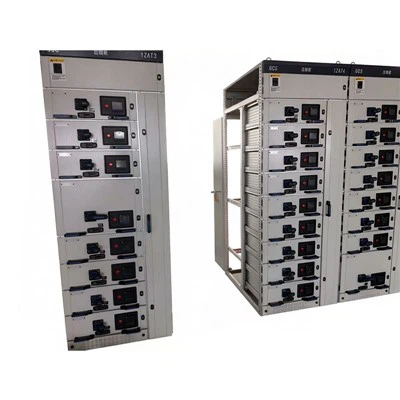
First, let’s get the basic definitions straight, because a lot of people mix these up. A conventional substation is the traditional, decades-old design: it’s a permanent, site-built structure, usually constructed from concrete block or steel framing, with individual components (transformers, switchgear, busbars, circuit breakers) installed on-site, wired together manually. It’s basically a standalone building for high-voltage electrical distribution, often used for large-scale, long-haul power tasks. A box type substation—sometimes called a prefabricated substation or pad-mounted substation, though “box type” is the industry term I stick to—is a fully assembled, self-contained unit: all the core electrical components are factory-built, wired, tested, and sealed inside a single, weatherproof metal enclosure before it even leaves the warehouse. For anyone who’s ever waited weeks for a concrete foundation to cure or a subcontractor to show up to run wiring, the on-the-ground convenience of this design is immediate.
Let’s start with installation, because that’s the biggest pain point for most project teams I work with. With a conventional substation, the process is messy and slow. First, you have to pour a concrete pad, wait 7 to 14 days for it to cure enough to support heavy equipment (transformers alone can weigh 10 to 50 tons, depending on size). Then you have to bring in cranes to lift each component one by one, hire specialized electricians to wire everything together, test each part individually, and then run final inspections. I’ve seen projects where a conventional substation install took 8 to 12 weeks from start to finish—and that’s if there are no delays: if the weather rains out a concrete pour, or a wiring part is backordered, that timeline can stretch to 16 weeks or more.
A box type substation? The installation is almost turnkey. Most units come with their own reinforced concrete base pre-installed, so you just need to level a compact gravel or asphalt pad on-site (that takes a day, max), use a crane to lower the entire sealed box into place, connect two things: the incoming power line and the outgoing lines to the building or site, and that’s it. Total installation time? For a unit that serves a 10,000-square-foot retail center, it’s 3 to 5 days. For a multi-building residential complex, maybe a week. I had a client last year who needed a substation for a temporary pop-up event complex in Texas—they got their box type substation delivered, installed, and powering the site all in 48 hours, which would have been impossible with a conventional setup. That speed isn’t just a nice perk; for commercial projects, every day of delay costs money in lost rent, missed launch dates, or construction overtime.
Next, let’s talk about footprint and site disruption. Conventional substations are big—way bigger than most people realize. A conventional substation that can power a small office park is often 1,000 square feet or more, and you need a 20 to 30 foot clearance around it for maintenance, cranes, and safety. That means it’s taking up valuable real estate that could be for parking, outdoor seating, or building space. I’ve worked on urban infill projects where developers had to carve out an entire corner of a block just to fit a conventional substation, pushing building lines back and costing them tens of thousands in lost revenue.
Box type substations, on the other hand, are compact. Most medium-sized units (the kind that power 50 to 200 residential units, or a small grocery store) are 10 to 15 feet long, 8 to 10 feet wide, and just 8 feet tall. They sit on the ground, often in spots that would be too small or awkward for a conventional substation—like a vacant strip of land between a sidewalk and a building, or the end of a parking lot. Because they’re sealed, there’s no need for large clearance around them; most local codes only require a 3-foot path for maintenance workers, so you’re not wasting valuable square footage. And since they’re pre-built, there’s no construction debris on-site: no leftover concrete chunks, no extra wiring scraps, no noisy construction trucks hanging around for weeks. For residential projects, that means less disruption for neighbors, and for commercial clients, it means the site is ready for tenants faster.
Now, performance and reliability—this is where a lot of people assume conventional substations are better, but that’s not always the case. Let’s break it down. Conventional substations have been around for so long that they have a reputation for being durable, and that’s true in some cases: if you’re powering a high-voltage transmission line for a rural area with extreme weather, a larger conventional substation might hold up well. But they have a big flaw: every connection, every wire, every component is installed by hand on-site, which leaves room for human error. A loose wire connection from a subcontractor, a misaligned busbar, or a foundation shift over time can lead to power outages, overheating, or even equipment failure. I’ve heard horror stories of conventional substations failing within 2 years of installation because of a small wiring mistake that no one caught during on-site testing.
Box type substations, by contrast, are built in a controlled factory environment, where every component is tested twice: once during manufacturing, and again before it leaves the warehouse. All connections are made by automated tools or experienced factory electricians, so there’s almost no chance of human error. The entire unit is sealed with weatherproof gaskets and corrosion-resistant coatings, so it’s protected from rain, snow, dust, and even small animals (like squirrels, which are a top cause of substation outages in many areas). A 2022 study from the Electrical Power Research Institute (EPRI) found that prefabricated box type substations have 30% fewer unplanned outages in their first 5 years of service than conventional substations, mostly because of that consistent manufacturing and protection. That reliability translates to less downtime for your property—for a retail store, a day without power can cost $10,000 or more in lost sales; for a hospital, it’s a safety issue.
Maintenance is another area where the two differ, and it’s a big one for long-term costs. Conventional substations require regular, hands-on maintenance that’s often messy and expensive. You have to send technicians to the site every 6 to 12 months, who have to climb around exposed wires, test individual components, clean out debris that’s accumulated in the open structure, and tighten loose connections. If something breaks, you might have to order a custom part and wait weeks for it to arrive, since conventional substations are made of individual, non-standard components.
Box type substations are designed for simple, low-cost maintenance. The sealed enclosure means very little debris gets inside, so routine inspections are just a quick visual check from the outside—most technicians don’t even need to open the unit every time. If you do need service, the entire unit (or individual replaceable modules inside) can be swapped out in a matter of hours, no custom parts needed. Most of the time, parts are standard, off-the-shelf items that you can have delivered overnight. I worked with a school district last year that had a faulty transformer in their box type substation; we swapped it out in 4 hours, and the school was back to full power before the end of the day. If they’d had a conventional substation, they would have had to wait 2 weeks for a custom transformer, and the school’s 2,000 students would have been without power (and air conditioning, in the middle of a hot August) for a week.
Wait, but what about cost? That’s the question everyone asks, and it’s not as straightforward as you might think. Upfront, a box type substation often seems more expensive than a conventional substation of the same size. But when you add in installation time, site disruption, maintenance costs, and the cost of downtime, the total cost of ownership over 20 years is usually 20 to 30% lower for a box type substation. Let’s do a quick example: a conventional substation for a 100-unit residential development might cost $120,000 upfront, with $15,000 a year in maintenance and $20,000 total in downtime costs over 10 years. A comparable box type substation might cost $140,000 upfront, but only $5,000 a year in maintenance and $5,000 total in downtime. Over 10 years, that’s a difference of $50,000 in total costs—enough to cover a lot of extra expenses for the development.
Of course, box type substations aren’t the right choice for every project. If you’re building a large-scale transmission substation for a regional power grid, or a substation that needs to handle very high voltage (above 35kV, for most standard box type units), a conventional substation is still your best bet. And if you’re in an area with extremely remote access, where transporting a large box type unit would be impossible, a conventional site-built structure is the way to go. But for most commercial, residential, and light industrial projects—from apartment complexes and shopping centers to small manufacturing plants and temporary event spaces—box type substations are the more practical, cost-effective choice.
I’ve been in this business for 12 years, and I’ve seen first-hand how many project teams choose a conventional substation just because that’s what they’ve always done, not because it’s the best fit for their needs. I had a client a few years ago, a small construction company, who tried to go with a conventional substation for a 50-unit apartment complex. They ended up with a 3-month delay, a $25,000 overrun in concrete and labor, and a outage during the first winter that cost them $8,000 in emergency repairs. A few months later, another client with a similar project went with a box type substation: they finished installation in 5 days, came in 10% under their budget, and had zero issues in their first year. That’s the difference, right? It’s not just about the way the substation looks or where it’s built; it’s about how it fits into your timeline, your site, and your long-term goals.
At the end of the day, the choice between a box type substation and a conventional substation comes down to three things: speed, space, and reliability. If you need power fast, have limited site space, and want to minimize unplanned downtime, a box type substation is the clear choice. If you need to handle very high voltage or operate in a remote area, a conventional setup makes more sense. As a supplier, I don’t push one over the other—I just help clients figure out which one aligns with their project. But what I can tell you is that for most of the projects I work on, box type substations solve more problems than they create.

If you’re planning a project and want to learn more about which substation is right for you, or if you’re ready to start sourcing a box type substation for your next build, reach out to our team to discuss your needs. We can provide custom sizing, testing details, and a transparent breakdown of costs to fit your project’s timeline and budget.
Box Type Substation References
- Electrical Power Research Institute (EPRI). (2022). Prefabricated Substation Performance and Reliability Study. EPRI Publication Number 3002001575.
- National Electrical Manufacturers Association (NEMA). (2021). Comparative Analysis of Prefabricated vs. Site-Built Substations. NEMA Standard PS 150.
- International Association of Electrical Inspectors (IAEI). (2020). Site Disruption and Installation Timelines for Electrical Distribution Infrastructures. IAEI Technical Report TR-20-04.
Jiangxi Yihong Electric Power Technology Co., Ltd.
As one of the most experienced box type substation manufacturers and suppliers in China, we also support customized service. We warmly welcome you to buy high quality box type substation from our factory. If you have any enquiry about pricelist, please feel free to email us.
Address: Chating Industrial Park, Guangxin District, Shangrao City, Jiangxi Province
E-mail: 15779933057@163.com
WebSite: https://www.yihcn.com/
