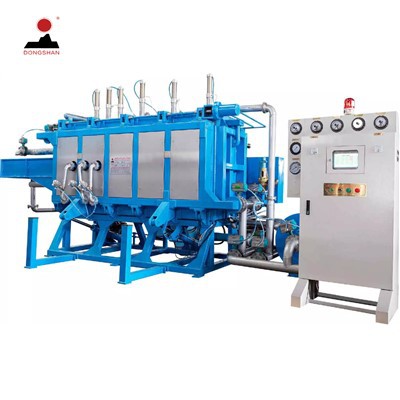
EPS (Expanded Polystyrene) block molding machines are versatile pieces of equipment widely used in various industries, including construction, packaging, and insulation. One common question that potential customers often ask is whether an EPS block molding machine can produce blocks with different shapes. As a supplier of EPS block molding machines, I am here to provide a comprehensive answer to this question. EPS Block Molding Machine
The Basics of EPS Block Molding Machines
Before delving into the question of shape versatility, it’s essential to understand how EPS block molding machines work. These machines operate on the principle of expanding polystyrene beads using steam. The beads are first pre – expanded to a certain size and then transferred to a mold. Inside the mold, steam is introduced, causing the pre – expanded beads to further expand and fuse together, forming a solid block.
The standard EPS block molding machines are typically designed to produce rectangular or cuboid – shaped blocks, which are commonly used in construction for insulation purposes. These blocks are easy to manufacture and stack, making them a popular choice in the industry. However, the capabilities of EPS block molding machines are not limited to just these basic shapes.
Producing Blocks with Different Shapes
Custom – Made Molds
One of the primary ways to produce EPS blocks with different shapes is through the use of custom – made molds. Molds can be designed and fabricated according to the specific requirements of the customer. For example, if a customer needs EPS blocks in the shape of cylinders for packaging delicate cylindrical objects, a mold can be created to achieve this. The mold is made of materials such as steel or aluminum, which can withstand the high – pressure steam environment inside the molding machine.
The process of creating a custom mold involves several steps. First, the design of the desired shape is created using computer – aided design (CAD) software. This digital design is then used to manufacture the physical mold through machining processes such as milling and turning. Once the mold is ready, it can be installed in the EPS block molding machine, and the production process can begin.
Complex Geometric Shapes
In addition to simple geometric shapes like cylinders and spheres, EPS block molding machines can also produce blocks with more complex geometric shapes. This is particularly useful in industries such as architecture and art, where unique and intricate designs are required. For instance, in architectural models, EPS blocks can be molded into shapes that mimic the structure of buildings, with detailed facades and unique contours.
To produce complex shapes, advanced molding techniques may be required. These techniques often involve multi – part molds and precise control of the steam injection process. The use of 3D printing technology in mold making has also made it easier to create molds for complex shapes. 3D – printed molds can be quickly prototyped, allowing for faster design iterations and more cost – effective production.
Hollow and Foam – Filled Shapes
EPS block molding machines can also produce blocks with hollow or foam – filled shapes. Hollow EPS blocks are useful in applications where weight reduction is a priority, such as in the aerospace and automotive industries. These blocks can be created by using a mold with an internal core that is removed after the molding process.
Foam – filled shapes, on the other hand, are used when additional strength or insulation properties are required. The foam filling can be made of different materials, depending on the specific application. For example, in some cases, a more rigid foam may be used to provide structural support, while in other cases, a softer foam may be used for better insulation.
Advantages of Producing Different Shaped EPS Blocks
Design Flexibility
The ability to produce EPS blocks with different shapes offers significant design flexibility. Architects and designers can use these blocks to create unique and innovative structures that were previously difficult or impossible to achieve. This flexibility also allows for the customization of products to meet the specific needs of customers.
Cost – Efficiency
In some cases, producing EPS blocks with different shapes can be more cost – efficient than using other materials. EPS is a relatively inexpensive material, and the molding process is highly automated, reducing labor costs. Additionally, the ability to produce custom – shaped blocks on – site can eliminate the need for expensive transportation and installation of pre – fabricated components.
Environmental Benefits
EPS is a recyclable material, and producing blocks with different shapes can help reduce waste. By using custom – shaped blocks, it is possible to optimize the use of material, minimizing scrap and reducing the environmental impact of production.
Challenges in Producing Different Shaped EPS Blocks
Mold Design and Manufacturing
The design and manufacturing of custom molds can be a complex and expensive process. It requires specialized knowledge and equipment, and the lead time for mold production can be long. Additionally, the cost of mold production can be a significant investment, especially for small – scale production runs.
Process Control
Producing EPS blocks with different shapes requires precise process control. The steam injection, pressure, and temperature need to be carefully regulated to ensure that the blocks are formed correctly. Any deviation from the optimal process parameters can result in defects such as incomplete fusion, warping, or uneven density.
Quality Assurance
Ensuring the quality of EPS blocks with different shapes can be more challenging than for standard rectangular blocks. Quality control measures need to be in place to check for defects such as voids, cracks, and inconsistent density. This may require additional testing and inspection procedures.
Conclusion
In conclusion, an EPS block molding machine can indeed produce blocks with different shapes. Through the use of custom – made molds, advanced molding techniques, and precise process control, it is possible to create EPS blocks in a wide range of shapes, from simple geometric shapes to complex and intricate designs. The ability to produce different shaped EPS blocks offers numerous advantages, including design flexibility, cost – efficiency, and environmental benefits.
However, it is important to be aware of the challenges involved in producing different shaped EPS blocks, such as mold design and manufacturing, process control, and quality assurance. As a supplier of EPS block molding machines, we are committed to providing our customers with the best possible solutions to overcome these challenges.
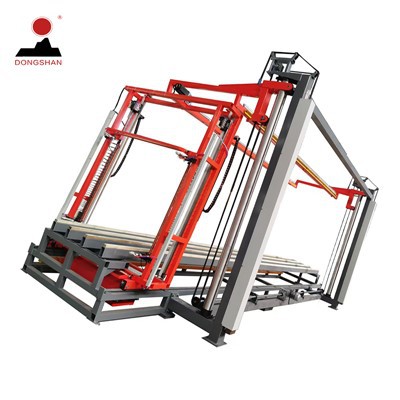
Vacuum System If you are interested in purchasing an EPS block molding machine or have any questions about producing EPS blocks with different shapes, we encourage you to contact us for a detailed discussion. Our team of experts is ready to assist you in finding the right machine and mold for your specific needs.
References
- Smith, J. (2018). "Advanced Molding Techniques for EPS Products". Journal of Polymeric Materials, 25(3), 123 – 135.
- Johnson, A. (2019). "Custom – Molded EPS Blocks: Design and Manufacturing". International Journal of Manufacturing Technology, 32(2), 210 – 225.
- Brown, C. (2020). "Environmental Impact of EPS Production and Recycling". Environmental Science Review, 15(4), 345 – 356.
Hangzhou Fuyang Dongshan Plastic Machinery Co., Ltd.
Hangzhou Fuyang Dongshan Plastic Machinery Co., Ltd. is one of the most professional EPS block molding machine manufacturers and suppliers in China, featured by quality products and low price. Please feel free to wholesale advanced EPS block molding machine made in China here and get quotation from our factory. Customized orders are welcome.
Address: 101 Guanting, Baiqian Villige, Luzhu Town, Fuyang District, Hangzhou City, Zhejiang Province, China
E-mail: xu@dong-shan.cn
WebSite: https://www.epseppmachinery.com/
